Leeb, Wilhelm Ritter von. Generalfeldmarschall.

[English version at the end]

 PERSONAJES DE BARBARROJA

¡Ya a la venta Barbarroja 03:00 hrs!


MARISCAL DE CAMPO WILHELM RITTER VON LEEB (1876-1956)
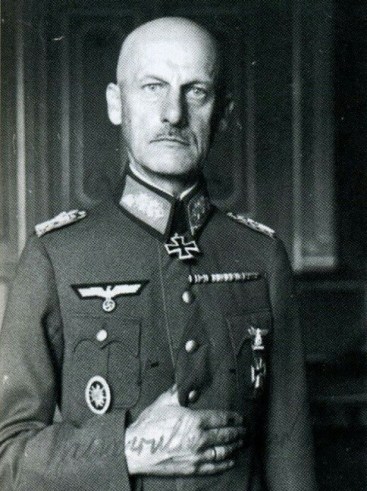
 

leeb, ritter von
Wilhelm von Leeb, jefe del Grupo de Ejércitos «Norte» ostentará el mando hasta enero de 1942. Durante su jefatura estará en desacuerdo con diferentes medidas de tipo no militar, como la famosa «orden de los comisarios», en las que se ordena la ejecución sumaria de estos oficiales del RKKA (no obstante tales prácticas se llevarán a cabo tanto en el 16º Ejército como el el 4. Panzergruppe).

El mariscal de campo Wilhelm Ritter Joseph Franz von Leeb es el comandante en jefe del Grupo de Ejércitos Norte durante la campaña de invasión de la URSS. Bávaro de nacimiento, participa en la Primera Guerra Mundial como oficial de artillería. En 1929 es ascendido ya a General der Artillerie pero es retirado del servicio en 1934 por su crítica abierta a la nueva normativa nacional-socialista de aplicación en las Fuerzas Armadas alemanas (Reichswehr). Sin embargo en 1939, en las vísperas del comienzo de la Segunda Guerra Mundial, es llamado al servicio activo y puesto al mando del Grupo de Ejércitos C. Su misión es la protección del las fronteras occidentales del Reich durante la invasión de Polonia.

En la Campaña de Francia (mayo de 1940) y en sus fases preparatorias, es muy crítico con los planes de invasión de los países neutrales, Bélgica, Holanda y Luxemburgo. De cualquier forma, por méritos propios contra las fuerzas francesas de la famosa Línea Maginot, es ascendido a mariscal de campo en julio de 1940.

En la Operación Barbarroja, desencadenada el 22 de junio de 1941, llegará en tiempo récord a las puertas de la cuna del bolchevismo, Leningrado, ante la cual Hitler le ordenará detenerse y rendir la plaza por hambre estableciendo un cerco. Será el máximo punto de avance de sus fuerzas (sur de Leningrado-ribera sur del lago Ladoga-Tikhvin-río Volkhov-lago Ilmen). Será relevado del mando de jefe del Heeresgruppe Nord<>Grupo de Ejércitos Norte el 16 de enero de 1942 por “razones de salud”. Su contrincante directo es el teniente general F. I. Kuznetsov, a la sazón, el comandante del Distrito Militar Especial del Báltico (Frente Noroccidental desde el primer día de la ruptura de hostilidades). Una de las unidades de combate más famosas puestas bajo sus órdenes será la División Española de Voluntarios (División Azul).

Ante la ingente empresa de asaltar el flanco norte de la URSS, a von Leeb se le hace evidente la topografía característica de las repúblicas bálticas que le fuerza a concentrar el eje principal de ataque en su ala derecha, originado en la Prusia Oriental y siguiendo la ruta Kaunas-Daugavpils (Jakovpils)-río Dvina-lago Pskov. El actuar de esta manera le llevará a cumplimentar un doble objetivo. El primero, a manera de cuña, dividir las fuerzas de F. I. Kuznetsov y las de Pavlov (Distrito Especial Militar de Kiev). El segundo es asfixiar al máximo número de divisiones de Kuznetsov contra las aguas de Báltico y Golfo de Finlandia y conducirse por las riberas del lago Pskov y río Volkhov hasta Leningrado.
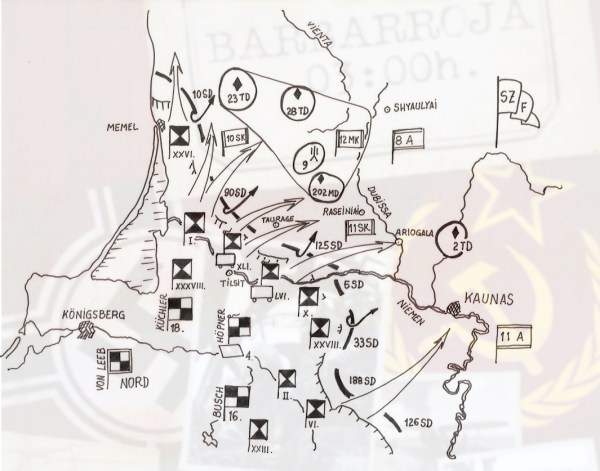
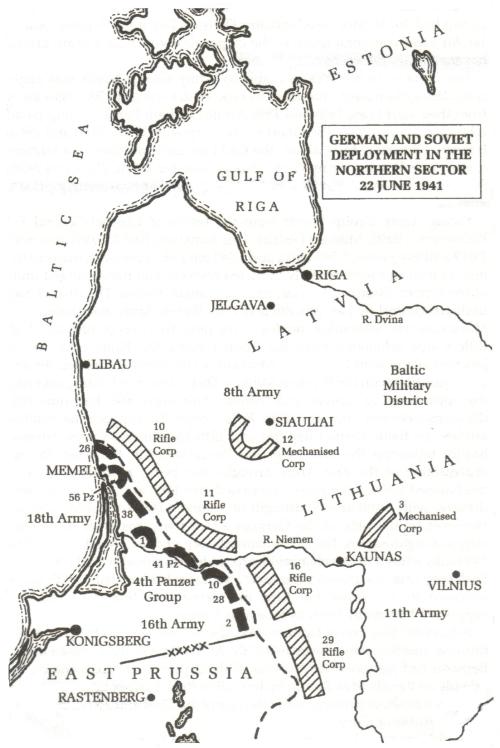
Situación a las 03:00 horas del 22 de junio de 1941. Los 3 ejércitos de von Leeb pasan al ataque. A diferencia de otros sectores del vasto «frente ruso» la preparación artillera no es masiva, sino concentrada en ciertos puntos. En otros le corresponde a los zapadores y a la infantería romper la resistencia soviética. La simbología mostrada es la oficial de la Wehrmacht y el RKKA respectivamente.[Cortesía del autor]

Su 18. Armee<>18º Ejército será quien penetre por la izquierda de su dispositivo en dirección a Riga (Letonia) y reduzca la resistencia de las tropas adversarias que embolse a su izquierda, atrapadas sin remisión de espaldas al Mar Báltico. Mientras tanto su 16. Armee<>16º Ejército protegerá el flanco derecho de todo el Grupo de Ejércitos “Norte”, sosteniéndose en las aguas del lago Ilmen. El papel protagonista, como es de esperar, le corresponde a los Panzer de Höpner con la misión de progresar a la máxima velocidad hasta Leningrado.

Así pues el mariscal de campo Wilhelm von Leeb cuenta con el siguiente orden de batalla:

16º Ejército (8 divisiones de infantería). Al este de Insterburg. Al mando de Ernst Busch.
18º Ejército (6 divisiones). Al norte, este y sur de Tilsit. Al mando de Georg von Küchler
4º Grupo Acorazado (7 divisiones). Este y sur de Tilsit. Al mando de Erich Höpner.
– Reservas: 5 divisiones de infantería y 3 de seguridad.

Totalizando la fuerza de von Leeb esta se compone de 3 divisiones acorazadas, 2 divisiones motorizadas, 20 de infantería más 3 divisiones de seguridad. El apoyo aéreo corre a cargo del 1. Luftflotte de Keller, que en realidad consta de un sólo Fliegerkorps (430 aviones), siendo el contingente aéreo más reducido de los tres grupos de ejército.

Von Leeb comienza su asalto en el Barbarossatag<>Día de Barbarroja  a las 03:05 horas con una preparación artillera y el cruce de la 6. Panzer Division de la frontera estatal soviética al sur de Taurage, con el éxito esperado. Kuznetsov contraataca en los días subsiguientes y ofrece resistencia, pero para el 30 de junio, con sus Panzer ya defendiendo las cabezas de puente conquistadas en el Dvina Occidental, de 12 a 15 divisiones del RKKA (Ejército Rojo) ya han sido destruidas, al haber quedado aisladas en la nueva Blitzkrieg de Hitler. Leningrado parece ahora un objetivo plausible…


¿Querrías conocer los detalles de esta y las demas operaciones?

¡Adquiere la obra cronológica Barbarroja 03:00h en edición de coleccionista!


Comprar Ahora Button

Sigue interesantes referencias también en Twitter @barbarroja0300h

Deja tu comentario abajo…


[English version]

BARBAROSSA’S PROTAGONISTS


FIELD-MARSHALL WILHELM RITTER VON LEEB (1876-1956)
 

heeresgruppe nord
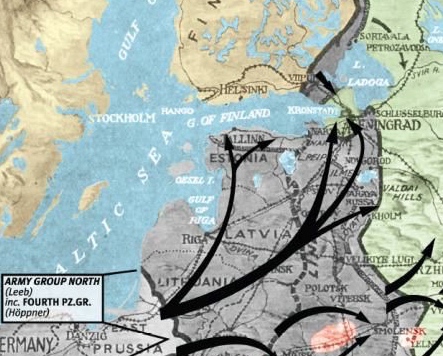
Northernmost sector of the vast «Russian Front». While the 18th Army breaks through to the north-northeast trapping forces against the Baltic Sea and capturing crucial enclaves like the port of Libau or Riga, the 16th Army penetrates to the South of the Baltic Republics, offering flank protection. General Höpner’s Tanks need to breakthrough at full speed towards the Western Dvina waters as a first step to drive towards Leningrad.

Field Marshall Wilhelm Ritter Joseph Franz von Leeb is the Commander-in-Chief of Army Group North during Hitler’s invasion campaing of the USSR. The Bavarian particiates in World War I as an artillery officer. In 1929 is already promoted to General der Artillerie, but in 1934 is retired from service dut to his open critizicism against the new National-Socialist regulations implemented in the Armed Forces (Reichswehr). However in 1939, shortly before the new world war, he is recalled for active duty and given the command of Army Group C. His mission is to defend the Western borders of the Reich during the Polish campaign.

During the campaign of France (1940) and its planning stages he again critizices the invasion plans of neutral Belgium, Holland and Luxemburg. Anyhow, by own merits against the French forces posted along the Maginot line, he is promoted to Field Marshall in July, 1940.

During Operation Barbarossa, unleashed on the 22nd of June, 1941, he will manage to arrive to the gates of the Bolshevism cradle, Leningrad (the old Petrograd and today Saint Petersburg). But his armies will be ordered to halt on their tracks on Hitler’s orders to surrender the city by hunger and not by a direct assault. Thus the city will remain under a historical siege until 1944. This will be indeed the maximum advance point of his forces (South of Leningrad-Southern banks of  Ladoga lake-Tikhvin-Volkhov river- Ilmen lake). He is relieved from command of Heeresgruppe Nord<>Army Group North on the 16th of January, 1942 allegedly for «health reasons». His most immediate adversary is General F. I. Kuznetsov, Commander-in-Chief of the Baltic Special Military District (from day 1 of hostilities renamed as Northwestern Front). One of the most famous combat units under von Leeb’s orders is the Voluntary Spanish Division (the Blue Division).

generalfeldmarschall von leeb generaloberst kuechler 1941
Generalfeldmarschall (Field Marshal) Ritter von Leeb (standing right) and Generaloberst (Colonel-General) von Küchler (centre) at an artillery post at the gates of the besieged Leningrad 11-October-41. The city will never fall, being desperately supplied at times through a small land corridor or, during winter, over the frozen waters of the Ladoga lake. [Courtesy Bundesarchiv]

Having in mind the plans of assaulting the Northwestern frontiers of the USSR, von Leeb realizes the orography of the Baltic countries and its features. The terrain characteristics force him to concentrate the main axis of his attack (Schwehrpunkt) over his right flank, starting from East Prussia and following the line Kaunas-Daugavpils (Jakovpils)-Western Dvina river-Pskov lake. By doing so he attemtps a two-fold task: Firstly, attacking in a wedge to split up F. I. Kuznetsov forces and Pavlov‘s (Kiev Special Military District). Secondly, to strangle the most of Kuznetsov forces against the Baltic Sea coast and Gulf of Finland and eventually to drive around the shores of Pskov lake and the Volkhov river towards Leningrad.

His 18. Armee<>18th Army will be responsible to drive north towards Riga (Latvia) trapping against the sea the maximum number of RKKA troops. In the meantime his 16. Armee<>16th Army will protect the whole right flank of Army Group North consolidating defenses along the banks of the Ilmen lake. As expected, the main task will be responsibility of General Höpner’s Panzer force who is to drive at full speed towards Leningrad.

This way, Field Marshall von Leeb counts on the following order of battle, along with 5 infantry divisions in reserve and 3 security divisions:

16th Army (8 infantry divisions). East of Insterburg. Ernst Busch in command.
18th Army (6 infantry divisions). North, East and South of Tilsit. Georg von Küchler in command.
4th Armoured Group (7 divisions). East and South of Tilsit. Erich Höpner in command.
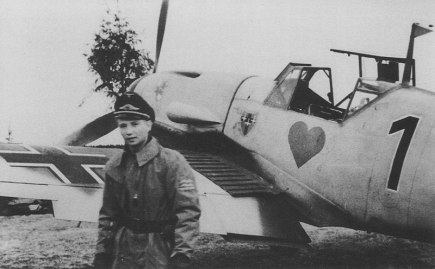
The «ace» Max Ostermann (JG 54 «Grünherz») by his Messerschmitt Bf-109F at Siverskaya airfield (South of Leningrad). The 54th Fighter Wing is the only unit of its type in Keller’s 1. Luftflotte. Winter 1941-42

In all von Leeb has at his disposal 3 armoured divisions, 2 motorized divisions, 20 infantry plus 3 security («static») divisions. His air support belongs to Keller‘s 1. Luftflotte that in reality is  composed by only 1 Fliegerkorps (430 airplanes), being the smallest air contingent of the 3 main Army Groups.

Von Leeb commences his assault on the Barbarossatag (day of Barbarossa) at 03:05 hours with a selective artillery attack and the crossing of the Soviet state border by the 6. Panzer Division, with the expected success. Kuznetsov, though, will counterattack on the incoming days and poses certain resistance, but by the 30th of June his tank men are already defending the recently conquered Western Dvina bridgeheads. Moreover, 12-15 RKKA divisions have been already cut off  and wiped out in the new Blitzkrieg of Hitler. Leningrad seems now a feasible objective…


Did you find this article interesting? Leave your comments below…

Follow other articles in Twitter @barbarroja0300h

Kuznetsov, Fyodor Isidorovich. General-Polkovnik

[English version at the end]

 PERSONAJES DE BARBARROJA

¡Ya a la venta Barbarroja 03:00 hrs!

GENERAL FYODOR ISIDOROVICH KUZNETSOV (1898-1961)


f i kuznetsov
Teniente general Fyodor Isidorovich Kuznetsov. Su jefatura del Distrito Especial Militar del Báltico (posteriormente Frente Noroccidental) será breve. Tras su relevo le será asignado el mando de un ejército.

El teniente general F. I. Kuznetsov,  al mando del Distrito Especial Militar del Báltico (cuartel general sito en Riga), intentará frenar el asalto del mariscal de campo von Leeb y su Grupo de Ejércitos “Norte”. Su jefe de estado mayor es el teniente general P. S. Klenov y su comisario de cuerpo es P. A. Dibrov. Dispone del siguiente orden de batalla, que aglutina a  26 divisiones (4 de ellas acorazadas) más 3 brigadas aerotransportadas y 2 regimientos motociclistas, frente a las 30 divisiones (3 de ellas acorazadas)  del mariscal bávaro:

  • 8º Ejército, al mando de P. P. Sobennikov (cuartel general en Jelgava)
  • 11er Ejército, al mando de V. I. Morozov (cuartel general en Kaunas)
  • 27º Ejército, al mando de N. E. Berzarin (cuartel general en Riga)
  • Fuerzas aéreas (VVS) de A. Ionov (cuartel general en Riga)
  • Fuerzas de la Defensa Antiaérea (PVO) de M. M. Karlin (cuartel general en Riga)

Kuznetzov, oriundo de la región de Mogilyov e hijo de campesinos, sirve en el Ejército Imperial Ruso del Zar durante la Primera Guerra Mundial, donde recibirá heridas. Tras la revolución bolchevique se pasará a las filas del Ejército Rojo de Trabajadores y Campesinos (RKKA). Participa así en la Guerra Civil Rusa donde llega a ostentar mando en regimiento. Tras ella, cursa estudios en la prestigiosa Academia Militar de Frunze en 1926. Su siguiente actuación en combate será durante la denominada Guerra de Invierno contra Finlandia en 1939-40. No obstante su hora más decisiva llegará el 22 de junio de 1941, el día de comienzo de la Operación Barbarroja. Como jefe del Distrito Especial Militar del Báltico desde diciembre de 1940, sobre el papel cuenta con una fuerza numerosa y capaz de enfrentarse al adversario, pero muchas de sus unidades están en este momento en proceso de reequipamiento y municionamiento, muchas con falta de radios, transportes y en ciertos casos escasas de carburantes.

Contraofensiva ordenada por Kuznetsov a las 24 horas del comienzo de Barbarroja. La maniobra se ejecuta tarde y secuenciada, perdiendo efectividad. Muchos de sus vehículos sufrirán el castigo de la Luftwaffe o adolecerán del combustible necesario para alcanzar los ambiciosos objetivos de su contraataque.

En la mañana de Barbarroja, su 8º Ejército despliega al norte de Lituania, mientras que su 11º defiende la línea fronteriza del resto de Lituania con la Prusia Oriental. Sufren una dura preparación artillera sobre sus posiciones y enseguida son asaltadas. La 10ª División de Fusileros (I. I. Fadeyev) responde al fuego alemán, presenta batalla e incluso pasa al contraataque en el área de los ríos Minya, Plunga y Retovas. Pero el caso de la 10ª es anecdótico y en cualquier caso, al atardecer Fadeyev recibe órdenes de I. F. Nikolayev, su jefe de Cuerpo, de retirarse.

A últimas horas del 22 de junio, Kuznetsov junto con su recién denominado Frente Noroccidental, pone en marcha un contragolpe con el 3er y 12º cuerpos mecanizados hacia Siauliai y Tilsit, zona identificada como eje principal de la ofensiva de von Leeb (en realidad es el punto de penetración<>Schwehrpunkt del 4. Panzergruppe de Höpner). Según su plan, en una segunda etapa, sus fuerzas mecanizadas deberán derrotar al enemigo en Kaunas y Vilnius. Asimismo se decide a lanzar a la 23 Tankovaya Divizya (división acorazada) contra la agrupación enemiga (18. Armee de Küchler) de la costa báltica. La operación, de tener éxito, es decir, detenido el enemigo, deberá continuar con una penetración hacia la Prusia Oriental según los planes de preguerra aprobados. Para desgracia de Kuznetsov, los planes de preguerra ya han quedado obsoletos a las 03:05 horas del 22 de junio de 1941.  El machaque del 1. Luftlotte de  Keller a sus efectivos aéreos y terrestres es tan significativo que le hace perder contundencia en su contraataque. Kuznetsov no es ajeno a la superioridad de la Luftwaffe en los cielos y ordena operar a sus fuerzas acorazadas en grupos reducidos para presentar blancos menos vulnerables desde el aire, pero como contrapartida los carristas soviéticos entran en acción de manera secuencial al combate sin poder hacer uso de su masa numérica.

Los ataques aire-suelo de la Luftwaffe a los aeródromos rojos eliminan en la práctica el apoyo aéreo a las divisiones de Kuznetsov. En palabras de Sobennikov: «…en este momento casi toda la aviación del Distrito Militar del Báltico fue neutralizada en sus pistas. Por ejemplo, de las divisiones aéreas mixtas asignadas al apoyo del 8º Ejército, hacia las 15 horas del 22 de junio quedaban ya sólo 5 ó 6 aparatos SB«.

Su maniobra, distando de ser perfecta, no obstante, pone en un serio aprieto a la 6. Panzer Division en Siauliai, cuando los alemanes hacen frente a un nuevo tipo de carro de combate descomunal del que nada sabían. La sorpresa táctica de los nuevos carros de 52 toneladas KV-1 y KV-2 es completa. De hecho, uno de los episodios más singulares de la Operación Barbarroja tiene lugar entre un solitario KV-2, que se las arregla para mantener bloqueado uno de los accesos logísticos de una cabeza de puente alemana durante dos días, como si de un búnker imbatible se tratara. Tras recibir docenas de impactos y el ataque sorpresivo nocturno de zapadores con minas, sólo la acción de un potente cañón FlaK 18 de 8,8 cm. dispuesto en su arco trasero, conseguirá ponerlo fuera de combate después de doce disparos certeros.

Pese a su contraataque el 8º Ejército no tendrá más remedio que retirarse según la línea Jelgava-Riga-Tartu-Narva por el noroste del lago Pskov  y el 11er Ejército por el eje Daugavpils-Pskov-Novgorod (este del Pskov). Sus hombres encajarán pérdidas significativas, pero serán capaces de evitar quedar copados al estilo de los cercos sufridos en el Frente Occidental de Pavlov, retirándose no de manera contínua sino con acciones dilatorias y contragolpes. Su última esperanza al mando del Frente Noroccidental será detener a los hombre de von Leeb en las aguas del Dvina Occidental, pero von Manstein al mando del LVI. Armeekorps (Motorisierte)<> 56º Cuerpo Motorizado, que incluye a la 8. Panzer Division, se le adelantará al más puro estilo de la guerra relámpago, llegando al Dvina antes de poder Kuznetsov erigir defensas sostenibles.

Su mando sobre las tropas del Frente Noroccidental será breve, acabando el 30 de junio de 1941 al ser relevado por el general-maior P. P. Sobennikov, hasta este momento subordinado suyo, a la sazón jefe del 8º Ejército.

¿Querrías conocer los detalles de esta y las demas operaciones?

¡Adquiere la obra cronológica Barbarroja 03:00h en edición de coleccionista!


Comprar Ahora Button

Sigue interesantes referencias también en Twitter @barbarroja0300h

Deja tu comentario abajo…


[English version]

BARBAROSSA’S PROTAGONISTS

COLONEL-GENERAL FYODOR ISIDOROVICH KUZNETSOV (1898-1961)

22jun41
Deployment of forces on the eve of the 22nd of June 1941. Northwestern sector. Kuznetsov opposes 2 infantry armies (16th and 18th) plus one armoured (4th).

Lieutenant General F. I. Kuznetsov, Commander of the Baltic Special Military District (HQ Riga, Latvia) will struggle to neutralize Field Marshall von Leeb’s Army Group «North». His Chief of Staff is the Lieutenant-General P. S. Klenov and his Corps Commissar is P. A. Dibrov. His order of battle includes 26 divisions (4 armoured), 3 airborne brigades and 2 motorcycle regiments opposed to von Leeb’s 30 divisions (3 armoured). It is as follows:

  • 8th Army, under P. P. Sobennikov (HQ Jelgava)
  • 11th Army, under V. I. Morozov (HQ Kaunas)
  • 27th Army, under N. E. Berzarin (HQ Riga)
  • Air Force (VVS) under A. Ionov (HQ Riga)
  • Air Defense Forces (PVO) under M. M. Karlin (HQ Riga)

Fiodor Kuznetsov, is born in the Mogilov region and is the son of peasants. Serves in the Tsar’s Imperial Army and participates in World War I, where receives wounds. After the Bolshevik revolution he decides to join the ranks of the new Red Army of Workers and Peasants (RKKA). Thus participates in the Russian Civil War commanding a regiment. After that graduates in the prestigious Frunze Military Academy in 1926. Kuznetsov sees new action in the so-called Winter War against Finland (1939-40). However, his most critical career moment will arrive on the 22nd of June, 1941, the day of the invasion of the USSR by Adolf Hitler and allies, Operation Barbarossa. As Commander-in-Chief of the Baltic Special Military District since December’ 40, on paper counts on a powerful array of forces capable to deter the adversary, but many of his units are at that stage under refitting and reorganization, many of them lacking radios, transport means and low on fuel supply.

In the morning of Barbarossa his 8th Army is deployed north of Lithuania while his 11th defends the rest of the Lithuanian border with Eastern Prussia. They suffer intense artillery punishment and are assaulted next. The 10th Fusiliers Division (I. I. Fayedev) replies to german fire, stands for battle and even counter-attacks in the vecinity of rivers Minya, Plunga and Retovas. But the case of the 10th is almost an anecdote and eventually Fayedev receives orders from his Corps Chief, I. F. Nikolayev, to withdraw his troops.

During the last hours of the 22nd of June Kuznetsov and his recently re-named Northwestern Front will carry out a counter-offensive with the 3rd and 12th mechanized corps against Siauliai and Tilsit. The threat has been correctly identified as von Leeb’s main axis of attack (breakthrough point<>Schwehrpunkt of Höpner’s 4th Panzer Group). But not only this, according to his plans, at a later stage, his forces will have to defeat the enemy between Kaunas and Vilnius. Likewise, he orders his 23 Tankovaya Divizya<>23rd Tank Division to pincer the invaders against the Baltic coast (Kuchler’s 18. Armee). His counter-stroke, if successful, must then continue towards Eastern Prussia according to his pre-war approved plans. Unfortunately for him his pre-war plans have already become obsolete as of today’s 03:05 hours. Keller‘s 1. Luftflotte pounding is merciless against his air and ground assets and will greatly affect Kuznetsov‘s actions. He is fully aware of the lethality of the Luftwaffe and order his tank forces to operate in smaller combat groups in order to become less vulnerable from the air, but having ordered so, his tankers will arrive piece-meal to the battle losing the effectivity of their number superiority.

Luftwaffe air-to-ground attacks to Red aerodromes neutralize the chance for air support to Kuznetsov armies. General Sobennikov will write: «…at this stage almost all Baltic District Aviation was destroyed in its bases. For instance, out of all the Mixed Air Divisions assigned to the support of the 8th Army after 15:00 hours of the 22nd of June just 5 or 6 SB bombers were left…».

kv-1 splash horch car
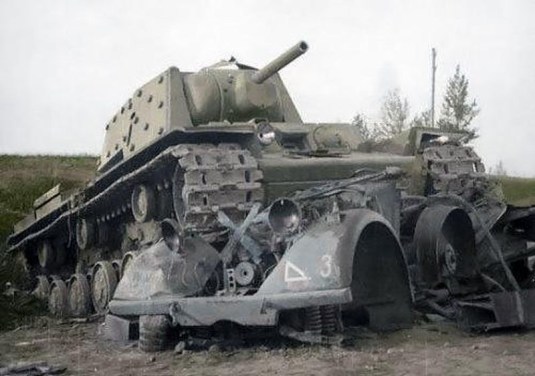
The KV series of secret tanks, named after Marshall Kliment Voroshilov, are literally indestructible machines for the German arms. Heavily armoured and gunned they are conceived for the Soviet doctrine of «deep battle». Here a KV-1 with a 76.2 mm cannon smashes a Horch command vehicle.

His maneouvre, far from being  perfect, still triggers a crisis amongst the ranks of the 6. Panzer Division near Siauliai, when the Germans suddenly face a gigantic unknown new type of tank: The 52-ton KV-1‘s and KV-2’s. The Soviets achieve a total  tactical surprise. As a matter of fact one of the most outstading feat of arms that take place during Barbarossa involves one of these KV-2’s. It manages to keep at bay for 2 days numerous Wehrmacht forces which try to force a logistical supply line to feed the Dubissa bridgehead. Behaving as  an undestructible fixed bunker, the Soviet crew manages to inflict grievous losses to the German supply columns and tanks. After having received dozens of direct impacts and mine night sneak attacks of engineers is only put out of action thanks to a FlaK 18 8.8 cm. powerful piece firing from its rear arc with 12 accurate shots.

In spite of his counter-attacks, the 8th Army has no other chance eventually but to pull back following the axis Jelgava-Riga-Tartu-Narva on the Western approaches of lake Pskov. Likely the 11th will do the same along Daugavpils-Pskov-Novgorod (Eastern Pskov). His men will endure severe losses but will manage to skip major encirclements like the ones in his neigbouring Western Front (Pavlov). His units will withdraw not relentlessly, but maneouvering and counter-attaking whenever a chance arises. His last hope as Commander-in-Chief of the Northwestern Front will be to halt von Leeb‘s Panzer at the banks of the Western Dvina river. Nevertheless von Manstein, Commander of the LVI. Armeekorps (Motorisierte)<> 56th Motorized Corps that includes the 8. Panzer Division will overtake him in the finest Lightning War style. The Teuton General will arrive to the river before Kuznetsov manages to build sustainable defenses along it.

His command will be short finishing on the 30th of June, 1941, being relieved then by his up to that moment Chief of the 8th Army, P. P. Sobennikov.

Did you find this article interesting? Leave your comments below…

Follow other articles in Twitter @barbarroja0300h