Planeamiento de «Barbarroja» 3ª Parte

[English version at the end]

LA GÉNESIS DE BARBARROJA

¡La obra de la invasión de Rusia ya a la venta!

3ª PARTE:

Marcks y su plan.
barbarroja-portada-plan
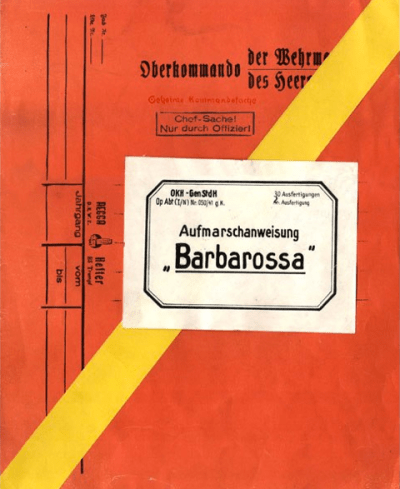
Plan de campaña de la Operación «Barbarroja». Debe el nombre a Federico «Barbarroja» el primer emperador del sacro imperio romano-germánico, del que Adolf Hitler es admirador.

El 5 de agosto de 1940, unas dos semanas tras la decisión de Hitler de preparar la invasión de la URSS, el general Erich Marcks presenta su planeamiento. Es interesante notar sus objetivos dado que Barbarroja está plagada de mitos:

a. Objetivo. Derrotar al Ejército Rojo y establecer línea Rostov-Gorky-Arkhangelsk para eliminar la amenaza aérea contra Alemania. El objetivo principal es Moscú.

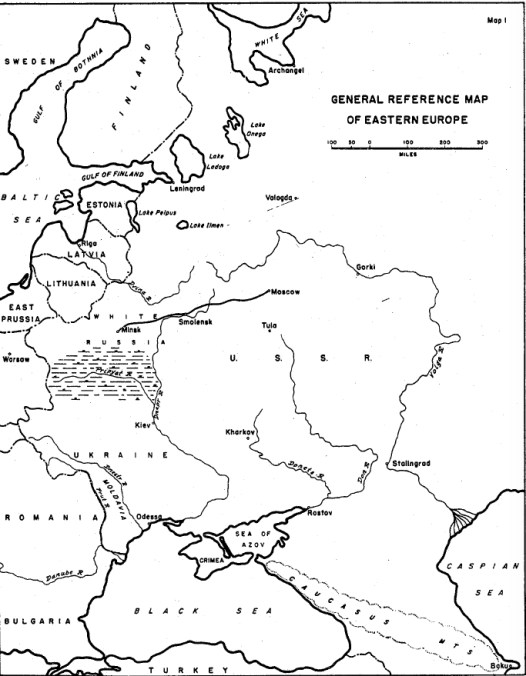
b. Terreno: Al norte y oeste de Moscú existe una pantalla de bosques  y pantanos que se extienden desde el Mar Blanco, pasando por Leningrado-Vitebsk-Kobrin-Slutsk-Kiev. Los pantanos del Pripyat dividen en dos teatros de operaciones las fronteras occidentales de la URSS. Al sur el terreno es más favorable aunque hay ausencia de buenas carreteras. Sólo hay una autopista a través de Kiev. En el norte, con mejores vías, el combate se restringiría a las vías de comunicación por la densidad de los bosques.

c. Tácticas soviéticas. Se presume que actuarían defensivamente excepto a lo largo de la frontera rumana donde atacaría para apoderarse de las plantas petrolíferas.

d. Fuerza estimada. (Agosto 1940). Contra Alemania 96 div. Inf. / 23 Div. Cab / 28 Brig. Mec. Para primavera de 1941 la estimación de fuerzas germanas es de 24 Panzer, 1 de caballería, 12 de infantería motorizada y 110 divisiones de infantería. Esta relación de fuerzas (muy optimistas) muestra un balance entre las fuerzas opuestas, pero Marcks está convencido de la mejor calidad de la Wehrmacht y sus tácticas.
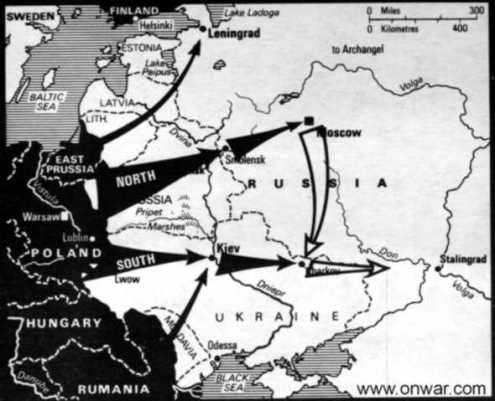
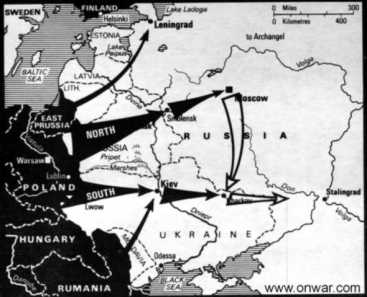
mapa-marcksplan
El plan de invasión original establece sólo dos ejes de ataque con objetivo de capturar Moscú. La captura de Leningrado sería tarea de un grupo auxiliar. La toma de Kiev sería llevada a cabo tras la de Moscú.[Cortesía http://www.onwar.com]

e. Despliegue soviético. La concentración principal está en los estados bálticos y Ucrania. Hay una fuerza de reserva alrededor de Moscú.

f. Conducción de las operaciones. El grupo norte llegaría hasta Moscú. El grupo sur atacaría en dirección a Kiev.

1. Ofensiva en el sur. El ataque a través de Ucrania es necesario para la protección de Rumanía y su petróleo. Rumanía puede participar en la toma de Besarabia, Odessa y Crimea.

2. Esfuerzo principal. Destrucción de las fuerzas Rusas al oeste de Moscú. Este esfuerzo tiene una fuerza auxiliar protegiendo el flanco izquierdo (Pskov-Leningrado).

3. Movimiento. Las fuerzas acorazadas y motorizadas romperán las líneas enemigas con apoyo de la aviación táctica, dejando a la infantería el cerco y destrucción de las tropas aisladas.

g. Orden de batalla Alemán. 147 divisiones de todo tipo.

h. Misión principal de las fuerzas terrestres. El Grupo de Ejércitos “Sur” debe destruir a los rusos en Ucrania y establecer cabezas de puente en el Dnieper. En Grupo de Ejércitos “Norte” tiene que tomar Moscú.

i. Misión de la Luftwaffe. Neutralizar a la VVS (Voenno Vozdushnye Sily-Fuerzas Aéreas soviéticas), destruir la red de comunicaciones terrestres y  apoyar las cuñas acorazadas

j. Misión de la Kriegsmarine. Neutralizar a la flota rusa en el Báltico, proteger los envíos de mineral de hierro suecos y transportar suministros por el Báltico cuando el Heer capture los puertos.

k. Logística. Se establecerán bases tras los dos grupos de ejércitos. En los estados bálticos, Rusia blanca y Ucrania se implantarán gobiernos autónomos no comunistas.

l. Secuencia. Mediados de mayo a mediados de octubre. Fase uno, perseguir a los rusos unas 250 millas con cuñas acorazadas. La segunda fase es el combate en bosques y ríos (60-120 millas). La tercera fase es la captura de Moscú y Leningrado. La cuarta fase es hasta la línea del Don, Volga y Dvina septentrional. Se estima un total de 9 a 17 semanas. Si los rusos no se rinden la ofensiva se continuará hasta los Urales y entonces los rusos no podrán conducir operaciones militares, aunque establecer un gobierno en Asia y mantener un estado de guerra indefinidamente.

Ir a la 2ª parte

Continuar a la 4ª Parte

¡Adquiere la obra cronológica Barbarroja 03:00h en edición de coleccionista!


Comprar Ahora Button

Sigue otras referencias interesantes en Twitter @Barbarroja0300h

-———————————————[English version]————–———————————

BARBAROSSA’S ORIGINS

3rd PART:

Marks and his planning.

On the 5th of August’ 40, about 2 weeks after Hitler’s decision to prepare the invasion of the USSR, General Marcks submits his planning. It is worth realizing its objectives as Barbarossa is full of myths:

marcks-erick-general-101id-liechte-ucrania
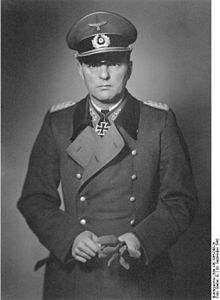
General Erich Marcks. Temporarily attached to the Army High Command (OKH). He will be in charge of commencing the study of the invasion of the USSR. His main objective was the capture of Moscow.

a. Objective. Defeat the Red Army and reach the line Rostov-Gorky-Arkhangelsk in order to neutralize the air threat against Germany. The main target is Moscow.

b. Terrain. Moscow is screened by huge woods and swamps that stretch from the White Sea along Leningrado-Vitebsk-Kobrin-Slutsk-Kiev. The Pripyat marshes divide the Western USSR district in two theatres of operations. In the south the terrain is more favorable but lacking good roads. There’s one motorway through Kiev. In the north, with better quality roads, combat would be constrained along them due to extensive forested areas.

c. Soviet tactics. Presumably they would conduct defensive operations except in the south where an attack into Romania is expected in order to seize their oil infrastructure.

d. Estimated forces (August 1940). Against Germany 96 rifle (infantry) divisions / 23 cavalry divisions / 28 mechanized brigades. In spring’ 40 Germany would have for this task 24 Panzer divisions / 1 cavalry division / 110 infantry divisions. This ratio of forces (way optimistic) show a balanced number of opposing troops, but Marcks is convinced of the better quality and tactics of the Wehrmacht.

e. Soviet deployment. The main concentrations are in the Baltic states and Ukraine. There’s a reserve near Moscow.

f. Operations execution. The northern group would reach Moscow. The souther group would attack in the direction of Kiev.

1. Southern offensive. The thrust throughout the Ukraine is paramount to protect Romania and its oil plants. Romania can participate seizing Bessarabia, Odessa and Crimea.

2. Main thrust. To destroy Soviet forces west of Moscow. This main effort would be supported by an auxiliary force screening the left flank (Leningrad-Pskov).

3. Movement. Armoured and motorized forces will breakthrough enemy lines with the support of tactical aviation, leaving to the infantry the annihilation of encircled troops.

g. German order of battle. 147 all-type divisions (24 Panzer).

h. Main objective of ground forces. Army Group “South” ,just destroy the Soviets in the Ukraine and to establish bridgeheads on the river Dnepr. Army Group “North” must seize Moscow.

i. Luftwaffe’s mission. To neutralize the VVS (Voenno Vozdushnye Sily – Red Air Force), destroy the road network and support the armoured thrusts.

j. Kriegsmarine’s mission. To neutralize the Soviet Baltic fleet, protect the Swedish iron ore shipments and to transport supplies throughout the Baltic Sea once the Heer seizes the needed ports.

k. Logistics. Supply dumps will be established behind each army group. In the Baltic states, White Russia and the Ukraine non-communist autonomous governments will be put in place.

i. Sequence. From mid-May till mid-October. Phase one, to pursue the Soviets 250 miles with the armoured units. The second phase encompass woods and river fighting (60-120 miles). The third phase is the capture if Moscow and Leningrad. The fourth phase is until the Volga-Don-Northern Dvina line. A total of 9-17 weeks is estimated. It the Soviets don’t give up the offensive will be carried out until the Ural mountains where the Soviets won’t be able to conduct military operations, although they might set a government in Asia and maintain an indefinite state of war.

Go to Part 2

Continue to Part 4

Follow interesting references in Twitter @Barbarroja0300h


Volver

Se ha enviado tu mensaje

Advertencia
Advertencia
Advertencia

¡Aviso!

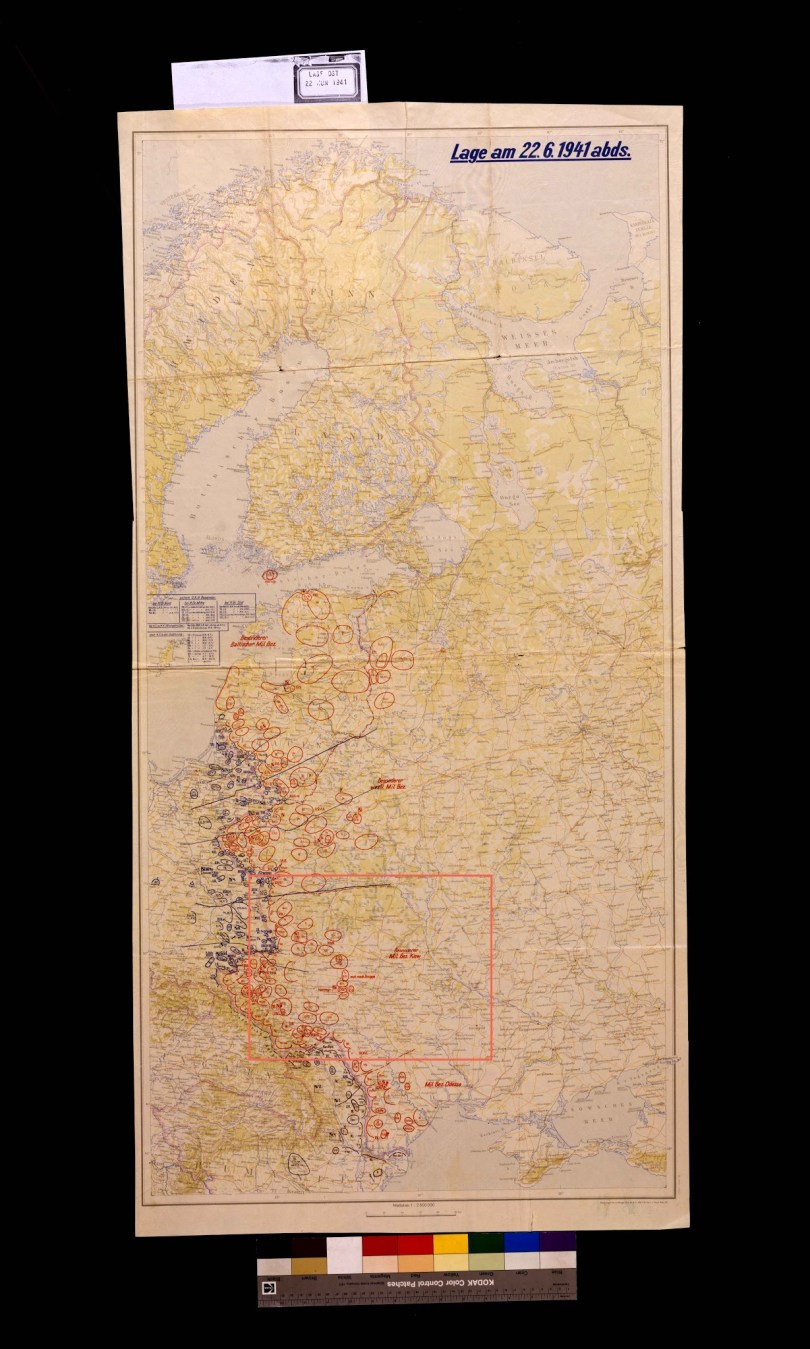
El frente de batalla. 22 junio1941

[English version below]


El frente de batalla se extiende desde Noruega hasta las aguas del Mar Negro. No obstante y debido a la enorme extensión de la línea de combate, el libro recoge las acciones diarias terrestres y aéreas entre los mares Báltico y Negro. Es el escenario de combate principal de partida de los tres grupos de ejército alemanes contra los distritos militares soviéticos «Norte», «Noroeste», «Oeste», «Suroeste» y «Sur». Una enorme extensión ya de por sí de más de 1.500 km.

mapa-410622-am-copia
Lage Ost karte (mapa de situación «este») con la disposición de tropas del Eje y soviéticas en la tarde del domingo 22 de junio de 1941. En trazo rojo el estado mayor alemán señaliza el despliegue conocido del RKKA (Ejército Rojo).


Ya disponible Barbarroja 03:00 h en edición de coleccionista


Comprar Ahora Button

——————————[English version]——————————

The frontlines stretch from Norway to the waters of the Black Sea. Nevertheless due to the gigantic scale of the theatre of operations the book narrates those daily ground and air actions taking place between the Baltic and the Black Seas. It is the initial fighting scenario of the three German army groups against the Soviet «Northern», «Northwestern», «Western», «Southwestern» and «Southern» military districts. A huge terrain extension of more than 1,500 kilometres.

Lage Ost Karte (Daily situation map «East») depicting the evening deployment of Axis and Soviet troops on Sunday the 22nd of June, 1941. With red ink the German Staff highlights the known location of the RKKA (Red Army) units.


Planeamiento de «Barbarroja» 2ª Parte

[English version at the end]

LA GÉNESIS DE “BARBARROJA”

¡La obra ya a la venta!

2ª PARTE:

Marcks, Erich OKH heer wehrmacht halder
General Erich Marcks, iniciador del primer estudio de ataque a la URSS. Su concepción se basa en dos ejes de ataque y Moscú como objetivo principal

El 29 de julio de 1940 Erich Marcks es un personaje de segunda fila en el organigrama del Ejército alemán. Si bien es general, está destinado en un estado mayor subordinado. No obstante, la historia le va a reservar un puesto especial: será el que inicie el planeamiento de la mayor campaña militar de todos los tiempos: la invasión de la URSS.

mapa-marcksplan
Concepto del ataque de Marcks. Dos grupos de ejército con objetivo principal, Moscú y secundarios, Leningrado y Kiev.

Marcks será destinado en esa fecha temporalmente desde su puesto de jefe de estado mayor del 18º Ejército al OKH, Alto Mando del Ejército (Oberkommando des Heeres) para iniciar tamaña tarea. Temporalmente su jefe será Franz Halder, Jefe del Estado Mayor del OKH.

Iniciado el trabajo de planeamiento de la operación de invasión de la URSS en julio de 1940, el FHO, Sección de Inteligencia de Ejércitos “Este” (Fremde Heeres Ost) redobla esfuerzos para actualizar sus datos sobre el orden de batalla soviético. El general Marcks, encargado por Franz Halder del estudio inicial, tiene en cuenta los datos de inteligencia disponibles de julio de 1940: Los soviéticos tendrían entre 50 y 75 divisiones de primera línea. Y esta fuerza podría ser asaltada por 80-100 divisiones de la Wehrmacht.

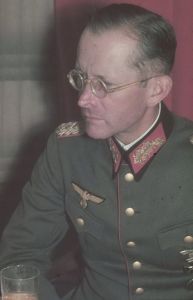
Pero las estimaciones de la Sección de Inteligencia “Este” del teniente coronel Eberhardt Kinzel pecan de muy optimistas. Kinzel es un oficial de infantería y no un hombre de la inteligencia, no habla ruso y no es posiblemente el mejor candidato para su puesto. Además, con la prohibición expresa de Hitler, antes de 1940, de recolectar datos de la URSS, posiblemente Kinzel se ve sobrepasado en su fundamental labor de ofrecer datos contrastados y realistas sobre la cantidad de divisiones soviéticas que existen.

De hecho, continuando en agosto el estudio, Marcks sube la estimación a 96 divisiones de fusileros (infantería), 23 de caballería y 28 brigadas mecanizadas en la URSS occidental. En sus cálculos esta fuerza no sería capaz de incrementarse apreciablemente para el comienzo de la operación. Son datos alentadores que abrigan la esperanza de una rápida victoria en el este. Pero son cifras aún excesivamente optimistas…

Con todo, Moscú parece el objetivo de la operación. Con esta premisa Erich Marcks entrega su plan a Halder el 5 de agosto…

Ir a la 1ª parte

Continuar a la 3ª Parte

¡Adquiere la obra cronológica Barbarroja 03:00h en edición de coleccionista!


Comprar Ahora Button

Sigue también interesantes referencias en Twitter @Barbarroja0300h

-———————————————[English version]————–———————————

“BARBAROSSA’S” ORIGINS

2nd PART:

On the 29th of July, 1941, Erich Marcks is a second line character in the German Armed Forces hierarchy. Being indeed a general, he is a chief of staff of a subordinate command. However, History will spare a special place for him: He will initiate the planning of the

kinzel-eberhardt-220px-bundesarchiv_bild_146-1985-048-28_eberhard_kinzel
Eberhardt Kinzel. En esta ilustración de 1943 es ya general, pero en 1940 es el teniente coronel jefe del FHO (sección de Inteligencia de los Ejércitos «Este»). Sus datos sobre el Ejército Rojo influencian peligrosamente el plan de Marcks. [Cortesía Bundesarchiv]

largest military campaign of all times: the invasion of the USSR.

On this very same date, Marcks is assigned from his post as 18th Army Chief of Staff to OKH Army High Command (Oberkommando des Heeres) to commence such a job.

Once the invasion of the USSR planning is started in July, 1940, the FHO, “East” Armies Intelligence Division (Fremde Heeres Ost), redouble efforts to update the Soviet order of battle. General Marcks, ordered by Halder to commence the study takes into account the July’ 40 available data : The Soviets would have no more than 50-75 first class divisions. And this force would be easily overwhelmed by 80-100 Wehrmacht divisions.

But Lieutenant Colonel Eberhardt Kinzel’s Intelligence Section is certainly optimistic. Kinzel is an infantryman and not an expert on intelligence matters, he doesn’t speak Russian and he isn’t possibly the best candidate for his post. On top of that, due to Hitler’s orders of avoiding any intelligence activities over the USSR before 1940, Kinzel is overwhelmed with the paramount job of providing realistic assessment of numbers of Soviet divisions.

As a matter of fact in August, Marcks, in full swing planning process, raises the estimates to 96 fusiliers (infantry) divisions, 23 cavalry and 28 mechanized brigades in Western USSR. And it is deemed that this figure would not raise significantly by spring next year. These are encouraging numbers to support the hopes of a rapid victory in the East. But still these figures are excessively optimistic…

Summarizing, Moscow seems to be the main objective of the operation. With these premises, Marcks finally submits his plan to Halder on the 5th of August, 1940…

Go to Part 1

Continue to Part 3

Follow interesting articles in posts @Barbarroja0300h


Volver

Se ha enviado tu mensaje

Advertencia
Advertencia
Advertencia

¡Aviso!

Planeamiento de «Barbarroja» 1ª Parte

[English version at the end]

LA GÉNESIS DE BARBARROJA

¡La obra ya a la venta!

hitler-reichstag-tercer-reich
Hitler ante el Reichstag. 19 julio 1940. Gran Bretaña está contra las cuerdas pero rechaza cualquier acuerdo paz con Alemania.

1ª PARTE:

El 19 de Julio de 1940 Adolf Hitler en alocución se dirige al Reichstag, manifestando intenciones de paz hacia Gran Bretaña. Polonia, Dinamarca, Noruega y Francia han caído en campañas fulgurantes. El “asunto” polaco, que se salda con la declaración de guerra de Francia, primero y Gran Bretaña después, está casi concluido de no ser por la resistencia de Churchill a establecer ningún acuerdo de paz con la Alemania de Hitler. A pesar de hallarse en una situación militar, social y política muy desfavorable, Gran Bretaña tiene como única esperanza militar su aún poderosa Royal Navy, la confianza de poder atraer a los EE.UU. a la guerra y contar con la asistencia soviética.

En este escenario internacional con media Europa bajo su control, dos días más tarde Hitler ordena al jefe del ejército, Walter von Brauchitsch, un estudio sobre la “cuestión soviética” y entregarle un plan de campaña contra la URSS. Las premisas con las que cuenta Brauchitsch, dadas por el Führer son:

hitler-y-brauchitsch--mapa
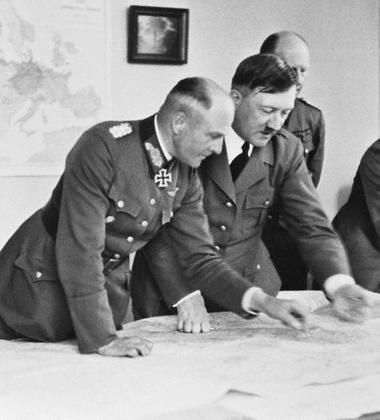
Hitler y Brauchitsch. Cuando el Alto Mando conoce de las intenciones de abrir un segundo en el este antes de la liquidación de Gran Bretaña, la mayoría recela…

1) La concentración inicial de fuerzas propias (del oeste de Europa al este) necesitará de 4 a 6 semanas.
2) Objetivo de la operación: destrucción del Ejército Rojo o al menos ocupar un «colchón» de territorio suficiente para impedir la llegada de la aviación enemiga a los centros industriales de producción de armamento alemanes. Especial énfasis hace Hitler a la protección de los campos petrolíferos rumanos (una de sus escasas fuentes de carburantes). Del mismo modo, esta ocupación del territorio debe permitir a la Luftwaffe englobar en su radio de acción la industria europea soviética.
3) El objetivo político es la independencia de Ucrania y el establecimiento de una confederación de estados bálticos bajo dominio alemán.
4) Las fuerzas estimadas necesarias propias serían de 80 a 100 divisiones, mientras que la URSS dispone de 50-75 en la zona europea.

Los datos de los que disponen los alemanes sobre el orden de batalla soviético son realmente optimistas. El 29 de julio el general Erich Marcks es destinado temporalmente desde su puesto de jefe de estado mayor en el 18. Armee al OKH, Alto Mando del Ejército (Oberkommando des Heeres) para confeccionar el estudio de la campaña contra la URSS…

Continuar a la 2ª Parte

¡Adquiere la obra cronológica Barbarroja 03:00h en edición de coleccionista!


Comprar Ahora Button

Sigue también interesantes referencias en Twitter @Barbarroja0300h

-———————————————[English version]————–———————————

“BARBAROSSA’S” ORIGINS

1st PART:

cartel-red-army
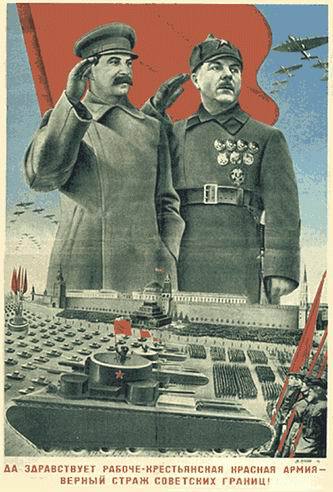
Mientras tanto la URSS es un gigante en pleno proceso de rearme y expansión. Las estimaciones alemanas de la capacidad militar de la URSS se demostraron muy deficientes.

On July 19th, 1940 Adolf Hitler addresses the Reichstag where it announces the chance to approach Great Britain in order to reach a peace accord. Poland, Denmark, Norway and France have fallen in swift campaigns. The Polish “question” that unleashed the war declaration of France firstly, and Great Britain secondly, is almost settled if not by Churchill’s reluctancy to come to any peace terms with Hitler’s Germany. In spite of being in military, social and political dire straits, Great Britain still counts on her powerful Royal Navy, the confidence of attract the USA to the war on her side and the chance to obtain Soviet assistance.

In this international scenario with half of Europe under the Reich’s control, 2 days later Hitler orders the Chief of the Armed Forces, Walter von Brauchitsch, a study over the Soviet “question” and to submit a campaign plan against the USSR. Brauchitsch is given by the Führer the following guidelines:

mapa-de-planeamiento-operaciones
Mapa referencia URSS. Los pantanos del Pripyat y los grandes ríos son factores cruciales del planeamiento de la invasión.

1) The initial troop assembly (from the West to the East) will take 4-6 weeks.

2) Objective of the Operation: destruction of the RKKA (Red Army) or at least occupy a buffer zone good enough to make any air raids over Germany’s armaments industrial centres impossible. Hitler emphazises the importance of protecting the Romanian oil plants (one of his scarce petrol supply sources). The Luftwaffe at the same time must lay under its action radius the Soviet European industry.

3) The political objective is the independance of Ukraine and a confederation of Baltic states under German control.

4) The own force estimate would be of 80-100 divisions. The USSR would have 50-75 in their European districts.

The intelligence data regarding the Soviet order of battle is way optimistic. On the 29th of July General Erich Marcks is temporarily assigned to the OKH, Army High Command (Oberkommando des Heeres) from his post as the 18th Army Chief of Staff…

Part 2 next…

Follow interesting posts in Twitter @Barbarroja0300h


Volver

Se ha enviado tu mensaje

Advertencia
Advertencia
Advertencia

¡Aviso!