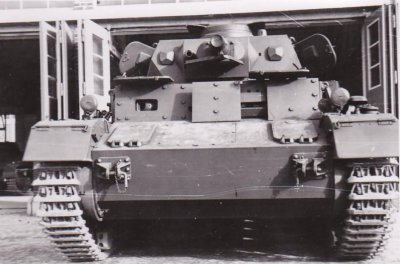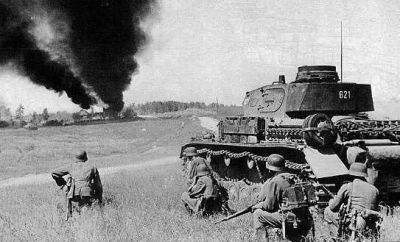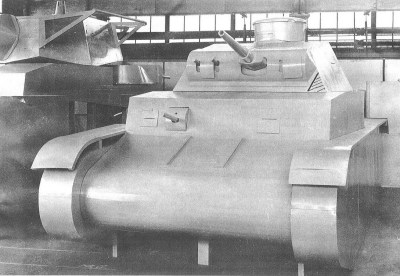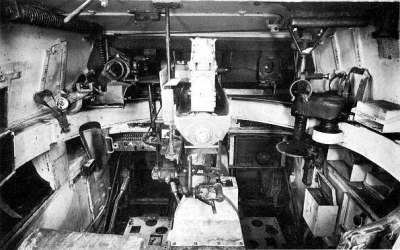
Panzerkampfwagen III

[English version at the end]


MÁQUINAS DE BARBARROJA


¡Ya a la venta Barbarroja 03:00 hrs!


CARRO DE COMBATE ALEMÁN MEDIO PANZERKAMPFWAGEN III (Sd.Kfz. 141)


pz iii pueblo color
En la variante PzKpfw. III Ausf. F se acopla un cajón tras la torreta, similar al del Panzer IV. En la foto este está montando un cañón Kwk 38 de 5,0 cm.

Debido a las estrictas prohibiciones impuestas por los aliados en el Tratado de Versalles (1919) tras la finalización de la Primera Guerra Mundial, relativas a la cantidad de efectivos militares y tipo que a Alemania se le permitiría poseer, esta, a pesar de obviar los términos del mismo con el ascenso de Hitler al poder como nuevo canciller, no está en condiciones de fabricar un carro de combate medio en un tiempo razonable. La potencia derrotada en la Gran Guerra debe equipar a sus nacientes fuerzas acorazadas con blindados ligeros PzKpfw. I y II, que servirán en cierta manera de “banco de pruebas“ para la nueva industria armamentística y el entrenamiento de las dotaciones de este nuevo tipo de vehículos. Por ello los prototipos del Panzer III no estarán listos hasta 1936 y sólo cuando Daimler-Benz gane el concurso entre varias empresas. La firma iniciará su producción en serie en 1937. A diferencia de sus antecesores, novedosamente, incorpora una torreta de tres hombres, una tripulación de 5 con intercomunicadores eléctricos y radio. En comparación con los modelos soviéticos, el Panzer III es más avanzado. Los blindados del RKKA (Ejército Rojo) aún necesitan de una rígida estructura de disposición en batalla, que precisa de vehículos de mando con jefes de carro que deben manejar banderines de señales, para coordinar la maniobra en mitad del combate. El comandante de carro alemán, por el contrario, dispone de una cúpula con excelente óptica y es capaz de concentrar el fuego de toda su unidad en tiempo reducido contra un único objetivo. Este será uno de los secretos de la guerra relámpago de Adolf Hitler. El Panzer III es pues ideado como blindado capaz de enfrentarse a otros carros de combate, mientras que el Panzer IV, es concebido como blindado de apoyo a la infantería.

Diagrama vulnerabilidades
Diagrama de vulnerabilidad del Panzer III, según los manuales técnicos soviéticos

Las versiones (Ausführung) iniciales desde la Ausf. A a la Ausf. F van dotadas con un cañón de pequeño calibre KwK 36 de 3,7 cm. (estándar en la Wehrmacht). Su «pegada» es escasa, en especial contra los modelos  pesados de Stalin, los T-34 y los KV; con munición Panzergranate 40 y una velocidad de salida en la boca de 762 m/s, tan sólo pueden penetrar 29 mm. a 500 metros. No se mejora su potencia de fuego con un cañón KwK 38 L/42 de 5,0 cm. (PzKpfw. III Ausf. G y versiones anteriores mejoradas) hasta 1941. Con la munición anti-blindaje Panzergranate 39 y 685 m/s de velocidad de salida en la boca, este cañón mejora sensiblemente su poder de fuego y puede perforar 47 mm. de blindaje a 500 metros.

El chasis del PzKpfw. III será el elegido para la fabricación de los archifamosos carros de asalto StuG III (Sturmgeschütz III). Finalmente el Panzer III llega a tiempo de intervenir en Polonia (1939), Noruega (1940), Francia (1940), norte de África (1941) y URSS.

Al comienzo de la Operación Barbarroja el 22 de junio de 1941, este modelo en todas sus versiones (el más moderno es el Ausf. H) constituye el 30 % de todas las fuerzas acorazadas germanas y el carro más importante numéricamente de la campaña. Es el mejor blindado alemán en ese momento y lo seguirá siendo hasta 1943. Dispone de unas planchas de grosor máximo de 60 mm. y desarrolla una velocidad de 40 km/h. en carretera. Empero enseguida se comprobará que la munición perforante de 3,7 cm. es totalmente inefectiva contra los modernos T-34 y sobre todo contra los KV como arriba se indica. El cañón F-34 de 76,2 mm. del T-34 es superior a cualquiera de los germanos en 1941 y a distancias seguras de 1 kilómetro es capaz de batir a cualquier Panzer. El casco inclinado del carro soviético, a pesar de ser comparable en grosor con el del Panzer III Ausf. H, le ofrece una gran ventaja defensiva. Tan sólo los Panzer III dotados con el cañón de 5,0 cm. tienen alguna posibilidad a corta distancia con disparos de fortuna o por los sectores laterales o traseros donde el blindaje del T-34 tiene menos grosor. Para suerte de las tripulaciones de este Panzer, la mayor parte de sus oponentes son aún T-26 y modelos BT. Por todo ello y bajo la bien ejecutada doctrina acorazada de la guerra de movimiento, llegarán a las puertas de Moscú en diciembre de 1941…
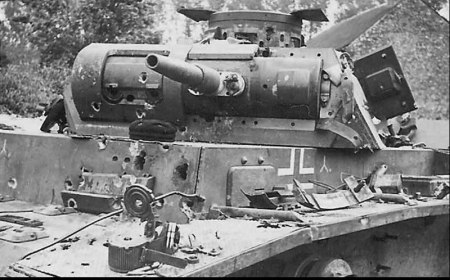
pz iii destruido
PzKpfw. III Ausf. E destruido mostrando numerosos impactos  de proyectiles de diferentes calibres en su sector delantero. El vehículo pertenece a la 2. Panzer Division, posiblemente durante la campaña de Francia.

¿Querrías conocer los detalles día a día de la Operación Barbarroja? Deja tu comentario abajo…

¡Adquiere la obra cronológica Barbarroja 03:00h en edición de coleccionista!


Comprar Ahora Button

Sigue interesantes referencias también en Twitter @barbarroja0300h


[English version]

BARBAROSSA’S MACHINES


GERMAN MEDIUM BATTLE TANK PANZERKAMPFWAGEN III (Sd. Kfz 141)
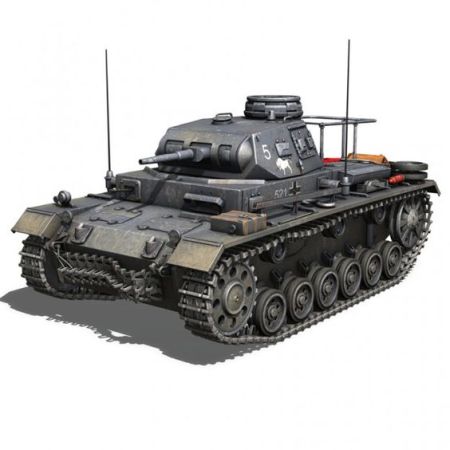
 

PANZERBEFEHLSWAGEN III
A command tank Panzerbefehlswagen III belonging to the 7th Armoured Regiment of the 10. Panzer Division (Lieutenant General Ferdinand Schaal). This division, one of Guderian’s 2. Panzergruppe, is fighting across Belarus in the first weeks of Operation «Barbarossa». [Unknown author].

Due to the dire constraints of the Treaty of Versailles (1919) dictated by the Allies after WWI, in regards of the number and type of forces Germany is allowed to field, the defeated Power is not in a position to develop any medium battle tank within a reasonable time. And this even though the terms will be  largely ignored after the election of Adolf Hitler as Chancellor. The only chance is to equip its new born armoured forces with light tanks, the PzKpfw. I’s and II’s. They will be the “benchmarks” for the inexperienced industry and just good enough to train the crews of these new vehicles, the Panzerwaffe.

The first prototypes won’t be ready until 1936 when Daimler-Benz wins the contest and produces the first series, the Panzerkampfwagen III Ausf. A, in 1937. As an innovation it is fitted with a three-man turret, a crew of 5 with electrical intercomms and radio. In contrast with the Soviet tanks, that still must rely on signal flags handled by command vehicles in order to coordinate the maneouver in the battlefield, the Panzer is more advanced. The German Panzer III commander can use a cuppola fitted with the latest optics and along with the use of radios is able to concentrate the fire of his whole unit onto a single target. This will be one of the key factors of Hitler’s Lightning War. The PzKpfw. III is as a matter of fact the Panzerwaffe‘s main battle tank, a tank destroyer, while the PzKpfw. IV is meant for infantry support.

The earlier versions (Ausführung) from the Ausf. A until the Ausf. F are fitted with a small 3,7 cm. KwK 36 gun (a Wehrmacht standard). This weapon has a modest «punch», especially against the Stalin’s heavies, the T-34’s and the KV‘s; with piercing ammo, Panzergranate 40, with an initial speed of 762 m/s, it can only penetrate 29 mm. of armour at 500 metres. The series family will not be enhanced with the more powerful 5,0 cm. KwK 38 L/42 gun (PzKpfw. III Ausf. G and earlier retrofitted variants) until 1941. With a higher calibre armour piercing ammo, Panzergranate 39, with an initial speed of 685 m/s., the Panzer III sensibly improves its «punch» and is able to penetrate 47 mm. at 500 metres.

pak 38 / kwk 38
5,0 cm. ammunition for the KwK 38/PaK 38. It is interesting to note the conical warhead in the Panzergranate 40 and 40/1 shells in order to enhance the penetration capabilities. The first shell from the right is the high-explosive type.

The chassis of the Panzer III will be chosen for the production of the famous assault gun StuG III (Sturmgeschütz III). Finally the long awaited PzKpfw. III will arrive in time to see combat in Poland (1939), Norway (1940), France (1940), North Africa (1941) and the USSR.

At Operation Barbarossa start on the 22nd of June 1941, this tank in all its variants (being the most modern the Ausf. H) makes 30% of the Panzerwaffe and the most numerous in the campaing. It is the best German tank at the moment and until 1943. Its hull is protected by up to 60 mm. and develops 40 km/h. on paved surfaces. Although its 3,7 cm. armour piercing projectiles will prove useless versus T-34’s and KV’s as aforementioned. The T-34 76.2 mm. F-34 cannon is better than any German one in 1941 and at comfortable stand-off distances of 1 kilometre is able to knock out any Panzer. The sloped hull of the Soviet, in spite of having the equivalent thickness of the Panzer III. Ausf. H, offers a greater defensive advantage. As explained above only those Panzer fitted with the 5,0 cm. gun will have a chance at short ranges, with critical hits or side or rear shots, where the T-34 armour is thinner. Luckily for the German crews, most of the Soviet tanks are T-26‘s and BT‘s. All in all, under the well coordinated Panzerwaffe mobile warfare doctrine, they will arrive to the gates of Moscow in December 1941…

Did you find this article interesting? Leave your comments below…

Follow other articles in Twitter @barbarroja0300h
BA-20

[English version at the end]

 MÁQUINAS DE BARBARROJA

¡Ya a la venta Barbarroja 03:00 hrs!

VEHÍCULO BLINDADO DE RUEDAS SOVIÉTICO BA-20 (Broneavtomobil-20)

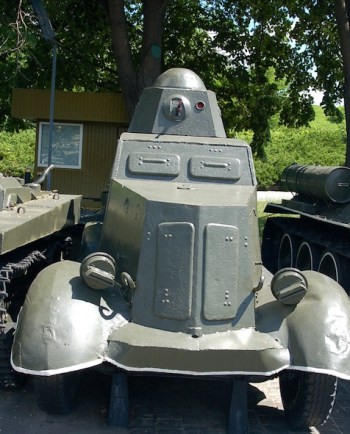
ba-20-museo-frontal
BA-20 en la actualidad.

Este automóvil acorazado responde a un requerimiento del RKKA (Ejército Rojo de Trabajadores y Campesinos) de 1934 para mejorar las características de conducción de los modelos en servicio en ese momento. Así para 1936 los primeros prototipos del BA-20 ya están listos para los ensayos y se ve que cumplen con casi todas las expectativas, dando una velocidad en carretera asombrosa de casi 100 km/h. Utilizan el chasis del GAZ-M1 (copia bajo licencia del camión norteamericano Ford) y su planta motriz de 4 cilindros de 50 C.V. Tras retrasos en la producción, finalmente en 1938 llega la versión final y mejorada que recibe la  denominación BA-20M. En comparación con los prototipos dispondrá de mayor coraza frontal y una torreta mejor protegida. Pesa 5,14 toneladas y está manejado por 3 hombres (comandante, ametrallador y conductor). Todo su armamento consiste en una única ametralladora DT de 7,62 mm. Con una coraza de sólo 6-15 mm. sólo aguantará los impactos de las armas ligeras de infantería.

Ya en julio de 1940 se han producido 295 vehículos, incluyendo 44 con una muy necesaria equipación de radio (BA-20U), algo aún poco común en el Ejército Rojo. Pero por limitaciones en componentes, muchos BA-20 entrarán en acción sin, por ejemplo, radios o neumáticos a prueba de impactos. La línea de producción continuará hasta 1942.

Cuando entra en servicio, el BA-20 es el principal modelo de vehículo blindado de ruedas de reconocimiento del Ejército Rojo, que pasa a equipar las brigadas de reconocimiento y cuerpos acorazados (Mekhanizirovannye Korpusy).

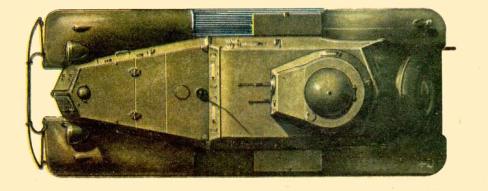
Vista en planta

Verá acción en el conflicto  de Khalkhin Gol en 1939, contra el Ejército Imperial Japonés, aunque no en la Guerra Civil Española (1936-39), a diferencia del BA-6/BA-10. Cuando Stalin invade el este de Polonia el 17 de septiembre de 1939, los BA-20 estarán presentes y también en la anexión de las repúblicas bálticas. En el invierno de 1939-40 también intervendrá en la llamada Guerra de Invierno contra Finlandia, país cuyas fuerzas se harán con un buen número de ellos y los pondrá en servicio.

Al inicio de la Operación Barbarroja existen en inventario más de 1.400 unidades, cuya misión es apoyar a las unidades de carros de combate en tareas de reconocimiento, enlace, municionamiento y otras. La Wehrmacht utilizará los capturados con la denominación Schienenpanzerwagen PzSp Wg202(r) en misiones de retaguardia, vigilancia policial y otras. La producción de todas las variantes llegará a las 4.069 unidades.

¿Querrías conocer los detalles día a día de la Operación Barbarroja? Deja tu comentario abajo…

¡Adquiere la obra cronológica Barbarroja 03:00h en edición de coleccionista!


Comprar Ahora Button

Sigue interesantes referencias también en Twitter @barbarroja0300h


[English version]

BARBAROSSA’S MACHINES

SOVIET ARMOURED SCOUT CAR BA-20 (Broneavtomobil-20)

ba-20 brest litovski
This BA-20 belonging to the 29th Armoured Brigade is in Brest Litovski in 1939. Still the Hitler-Stalin pact is current. This particular vehicle is a command unit fitted with a radio as the rectangular aerial can be seen surrounding the whole structure.

This scout car represents the response to a 1934 RKKA (Red Army of Workers and Peasants) requirement to enhance the performance of older existing models in service. Thus, in 1936 the first prototypes will be ready for testing and will prove to fulfill almost all expectations. On paved surfaces, impressively, it will be capable of reaching almost 100 Km/h. It is based on the GAZ-M1 (licence copy of the Northamerican Ford truck) chassis and its 50 H.P. 4-cylinder powerplant. After delays in the production lines, finally in 1938 the first series model will be delivered: it is the BA-20M. Compared to its prototypes, this will enjoy a thicker frontal hull and a better protected turret. It weighs 5.14 tons and has a crew of 3 (commander, gunner and driver). All its weaponry consists of a single 7.62 mm. DT machine gun. Its thin armour plate of 4-6 mm. will only be resistant against infantry light arms.

By July 1940, 295 vehicles will have been delivered, including 44 (BA-20U) with a much needed radio set (not very common in the Soviet vehicles of its time). Nevertheless, due to factory shortages in certain components, many BA-20’s will see combat without, for instance, radios or bulletproof wheels. Production will be discontinued by 1942.

When it enters in the RKKA service, the BA-20 is the main armoured automobile fielded in reconnaissance brigades and mechanized corps (Mekhanizirovannye Korpusy).

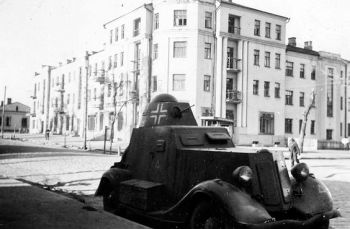
ba-20 captured
A captured BA-20 scout car. It carries now the «Balkankreuz» on both sides of the turret as it has been put into new service with the German forces.

It will participate in the Khalkhin Gol conflict against the Imperial Japanese Army forces in 1939, but not in the Spanish Civil War (1936-39), unlike its counterpart, the BA-6/BA-10). When Stalin invades Eastern Poland on the 17th of September 1939, the BA-20‘s will take part and also in the annexation of the Baltic Republics. In the 1939-40 winter they will fight against the Finns in the so called Winter War. The latter will capture a good number of them and will manage to put them back to their own service.

At Operation Barbarossa start there are already +1,400 units in the Soviet inventory, that will support the main tank forces in the role of reconnaissance, liaison, resupply and other tasks…The Wehrmacht will use the captured ones, redesigned as Schienenpanzerwagen PzSp Wg202(r), in rearguard duties for police forces. Total deliveries of all variants will reach 4,069 units.

Did you find this article interesting? Leave your comments below…

Follow other articles in Twitter @barbarroja0300h
Panzerkampfwagen IV

[English version at the end]

 MÁQUINAS DE BARBARROJA

¡Ya a la venta Barbarroja 03:00 hrs!

CARRO DE COMBATE ALEMÁN MEDIO PANZERKAMPFWAGEN IV (Sd.Kfz. 161)

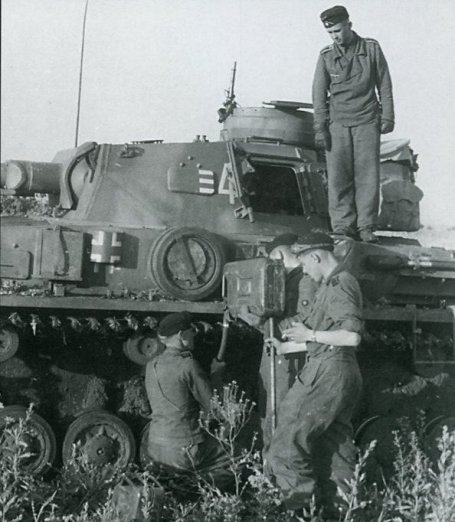
Pz iv repostando
La tripulación de este PzKpfw. IV Ausf. E en plenas labores de repostaje y mantenimiento antes de entrar en batalla.

Posiblemente el PzKpfw IV ha pasado a la historia como el icono más representativo de las fuerzas acorazadas germanas en la Segunda Guerra Mundial. Es sin duda el caballo de batalla de las Panzerdivisionen. Ya en la segunda mitad de 1934  (un año y medio tras la ascensión de HItler al poder) la Dirección de Armamentos de Alemania lanza a concurso el diseño de un prototipo de no más de 24 toneladas al que acuden firmas como Rheinmetall y Krupp, en primera instancia y luego, Daimler-Benz y M.A.N. Tras 18 meses de estudio y desarrollo, se concluye que el modelo de Krupp, denominado VK 2001 (K), es el más idóneo. Comienza a producirse en 1936 con un cañón “corto” para apoyo de infantería, ya con la denominación Panzerkampfwagen IV. Destaca por su amplio casco y torreta, fácil mantenimiento y resistencia. Al final del conflicto mundial superará al PzKpfw. III en cantidad de vehículos fabricados, totalizando 8.600 unidades.

El arma elegida para el nuevo blindado, el cañón Kampfwagenkanone 37 L/24 “corto” de 7,5 cm. está ideado para allanar el camino a la infantería contra posiciones fortificadas, pero no es especialmente apto para la lucha contra carro. Para la primera tarea emplea munición de alto explosivo. No obstante se les surtirá con un tipo de proyectil adicional perforante capaz de penetrar 43 mm. de blindaje a 700 metros, adecuado en los años 30, pero que demostrará sus limitaciones ya iniciada la contienda mundial.

Se diseñan muchas variantes (Ausführung) , desde la Ausf. A hasta la Ausf. J y multitud de modificaciones para roles diversos usando su chasis. El PzKpfw. Ausf. A tiene una coraza frontal de sólo 15 mm. pero en las versiones posteriores será de 30 mm. y en el Ausf. E, el primero de gran producción en serie, se dispondrá de una coraza frontal engrosada hasta los 50 mm. Pero el gran salto cualitativo se dará con la llegada del Ausf. F2. Tras las primeras experiencias de la campaña rusa, se le instalará un nuevo cañón “largo”, el  KwK 40 L/43 de 7,5 cm., con la nada desdeñable capacidad de penetración  de 77 mm. de coraza a 1.850 metros. Este es el armamento adecuado contra los modelos pesados soviéticos. La planta motriz está diseñada por la firma Maybach, que dependiendo de la variante ronda los 230-300 C.V., lo que le confiere una velocidad en carretera de 38-42 km/h.

pz iv ausf e
PzKpfw. Ausf.E es la variante más numerosa en participar en la campaña de invasión de la URSS.

Pero al comienzo de la Operación Barbarroja el PzKpfw IV Ausf. E es aún la variante más numerosa en pisar suelo soviético. Aún así, en todas sus versiones, constituyen sólo el 10% del parque acorazado de Adolf Hitler. Como ejemplo, en el 3. Panzergruppe del general Hoth (Grupo de Ejércitos «Centro»), de un total de 1.048 blindados en plantilla en la víspera de la Operación Barbarroja, sólo 121 son PzKpfw. IV (gran contraste con los 507 PzKpfw 38(t)). Todos ellos son de cañón “corto”, que contra los carros de combate ligeros BT y T-26 se las arreglan bien. En el inventario de las unidades blindadas alemanas de junio de 1941, es el carro de combate más moderno y pesado de que se dispone. No obstante quedarán en inferioridad especialmente en la Operación Taifun (conquista de Moscú) cuando hagan frente a más y más asaltos masivos de T-34 y KV-1.

pz iv fuego cobertura
Este PzKpfw. IV ofrece fuego de cobertura a la infantería contra un objetivo no blindado. En esta labor el cañón «corto» de 7,5 cm. demuestra su máxima eficacia.

La principal ventaja de diseño con respecto a los tipos soviéticos, es su dotación de cinco hombres (uno o dos más tripulantes que sus adversarios): jefe de carro, artillero, cargador, radio-ametrallador y conductor. Esto ya de por sí, comparado con los cuatro del T-34, le posibilita efectuar una cadencia superior de tiro. Se estima que como media pueden realizar tres disparos por cada uno del T-34. No obstante, como es norma en los carros de combate germanos, el ancho de cadena, que en el caso del PzKpfw. IV es de 360 mm. (a partir del Ausf. F será de 400 mm.), es demasiado estrecho para el difícil terreno de la Unión Soviética y su casi inexistente red viaria, en especial cuando llega la estación lluvias.

¿Querrías conocer los detalles de esta y las demas operaciones?

¡Adquiere la obra cronológica Barbarroja 03:00h en edición de coleccionista!


Comprar Ahora Button

Sigue interesantes referencias también en Twitter @barbarroja0300h

Deja tu comentario abajo…


[English version]

BARBAROSSA’S MACHINES


GERMAN MEDIUM BATTLE TANK PANZERKAMPFWAGEN IV (Sd Kfz 161)


vk2001k
The Krupp design wins the contest for the development of a 24-ton armoured vehicle with the designation VK 2001 (K). Its initial KwK37 L/24 «short» 7.5 cm cannon will be a constant in the family saga until the Ausf. F2.

Possibly the PzKpfw. IV has become the most iconic symbol of the German armoured forces in World War II. It is undoubtedly the Panzerdivisionen workhorse. Already in 1934 (1.5 years after Hitler’s election as Сhancelor) the German Armaments Direction lauches a request to the industry for a 24-ton battle vehicle. Firms like Rheinmetall and Krupp will enter in the contest, followed shortly by Daimler-Benz and M.A.N. After 18 months of design and development the Krupp’s prototype, the VK 2001 (K),  is deemed as the most suitable one. Its production is therefore started in 1936, fitted with a «short» infantry support cannon with the new standard designation of Panzerkampfwagen IV. Its ample hull and turret are appreciated as well as its manteinability and durability. At the end of the world war it will surpass the Pzkpfw. III production, with 8,600 units delivered.

The 7.5 cm. “short” Kampfwagenkanone 37 L/24 is deviced to support the infantry against fortified battlefield positions, but it is not fully ideal for anti-tank purposes. For the former task uses HE (high explosive) ammo. However for the latter,  they are additionally supplied with armour piercing shells capable of penetrating 43 mm. at 700 metres. This, enough for the 30’s standards, will prove inadequate once the new world conflict starts.

pz iv ausf a 1938
PzKpfw. Ausf.A in 1938. Still very lightly armoured with a maximum of 15 mm. This will be improved in the next variants.

The type will see many variants (Ausführung) produced, from the Ausf. A to the Ausf. J and many sub-variants using its chassis. The PzKpfw. IV Ausf. A is lighly armoured with a 15 mm. plate, but later developments will see their armour thickened to 30 mm. The Ausf. E, the first mass produced series, will enjoy a frontal hull of 50 mm. But the greatest leap in the saga will come with the Ausf. F2, learning from the Russian battlefield, with its newer “long” barrel 7.5 cm. KwK 40 L/43 gun. It is capable to pierce 77 mm. at 6.000 feet! This is the adequate “punch” against the Soviet heavies. The powerplant is produced by Maybach, that will develop 230-300 H.P. regarding the different types. The speed on hardened surfaces ranges 38-42 km/h.

But at Barbarossa start the PzKpfw. IV Ausf. E is the most numerous type to march into Soviet soil. In spite of this and with all versions, they are just 10% of Hitler’s tanks. As an example, in the 3. Panzergruppe of General Hoth (Army Group «Centre») out of 1,048 tanks on the eve of Operation Barbarossa, just 121 are PzKpfw. IV (in great contrast with 507 PzKpfw 38(t)). All of them are fitted with the aforementioned “short” gun, capable against the BT’s and T-26’s. But when Operation Taifun commences (capture of Moscow) it will be outgunned by massive T-34 and KV-1 assaults.

pziv turret
The picture shows the commander’s perspective inside the turret of this PzKpfw. IV. To his left sits the gunner, while on the right sits the loader. In the far bottom left operates de driver and opposite him the radio-machine gunner.

Its main advantage in relation to the Soviet types resides in its 5-man crew (1 or 2 more than its adversaries): Tank commander, gunner, loader, machine-gunner/radio and driver. If we compare this fact with the 4-crew T-34’s gives it the edge of a superior fire rate. As an average a trained crew can fire 3 times per every round of a T-34. Nevertheless, as a standard in all German tanks, the track width, in the case of the PzKpfw. IV of 360 mm. (after the Ausf. F, 400 mm.), it proves too narrow for the Soviet Union unprepared terrain, especially due to its almost non-existant road network in the rainy season.

Did you find this article interesting? Leave your comments below…

Follow other articles in Twitter @barbarroja0300h

Heinkel He-111

[English version at the end]

 MÁQUINAS DE BARBARROJA

¡Ya a la venta Barbarroja 03:00 hrs!

BOMBARDERO BIMOTOR MEDIO HEINKEL He-111

lofte 7 bomb sight
Diagrama de la sección de morro del Heinkel He-111. La poco usual carlinga acristalada del bimotor es capaz de alojar al piloto y al bombardero, quien dispone de un instrumento de precisión Lofte 7 para la puntería en las misiones de bombardeo. La disposición de la carga bélica en la bodega de bombas es vertical como se muestra en el gráfico.


Bimotor diseñado en los años 30 como “teórico” transporte civil, pero con intención de desarrollar un bombardero medio veloz para la naciente Aviación Militar  de Adolf Hitler. El primer prototipo, el Heinkel He-111 V1 deriva del modelo existente Heinkel He-70, al que se incorporan dos plantas motrices.  Su primer vuelo de pruebas lo efectúa el 24 de febrero de 1935. La variante V3 (tercer prototipo) será por fin claramente una versión con capacidad militar. A finales de 1936 empieza ya  a entregarse la versión He-111B a las filas de la Luftwaffe, concretamente al 1er Escuadrón de Bombardeo del Ala núm. 154 (1./KG 154). Entretanto el modelo He-111C-0 se integra en la flota de aviones civiles de Lufthansa como aparato de línea para 10 pasajeros.

Participa en la Guerra Civil Española a partir de febrero de 1937 en dos escuadrillas de la Legión Cóndor  (Kampfgruppe K/88), donde recibe el sobrenombre de “Pedro”. Casi un centenar de ellos recibirá su bautismo de fuego en la contienda civil hispana. Volará hasta el mismo final de la Segunda Guerra Mundial en una gran variedad de roles y versiones, por ejemplo como torpedero e incluso como avión de transporte. Numerosos He-111 se usarán en este último rol durante los trágicos sucesos del cerco de Stalingrado (1942-43) donde encajarán pérdidas gravosas.

he-111 en vuelo vista inferior
Vista inferior de un He-111 en vuelo. Se aprecian especialmente los dos motores (versión H-3) Junkers Jumo 211D-2 de 12 cilindros en V, que le confieren una velocidad máxima de 415 km/h.

Es el tipo de bombardero más común de la Luftwaffe a comienzos del gran conflicto mundial, haciéndose especialmente famoso durante la Batalla de Inglaterra (1940). La producción de esta leyenda de la Aviación se continuará acabada la Segunda Guerra Mundial en España, en su variante Heinkel He-111H-16, producida en las factorías de CASA (Construcciones Aeronáuticas S.A.) bajo la denominación CASA 2.111. En la actualidad aún existe un número de la versión española volando en exhibiciones aéreas internacionales con escarapelas de la Luftwaffe. El Heinkel es un modelo robusto, aunque poco a poco adolecerá según avance la guerra de un escaso fuego defensivo, que obligará a las variantes posteriores a portar más y más ametralladoras, aumentando así su peso y deteriorando sus ágiles prestaciones de origen.

Al comienzo de la Operación Barbarroja aún varias alas de bombardeo están equipadas con este modelo, a pesar de la introducción del más avanzado Junkers Ju-88. Son las unidades que siguen:

2 (F)/Ob.dL. (Luonetjärvi, Finlandia. 1. Luftflotte de Alfred Keller): 1 He-111 (reconocimiento estratégico)

KG 53   (Radom, Grojec y Radzyn, Polonia. 2. Luftflotte de Albert Kesselring):124 He-111

KG 27 (Focsani y Zilistea, Rumanía. 4. Luftflotte de Alexander Löhr): 124 He-111

KG 55 (Labunie y Zamojskie, Polonia. 4. Luftflotte de Alexander Löhr): 124 He-111

La misión prioritaria de los primeros días de la campaña de invasión de la Unión Soviética es la destrucción del poder aéreo del

artillero de proa
Detalle del puesto del artillero de proa en posición de tendido junto a su ametralladora Rheinmetall MG 15 de 7,92 mm.

adversario en el suelo. Varias docenas de aeródromos de la Voenno-Vozdushnye Sily (VVS-Fuerza Aérea Soviética)  son atacados exactamente a las 03:00 horas del 22 de junio de 1941. Los bimotores Heinkel son pieza fundamental en esta tarea. En una de las primeras misiones de ataques a pistas de la aviación adversaria, uno de los  pilotos de Heinkel describe: “La tierra bajo nosotros está oscurecida por la neblina pero los objetivos son lo suficientemente visibles. Estoy sorprendido de que no hayamos encontrado reacción alguna. De este modo sorprendemos bien a los de abajo. Lanzamos los “pepinos”.  Columnas de humo y fuego, surtidores de tierra y polvo, mezclados con cascotes vuelan hacia el cielo…Entonces hay un grito de pánico en la radio ¡Cazas detrás! Nuestras ametralladoras tabletean. La formación se compacta. Naturalmente ofrecemos un gran blanco a los rusos, pero nuestro fuego defensivo es más concentrado. Balas trazadoras de veintisiete aviones vuelan hacia los rusos, quienes inmediatamente pican para desaparecer.”.

En julio de 1941 la flota de Heinkel He-111 junto con los Junkers Ju-88A y los Dornier Do-17Z participan en la campaña de bombardeo “estratégico» contra Moscú, pero los resultados después de numerosas misiones distan de igualar la contundencia que los bombarderos cuatrimotores británicos y estadounidenses conseguirán sobre el territorio del III Reich. Al fin y al cabo, como buen exponente de la Luftwaffe, nunca fue concebido el Heinkel He-111 como aparato de alcance estratégico.

¿Querrías conocer los detalles de esta y las demas operaciones?

¡Adquiere la obra cronológica Barbarroja 03:00h en edición de coleccionista!


Comprar Ahora Button

Deja tu comentario abajo y síguenos haciendo click en la opción al final de la página


[English version]

BARBAROSSA’S MACHINES


MEDIUM TWIN ENGINE BOMBER HEINKEL He-111


He-111 instrument panel
Beautiful shot of the Heinkel He-111 instrument panel nowadays. Its unusual fully glazed cockpit and upperhead panel is fully characteristic. The pilot seats on the left hand side while the bombardier/nose-gunner lays on the right.

It is a twin-engine airplane designed in the 30’s to fulfill the needs of a «civilian transport», but with the intention to develop a fast medium bomber for the new born Hitler’s Military Aviation. The first prototype, the Heinkel He-111 V1, derives from the already existant Heinkel He-70. It will be fitted with 2 powerplants. Its maiden flight takes place on the 23rd of February 1935. The third of those, V3, will be at last specifically a military design. In 1936 the series  He-111B is delivered to the first Luftwaffe squadron, the 1./KG 154 (1st Squadron/ 154th Bomber Wing). In the meantime, the full civilian He-111C-0 joins the Lufthansa fleet as a 10 seat passenger airliner.

It will see action in the Spanish Civil War after February 1937, fielded in 2 Legion Condor squadrons (Kampfgruppe K/88), where it will be known as “Pedro”. Almost a hundred Heinkel machines will receive their baptism of fire in the Spanish skies. It will fly until the very end of WWII in a wide variety of roles, even as torpedo bomber or as transport aircraft. A large number of them will be lost serving as cargo during the dramatic events of the encirclement of Stalingrad (1942-43).

he-111 in action over russia
An I-16 «Ishak»,  guns blazing, attacking a He-111. A dramatized scene during the frantic months of Operation «Barbarossa». [Unknown artist]

It is the most common bomber in the Luftwaffe inventory at the beginning of the greatest world conflict and possibly it will become most famous during the Battle of Britain (1940). The production of this Aviation Legend will continue beyond WWII in Spain after its version Heinkel He-111H-16 in the CASA factories (Construcciones Aeronáutucas S.A.), this time named CASA 2.111. Even today a number of these CASA’s can be seen participating in international airplane shows in German colours and markings. The Heinkel He-111 is a sturdy airplane, although throughout the war will suffer relentlessly from lack of an adequate defensive fire; even though every variant will be fitted with more and more machine guns, increasing the weight and hampering its initial performance.

During Operation Barbarossa still several Kampfgruppen (Bomber groups) are equipped with the twin-engine Heinkel in spite of the introduction of the most modern Junkers Ju-88. The flying units are as listed:

2 (F)/Ob.dL. (Luonetjärvi, Finland. 1. Luftflotte  Alfred Keller): 1 He-111 (long-range reconnaissance)

KG 53   (Radom, Grojec and Radzyn, Poland. 2. Luftflotte Albert Kesselring):124 He-111

KG 27 (Focsani and Zilistea, Romania. 4. Luftflotte Alexander Löhr): 124 He-111

KG 55 (Labunie and Zamojskie, Poland. 4. Luftflotte Alexander Löhr): 124 He-111

He-111 preflight
The so-called «black men» (Luftwaffe mechanics) remove the Heinkel He-111 engine covers for a new mission.

The primary mission of the Luftwaffe during the first days of the campaing against the Soviet Union is the destruction of the adversary’s air power on the ground. Several dozen VVS (Voenno-Vozdushnye Sily-Air Force) aerodromes are attacked exactly at 03:00 hours on the 22nd of June 1941. The twin-engine Heinkels are part of the job. A German pilot remembers: “The land underneath is obscured by the mist, but our targets are clear enough. I am surprised that we did not encounter any enemy reaction. This way we are indeed surprising them down there. We release the bombs. Columns of smoke and fire, earth and dust, amidst debris fly towards the sky…Then someone screams over the R/T “Fighters behind!”. Our machine guns rattle. The flight formation tightens. This way of course we offer a bigger target for the Russians but at the same time our defensive fire is more concentrated. Tracer bullets from 27 aircraft streak towards the Russians, who in no time dive and disappear”.

In July’ 41 the Heinkel will participate in a “strategic bombing campaign” against Moscow, along with other models in the German inventory. However the results after many missions fall way short of becoming as decisive as the four-engine British and US bombers will achieve against the Reich‘s territory. One must not forget, that even as a good creation for the Luftwaffe, it was never thought to become a strategic long range bomber.

Did you find this article interesting? Leave your comments below and follow us clicking on «SEGUIR» at the end of the page

Kliment Voroshilov KV-1

[English version at the end]

 MÀQUINAS DE BARBARROJA

¡Ya a la venta Barbarroja 03:00 hrs!


CARRO DE COMBATE PESADO KLIM VOROSHILOV KV-1

kv-1-museo-fas-rusia
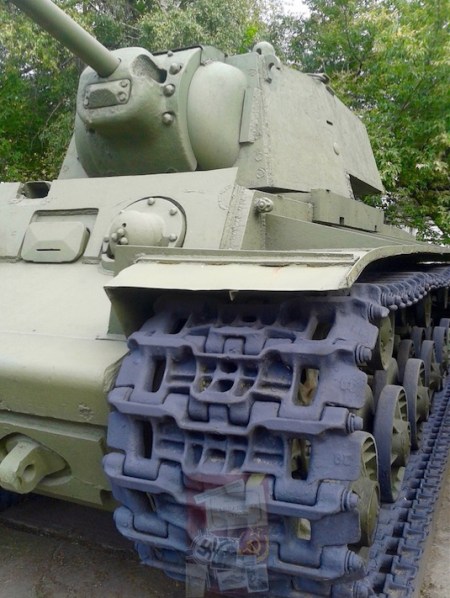
Un KV-1 en la actualidad en el museo de las Fuerzas Armadas de la Federación Rusa. Se puede apreciar la gran solidez del vehículo y sus anchas cadenas para sortear terrenos no preparados.

Obedece al concepto doctrinal soviético de operaciones en profundidad. Desarrollada en los años 20 esta doctrina meramente ofensiva, necesita de vehículos suficientemente resistentes capaces de romper el frente enemigo y penetrar incólumes en el dispositivo adversario.  Por añadidura se requieren carros rápidos (modelos BT) y vehículos de reconocimiento. Este grupo de blindados pesados, a veces llamados carros de “asedio”, deben ser capaces de aguantar los impactos de calibres contracarro. El carro de combate de 5 torretas T-35 es el primero que sigue esta filosofía. Se suceden otros prototipos, a destacar el SMK y el T-100 desarrollados en la fábrica Kirov de Leningrado (LKZ<>Leningradskom Kirovskom Zavode). Una modificación del primero con una sóla torreta será el que reciba propia denominación como KV-1.

El KV adopta el nombre del Comisario de defensa del Pueblo, Kliment (Klim) Voroshilov, y recibe el visto bueno de Stalin para su producción. Algunos modelos de preserie son usados en la Guerra de Invierno contra Finlandia satisfactoriamente (1939-40). De hecho no sólo el KV participa sino también prototipos del SMK y el T-100. En febrero de 1940 comienza la producción en serie en la fábrica mencionada de Leningrado y pronto en la fábrica de tractores de Chelyabinsk, más allá de los Urales. El primer modelo se denomina KV-1 mod. 39.

Es un impresionante blindado de 45 toneladas y 75 mm. de coraza en su parte más protegida, cuyo principal defecto reside en que adolece de un buen sistema de transmisión para mover tamaña masa. Otra de sus deficiencias es su escasa visibilidad a través de escotillas estrechas. El modelo 39 porta un cañón “corto” L-11 de 76,2 mm. Versiones posteriores a finales de 1940 portarán el F-32 capaz de perforar 66 mm. de coraza a 500 metros (KV-1 mod. 1940). Una vez de comienzo la campaña de invasión de Hitler de la URSS el 22 de junio de 1941, abrirán fuego a 1.000 metros con efectividad contra cualquier carro germano. El armamento principal está complementado por 3 ametralladoras DT-29 de 7,62 mm. Una de ellas cubre el arco trasero desde la parte posterior de la torreta.

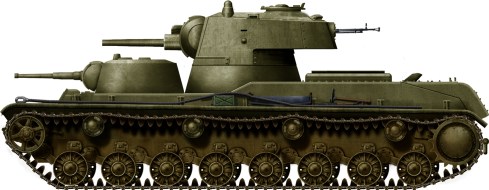
smk precursor del KV-1
El «Carro de Combate de Asedio» SMK. Se ve la similitud con el KV-1, su desarrollo posterior de una sola torreta.

La planta motriz se basa en el motor diesel de 12 cilindros en V (V-2k) capaz de desarrolar 600 C.V. Su máxima velocidad en carretera es de 34 Km/h. Algunos modelos KV-1 mod. 39 recibirán un refuerzo de coraza extra de 20 mm. adicionales. Pasarán así a denominarse KV-1E.

Durante la Operación Barbarroja el primer encuentro con los Panzer se produce en Raseiniai (Lituania) a poco más de 24 horas de la ruptura de hostilidades. La 6. Panzer Division del general Landgraf hace frente a estos súperpesados. La divisón germana, que está equipada con numerosos blindados ligeros de orígen checoslovaco Pz.Kpfw 35(t), al atardecer entran en Raseiniai y cruzan el río Dubissa para hacer frente a la 2ª División Acorazada con un número de gigantes KV. Es la unidad del General-maior Krivoshein ¡La sorpresa táctica de los carros KV es total! Pasan incólumes a través de las posiciones de infantería alemanas y machacan con sus anchas orugas piezas contracarro e incluso embisten a los “pequeños” Panzer. La cabeza de puente en la margen derecha del Dubissa debe ser abandonada, pues no hay manera de detener a estos monstruos de acero que siguen adelante como si nada. Acto seguido cruzan el puente sobre el río…Sólo la intervención de obuses de grueso calibre apuntando con sus bocas horizontalmente en tiro directo y, sobre todo, de piezas de 8,8 cm., consiguen posteriormente ralentizar la contraofensiva del la 2 TD (Tankovaya Divizya<>División Acorazada). Los combates duran todo este caluroso día de junio.

Para suerte de las tropas del Eje, “sólo” hay 639 KV en servicio el 22 de junio de 1941. Son prácticamente invulnerables al fuego de piezas contracarro (PaK 36 de 3,7 cm. y PaK 38 de 5,0 cm). Como se acaba de relatar, no son pocas las situaciones difíciles en las que los germanos deben emplearse a fondo con piezas de 8,8 cm. y obuses de 10,5 cm. con tiro directo para inmobilizarlos en zonas vulnerables, como la transmisión o el sector trasero, menos blindado. La mayoría de los KV verán acción en el sector septentrional del gigantesco «frente ruso», por el sencillo hecho de la localización geográfica de su fábrica de ensamblaje en Leningrado…


¿Querrías conocer los detalles de esta y las demas operaciones?

¡Adquiere la obra cronológica Barbarroja 03:00h en edición de coleccionista!


Comprar Ahora Button

Deja tu comentario abajo y síguenos haciendo click en la opción al final de la página


[English version]

BARBAROSSA’S MACHINES


HEAVY TANK KLIM VOROSHILOV KV-1


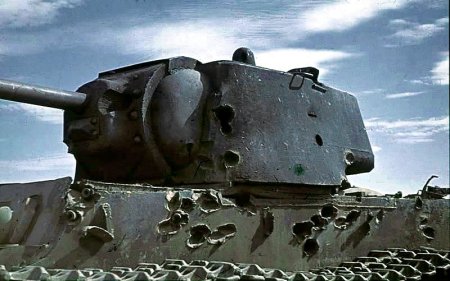
shot out kv-1
The picture depicts the punishment suffered by this KV-1 before being fully disabled. Most of the impacts on its hull bounced off.

This vehicle is developed under the Soviet doctrinal concept of “deep combat”. This doctrine is developed in the 20’s and needs armoured vehicles resistant enough to enemy fire, in order to breakthrough their lines and reach its rearguard areas unscathed. Additionally it calls for the use of fast machines (BT types) and reconnaissance types. This group of «heavies», sometimes referred to as “siege tanks” have to be able to withstand most antitank munitions. The 5-turret T-35 is the first to follow this concept. Other prototypes will follow, such as the SMK and the T-100, all of them produced in the Leningrad’s Kirov factory (LKZ<>Leningradskom Kirovskom Zavode). A further modification of the former will recibe its own designation as KV-1.

The KV takes the People’s Defense Commisar’s name, Kliment (Klim) Voroshilov. Its production receives green light by the very same Stalin. Some pre-series units are used during the so-called Winter War (1939-40) against Finland with good results. As a matter of fact, not only the KV, but the prototypes SMK and T-100 are tested too.  In February 1940 the series production starts in the aforementioned factory and soon in the Tractor Factory in Chelyabinsk beyond the Urals. The first model is called KV-1 mod. 1939.

It is a 45-ton tank with 75 mm. of armour in its thicker areas, but lacks a reliable transmission system to move such a mass. Another one of its flaws is a reduced crew visibility (narrow slits). The 1939 model is fitted with a “short” barrel 76,2 mm. L-11 cannon. At the end of 1940 it will be retrofitted with the F-34, capable of piercing 66 mm. of armour at 500 metres (KV-1 mod. 1940). On the battlefield often they open fire at ranges of 1,000 metres, being able to engage any German Panzer with success. The main weapon is complemented by 3 DT-29 7.62 mm. machine guns. One of them is covering the rear arc firing from the back of the turret.

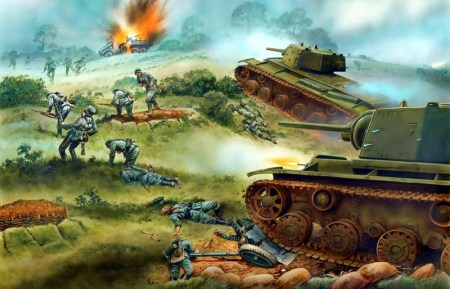
kv-1 raiseniai
A dramatized picture of the events at Raseiniai. The clash of the 6. Panzer Division and the 2nd Armoured Division KV-1’s.

Its powerplant is the V-2k 12 cylinder v-diesel engine, capable to develop 600 H.P. Maximum road speed 34 km/h. Some KV-1’s mod. 1939 will receive 20 mm. of extra armour and will be known as KV-1E.

During Operation Barbarossa the first encounter with these juggernauts takes place in Raseiniai (Lithuania) just 24 hours into the operation. Generalmajor Landgraf’s 6. Panzer Division is to face these heavy-weights. The German division, equipped with many Czech light Pz.Kpf. 35(t)’s enters in Raseiniai in the evening of the 23rd. Then they force Dubissa river and engage the 2 Tankovaya Divizya (2nd Armoured Division) which fields a number of KV‘s. General-maior Krivoshein is in command. The tactical surprise of the KV‘s is undescriptible! They breakthrough the German infantry lines unscathed and crush with their wide tracks the small anti-tank guns and even ram the relatively tiny Panzer. The right bank of the Dubissa river is swiftly abandoned by the Landser (nickname of the German soldier) before the unstoppable onslaught of the steel monsters. Right away the Russian armour cross the bridge onto the western side. Only the last minute intervention of high caliber howitzers and specially the famous 8,8 cm. gun manage to contain the tide of the 2nd Tankovaya Divizya. The combat continues through this hot day of June 1941.

To Germany’s relieve, there are “only” 639 KV’s in service on the 22nd of June 1941. They are virtually immune to any 3,7 cm. PaK 35/36 and 5,0 cm PaK 38 fire. As just related, in many difficult situations the Germans get away thanks to the use of 8,8 cm. cannons and howitzers in direct fire, to disable the transmission systems or to hit the rear sectors where they are less armoured. Most of the KV-1‘s will see action in the Northern sector of the huge «Russian front», just because of the geographical location of the assembly lines in Leningrad…


Did you find this article interesting? Leave your comments below and follow us clicking on «SEGUIR» at the end of the page

T-28

[English version at the end]

 MÁQUINAS DE BARBARROJA

¡Ya a la venta Barbarroja 03:00 hrs!


CARRO DE COMBATE MEDIO SOVIÉTICO T-28


t-28 museo moscu
T-28 hoy en día expuesto en el museo de la Fuerzas Armadas de la Federación Rusa (Moscú). El puesto del conductor se adivina tras la aspillera central entre las dos torretas auxiliares.

Siguiendo la doctrina ofensiva del RKKA (Ejército Rojo) su diseño se origina en 1931 como respuesta a la necesidad de un carro de combate de tres torretas capaz romper las líneas enemigas y combatir en profundidad. Antes de la Operación Barbarroja es uno de los símbolos del arma acorazada del RKKA (Ejército Rojo), apareciendo en innumerables documentales y noticieros de la época. En 1932 el primer prototipo sale de fábrica y en 1933, tras numerosos ensayos, es aceptado finalmente en la plantilla del RKKA. Su dotación es de 6 hombres, en donde el jefe de carro actúa a la vez como cargador y artillero del armamento principal. El blindaje no es especialmente grueso, montando en su glacis frontal una coraza de 30 mm. lo que no será gran defensa contra proyectiles de 5,0 o 7,5 cm de los Panzer a partir del verano de Barbarroja.

La torreta principal alberga un cañón de 76,2 mm KT-28 (en 1938 se le sustituye por el modelo L-10) más una ametralladora DT de 7,62 mm., mientras que las dos torretas adicionales albergan una ametralladora más cada una. El cañón KT-28 también arma a modelos ligeros BT-7A y pesados T-35. Esta es un arma que se empieza a producir en la fábrica de Kirov ya desde 1933. Algunos T-28 son probados, no obstante, con el modelo de cañón PS-3, un arma con mejor balística que el KT y por lo tanto con mejor poder de penetración.  También, y curiosamente, en 1939 el modelo de cañón F-34 (que montará el archifamoso T-34) será ensayado en los T-28.

kt-28 gun
Diagrama del cañón KT-28 normalizado en su alojamiento en la torreta principal. Nótese la ametralladora trasera DT de 7,62 mm. El monetaje de armamento defensivo trasero es muy común en los vehículos soviéticos, no así en los del Eje.

Así pues está relativamente bien armado, aunque el mayor defecto del T-28 reside en su motor y delicado sistema de transmisión. No obstante a mediados de los años 30 se le considera el carro de combate medio más potente del mundo. Como tal toma parte en las operaciones de captura de Besarabia (oeste de Ucrania-Rumanía), la invasión del este de Polonia (17 de septiembre de 1939, por acuerdo secreto Hitler-Stalin) y la Guerra de Invierno 1939-40 contra Finlandia. Allí se les usa para batir los fortines finlandeses con fuego directo, pero su blindaje de 30 mm. no da muestras de ser lo suficientemente grueso contra la artillería contracarro del adversario y los soviéticos pierden numerosos T-28. Tras la experiencia finlandesa se decide incrementar el grosor de la coraza a 80 mm. en la parte frontal.

En Barbarroja la mayor ventaja del T-28 sigue residiendo en su potente cañón de 76,2 mm., capaz de enfrentarse a gran distancia contra los PzKpfw. III y IV (51 mm. de penetración a 1.000 metros). No obstante los modelos germanos son mucho más maniobrables y confiables. Disponen de radios y una excelente doctrina de coordinación de fuegos entre varias armas incluidas la aviación. Los soviéticos disponen en junio de 1941 de 481 unidades, aunque listas para el combate solamente unas 200.

En la mañana de Barbarroja, las vanguardias acorazadas del general Hermann Hoth (3. Panzergruppe) se acercan a las aguas del río Niemen dispuestos a capturar el puente de Alitus. Bajo acoso de la Luftwaffe la 5ª División Acorazada del general Kurkin pasa a la contraofensiva. 24 T-28 dan fuego de cobertura a un número de veloces BT-7 y frenan a los Panzer durante unas horas. No obstante la llegada de elementos de otra división blindada germana, con fuerte apoyo aéreo, obliga a los soviéticos a retirarse en la mañana del 23 en dirección a Vilnius. Hoth fuerza el Niemen. 16 T-28 quedan destruidos y el resto son abandonados por averías serias. Así, para el verano de 1941, la mayor parte de los T-28 habrán sido destruidos o abandonados por fallos técnicos…


¿Querrías conocer los detalles día a día de la Operación Barbarroja? Comenta abajo y haz click en seguir para recibir en tu correo los últimos artículos publicados

¡Adquiere la obra cronológica Barbarroja 03:00h en edición de coleccionista!


Comprar Ahora Button

Sigue interesantes referencias también en Twitter @barbarroja0300h


[English version]

BARBAROSSA’S MACHINES


SOVIET MEDIUM TANK T-28


t-28 forest
T-28 in a forest. The close up clearly shows the 2xDT 7.62 mm. machine guns fitted in the auxiliary turrets. Many T-28’s were lost due to mechanical breakdowns in engine and transmission system.

Following the RKKA‘s (Red Army) offensive doctrine the development of this medium battle tank starts in 1931. It is the answer for a request for a «deep penetration» tank, capable of breaking through enemy lines. It is a three-turret tank design. It becomes before Operation Barbarossa one of the icons of the Soviet armoured arm, being presented in numerous newsreels and documentaries. In 1932 the first T-28 prototype rolls out from factory and after extensive testing it will be eventually accepted in the ranks of the RKKA in 1933. It is crewed by 6 men, where the commander must perform additional tasks as loader and gunner of the main gun. It is not specially heavily armoured, being the frontal hull 30 mm. thick, which won’t be sufficient against Panzer 5.0 and 7.5 cm. projectiles during the Barbarossa summer.

Its main turret will be initially fitted with a powerful 76.2 mm. KT-18 cannon (replaced in 1938 by the enhanced L-10) plus a 7.62 mm. DT machine gun, while the two auxiliary turrets will lodge only one DT machine gun each. The KT-28 is fitted in the light BT-7A’s and heavy T-35’s as well. This weapon is produced since 1933 in the Kirov factory. Some T-28’s are tested with a better gun, though, the PS-3; a cannon with enhanced ballistics and better penetration. Curiously enough the F-34 gun type (also fitting the iconic T-34) will be tried on T-28’s.

It is well armed by the 1930’s standards but it will suffer from never ending engine and transmission gear problems. However, at its time it is considered the best medium tank in the world. It takes part in combat during the operations of the capture of Bessarabia (Western Ukraine-Romania), the invasion of Eastern Poland on the 17th of September 1939 (secretly agreed between Stalin and Hitler) and during the Winter War 1939-40 against the Finns. In this last scenario it is used to blast Finn fortifications with direct fire, but at the same time, being exposed themselves to effective antitank fire, many T-28’s are lost (its 30 mm. frontal armour proves not thick enough). As lessons learned, the Soviets decide to add extra armour (80 mm. in the frontal sector).

t-28 crew
Interesting front view depicting 5 of its 6 crew members.

At Barbarossa start its main advantage is still its 76.2 mm. cannon capable to engage at long distances either the PzKpfw. III’s and IV’s (51 mm. of penetration at 1,000 metres). Nevertheless the German types are more reliable, maneuverable and are fitteed with radios with excellent coordination doctrines inter-arms including the Aviation.

In the very same morning of Barbarossa General Hermann Hoth‘s armoured vanguard reaches the waters of the Niemen river poised to seize the vital bridge at Alitus. Under relentless Luftwaffe strikes, General Kurkin’s 5th Armoured Division counterattacks. 24 T-28’s give cover fire to a formation of fast BT-7’s and manage to stop the Panzer for a few hours. However, the arrival the next morning of reinforcing elements of another Panzer division, with lethal air support, forces Kurkin to withdraw his forces towards Vilnius. Eventually Hoth crosses Niemen. 16 T-28’s remain knocked out in the battlefield while the rest are abandoned due to breakdowns. Similarly, with the invaluable help of the Luftwaffe, by mid-summer 1941 most of the T-28’s will have been destroyed or simply abandoned due to technical failures…


Did you find this article interesting? Comment below and click Seguir to receive the latest posts in your e-mail

Follow other articles in Twitter @barbarroja0300h

FIAT G.50 «Freccia»

[English version at the end]

 MÁQUINAS DE BARBARROJA

¡Ya a la venta Barbarroja 03:00 hrs!

CAZA MONOPLANO FIAT G.50 «Freccia»

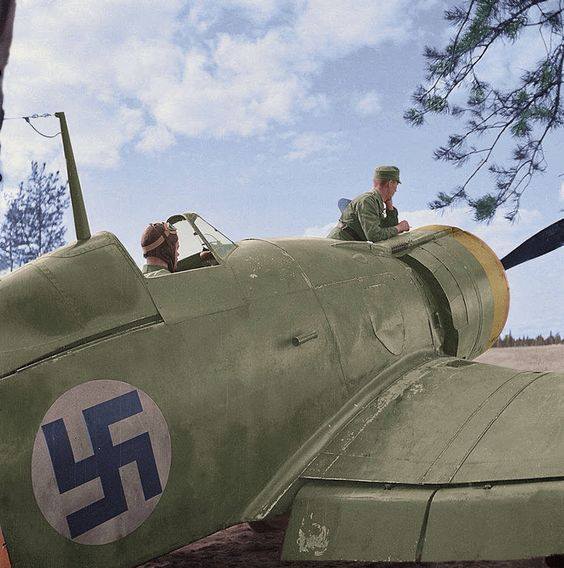
FIAT G.50 LeLv26
fiat g.50 ilmavoimat lelv 26

El «Freccia» (Flecha) es un aparato de caza desarrollado en Italia que efectúa su primer vuelo de ensayos en 1937. Es presentado internacionalmente en el salón aeronáutico de Milán como el aparato de caza más moderno del inventario italiano. La versión ya de serie monta un motor FIAT A.74 RC38 de 840 C.V. con una velocidad máxima de 472 km/h. El aparato en sí supone un avance en el diseño de ingeniería, al ser ya monoplano y de contrucción metálica, pero otros modelos británicos o alemanes contemporáneos lo superan en capacidades.

En enero de 1939 una docena de Fiat G.50 son enviados rápidamente al combate por primera vez a la Guerra Civil Española, donde son apreciadas sus buenas prestaciones y maniobrabilidad. También está bien armado con un par de ametralladoras pesadas BREDA-SAFAT de 12,7 mm. Se les encuadra en el Gruppo Sperimentale da Caccia, bajo dependencia de la Aviazione Legionaria de Mussolini, pero el conflicto finaliza en pocos meses antes de que se pueda acumular gran experiencia operativa.

A finales de 1939 el gobierno finlandés hace un pedido apresurado de 35 unidades para incrementar su capacidad defensiva frente al ataque de la URSS (Guerra de Invierno 1939-40). Llegarán demasiado al final. Serán incorporados a la base de Utti, hogar del 26º Escuadrón, el LeLv 26 (Lentolaivue<>escuadrón).

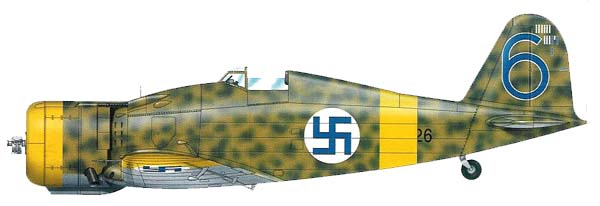
fiat g.50 perfil
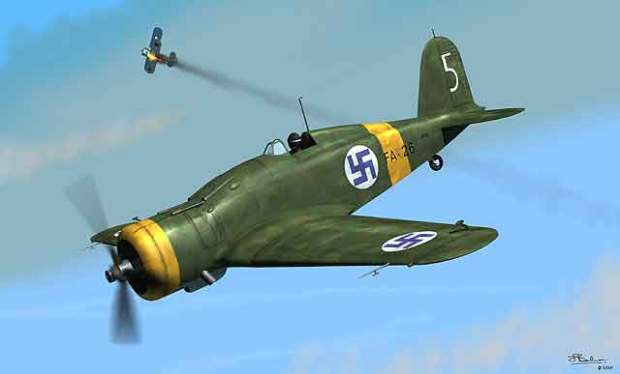
Perfil del FIAT G.50 «Freccia». El aparato está encuadrado en el LeLV 26 y es la montura del suboficial «Oippa» Tuominen, el mayor as de este tipo de aeroplano. En la cola están marcadas las 13 victorias conseguidas en el «Freccia» de matrícula FA-26. Con ocasión de la Operación «Barbarroja», la Luftwaffe pide a la Ilmavoimat (Fuerza Aérea finlandesa) pintar una banda en el fuselaje y las puntas del intradós alar también en amarillo, con fines de identificación.

Ya en junio de 1941 y tras 3 días del comienzo de la Operación Barbarroja, Stalin autoriza ataques preventivos contra Finlandia. Los fineses denominarán esta nueva fase de combates como la Guerra de Continuación. Las fuerzas de la Ilmavoimat (Fuerza Aérea finalndesa) están mejor preparadas que hace un año y medio y cuentan esta vez con dos regimientos de interceptadores, el LeR 2 y el LeR 3, totalizando 155 aparatos de caza. El primero es el más potente y engloba a tres escuadrones; uno de Brewster 239, otro de MS 406 y otro de FIAT G.50 «Freccia». Este último escuadrón es el mencionado LeLv 26. La VVS (Voenno Vozdushnye Sily<>Fuerza Aérea Soviética) va a oponerle «sólo» 500 aviones, dado que el grueso de sus fuerzas están intentando contener en vano a los germanos en otros sectores del vasto «frente ruso». Y de este modo los «Freccia» son empleados en la segunda lucha contra Stalin en cielos de Finlandia (donde dan algunos resultados bastante respetables). Intervienen en numerosas acciones en la zona del lago Ladoga y el itsmo de Carelia. Varios ases fineses comenzarán precisamente su carrera en el ligero y maniobrero caza italiano, como el suboficial Oiva Tuominen (44 victorias), quien el 17 de agosto de 1941, a los mandos de un G.50 derriba 4 bombarderos soviéticos en el asombroso intervalo de 4 minutos, sólo retirándose del combate al agotar la munición.

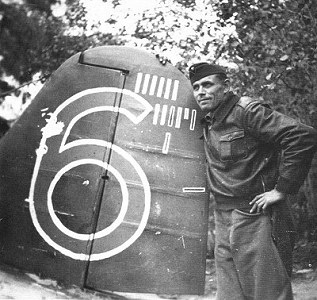
tuominen
Tuominen posa junto a la cola de su «Freccia» mostrando marcas de victorias aéras. Las blancas corresponden a bombarderos y las negras a cazas.

25 de Junio de 1941: Stalin autoriza ataques preventivos contra su vecino del norte. Los regimientos aéreos LeR están preparados. Unos 150 bimotores de bombardeo soviético aparecen en el espacio aéreo finlandés. La caza les sale al encuentro, entre ellos los “Freccia” del LeLv 26. Una vez interceptados los bombarderos los pilotos del LeLv 26 dan cuenta de 13 de ellos…

¿Querrías conocer los detalles día a día de la Operación Barbarroja? Deja tu comentario abajo…

¡Adquiere la obra cronológica Barbarroja 03:00h en edición de coleccionista!


Comprar Ahora Button

Sigue interesantes referencias también en Twitter @barbarroja0300h


[English version]

BARBAROSSA’S MACHINES


MONOPLANE FIGHTER AIRCRAFT FIAT G.50 «Freccia»


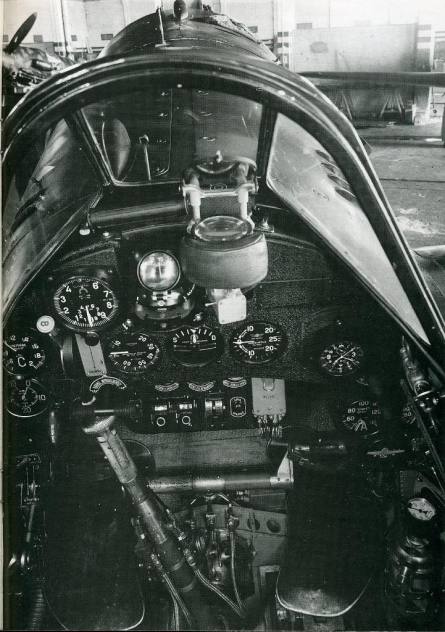
g.50 cockpit
FIAT G.50’s cockpit. Some versions followed the closed canopy rule, but most of the «Freccias’s» fly open-cockpit.

The “Freccia” (Arrow) is an Italian fighter design which makes its first test flight in 1937. That year is internationally presented in the Milan aeronautical salon as the most advanced combat aeroplane in the Italian inventory. The series version is powered by a FIAT A.74 RC38 engine that develops 840 H.P. and a top speed of 472 km/h. The machine is indeed a leap forward in the aeronautical engineering, being already a monopane and of metal construction. But other countries will develop other models at the time with better capabilities, like Great Britain and Germany.

In January 1939 a dozen FIAT G.50‘s are hurriedly sent to Spain for tests in the civil war, where they show good overall performance and maneouverability. They are fitted with 2xBREDA-SAFAT 12.7 mm. heavy machine guns. They are used by the Gruppo Sperimentale da Caccia (Experimental Fighter Group) depending from Benito Mussolini’s Aviazione Legionaria, but the war ends just a few months later before any useful experience can be gained.

Late the same year the Finnish government orders 35 units to face the USSR invasion in the so-called Winter War 1939-40. But they will arrive late in the conflict. They will be based then at Utti airbase, home of the LeLv 26 (Lentolaivue<>squadron).

Already in June 1941 and after 3 days from the start of Operation Barbarossa, Stalin approves pre-emptive attacks against Finland. The Finns will name this new combat phase against the Soviet Union as the Continuation War. The Ilmavoimat (Finnish Air Force) assets are better prepared than a year and a half ago and they count on two interceptor regiments, the LeR 2 and LeR 3, in all 155 fighter aircraft. The former is the most powerful fielding 3 squadrons: one of Brewster 239‘s, a second of MS 406’s and one another of FIAT G.50 «Freccia». The latter is the aforementioned LeLv 26. The VVS (Voenno Vozdushnye Sily<>Soviet Air Force) will oppose them «only» 500 planes, due to the fact that most of her forces are vainly trying to withstand the German onslaught in other sector of the vast «Russian Front». And this way the «Freccia‘s« are used in the second Finnish war against Stalin (with promising results). They will participate in numerous air combats over lake Ladoga and the Karelian isthmus. Some «aces» will commence their successful careers at the controls if this light and agile Italian machine, like the Warrant Officer Oiva Tuominen (44 victories). On the 17th of August 1941 piloting a G.50 he will shoot down 4 Soviet bombers in the awesome interval of 4 minutes, only to break the engagement after depleting his ammo.

g.50 vs chaika
The art shows an air engagement of a «Freccia» vs. a «Chaika» somewhere over southern Finland. [Unknown author].

25th of June 1941: As mentioned, Stalin approves pre-emptive strikes against his northern neighbour. The fighting regiments LeR are combat ready. Some 150 Soviet twin engine bombers show up in the Finnish airspace and the fighters take off to intercept; the LeLv 26 “Freccia’s” are amongst them. They will claim 13 bombers to their list of air victories…

Did you find this article interesting? Leave your comments below…

Follow other articles in Twitter @barbarroja0300h
Ilyushin Il-4

[English version at the end]

 MÁQUINAS DE BARBARROJA

¡Ya a la venta Barbarroja 03:00 hrs!

BOMBARDERO MEDIO BIMOTOR ILYUSHIN IL-4 (DB-3F)

il4 museo
Ilyushin Il-4 en la actualidad. Museo del parque de la victoria en Moscú. Se puede apreciar con detalle la sección de morro alargada y acristalada, característica de la versión F de los diseños DB de Sergei Ilyushin.

Aparato de largo alcance derivado del diseño del equipo de ingeniería de Sergei Ilyushin del bimotor DB. De hecho su desarrollo comienza como la variante DB-3F. No obstante en el momento de ser entregado en grandes cantidades a las unidades de ataque de largo alcance cambia su denominación, convirtiéndose en el Il-4. En 1938 comienza su diseño con una modificación sustancial de la célula del aparato original. Conserva la estructura primaria de la serie DB, aunque con una nueva sección de morro (ver video al final de la página con modelos DB e Il-4). Así inicia su primer vuelo en 1939 aún con la designación DB-3F.

A comienzos de la Operación Barbarroja la serie de bombarderos DB constituye la flota de aparatos de ataque  principal de largo alcance, integrándose en las unidades de vuelo DBAP (Dalnyebombardirovochnyi Aviatsionnyi Polk<>Regimiento Aéreo de bombarderos de largo alcance) y MTAP (Minno Torpednyi Aviatsionnyi Polk<>Regimiento Aéreo de Torpederos Minadores). Hay en inventario 1.122 unidades DB-3 y DB-3F (906 de ellos operativos). Está propulsado por dos motores M-88B que desarrollan 1.100 C.V. cada uno, siendo capaz de transportar una carga bélica de hasta 2.500 kilogramos (tanto en bodega como en afustes externos).

En la misma tarde del 22 de junio de 1941, día de comienzo de las hostilidades contra el III Reich, formaciones de bombarderos DB e Il-4 atacan las ciudades de Königsberg (actual Kaliningrado) y Memel e incluso atacan concentraciones de tropas en los arrabales de Varsovia, cubriendo una distancia de 600 kilómetros desde sus bases. Las misiones no cuentan con escolta de cazas y las pérdidas son numerosas. La Luftwaffe domina los cielos. También atacarán objetivos de la industria petrolífera de Rumanía, en Ploesti, desde bases de la Flota del Mar Negro en Crimea. Por su largo radio de acción son aparatos idóneos para la tarea, pero de la misma forma, sin escolta adecuada, para muchas tripulaciones su primera misión será la última al encontrarse con los Hurricanes de la Aviación Rumana o los Messerschmitt de la Lutfwaffe.

radio accion il4 isla oesel a berlin
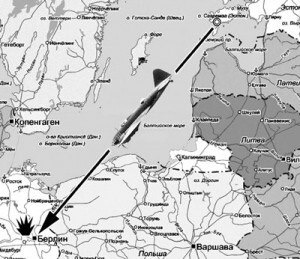
Esquema de la ruta seguida por los aparatos del 1 MTAP desde su base en la isla Ösel hasta Berlín. Los Ilyushin vuelan hacia su objetivo prácticamente al máximo de su radio de acción.

Este bimotor de Ilyushin ya es conocido por la Luftwaffe antes de comenzar las operaciones en el frente del este. Antes de la fecha de invasión de la URSS, la Ilmavoimat (Fuerza Aérea Finlandesa) presenta a los alemanes un DB-3M de este tipo capturado en la Guerra de Invierno para su evaluación.

7 de agosto de 1941: En la base de la aviación naval del Báltico de la isla de Ösel una quincena de aparatos DB-3T (variante «navalizada») calientan motores para una misión especial. La cantidad de combustible es la máxima posible en detrimento de la carga de bombas, pues el objetivo está casi fuera del radio de acción de los bimotores soviéticos. El objetivo es Berlín. Con el avance imparable de la Wehrmacht hacia el corazón de la URSS ya sólo hay disponibles 3 modelos capaces de tal misión: el Yer-2, el Pe-8 y el modelo de Ilyushin. Se le asigna la misión al 1 MTAP de la Flota de Báltico. Como se indica, usarán la base de la isla de Ösel, que dista unos 900 kilómetros hasta Berlín…

¿Querrías conocer los detalles día a día de la Operación Barbarroja? Deja tu comentario abajo…

¡Adquiere la obra cronológica Barbarroja 03:00h en edición de coleccionista!


Comprar Ahora Button

Sigue interesantes referencias también en Twitter @barbarroja0300h


[English version]

BARBAROSSA’S MACHINES

TWIN ENGINE MEDIUM BOMBER ILYUSHIN IL-2 (DB-3F)

il4 machine gunner
Il-4 dorsal machine gunner gets his UBT 12.7 mm ammo ready for a sortie. The aircraft carries 3 gunners (nose, ventral and dorsal). The machine gun turret will suffer different modifications throughout the DB-3 initial versions to the Il-4.

A long range medium bomber derived from the DB type, a design from Sergei Ilyushin’s engineering team. As a matter of fact initially it will still carry the official designation DB-3F. However as it commences the delivery to the long range flying units, it will change into Il-4. The development starts in 1938 using the DB series, with a thorough modification of the structure and specially of the nose section (watch the video at the bottom of the page with both variants). As just mentioned its maiden flight is carried out in 1939 still as a DB-3F.

At Barbarossa start the aircraft DB family is the Red Air Force long range bomber backbone. It is fielded by DBAP flying units (Dalnyebombardirovochnyi Aviatsionnyi Polk<>Long Range Aviation Regiment) and MTAP (Minno Torpednyi Aviatsionnyi Polk<>Mine-Torpedo Aviation Regiment). There are 1,122 DB-3’s (including DB-3F’s) in the VVS (Voenno Vozdushnye Sily<>Soviet Air Force) inventory. Out of them, 906 are airworthy machines. They are powered by two 1,100 H.P. M-88B engines that allow them two carry up to a maximum of 2,500 kg. of warload (inside the bomb bay and in external pylons).

il4 at night
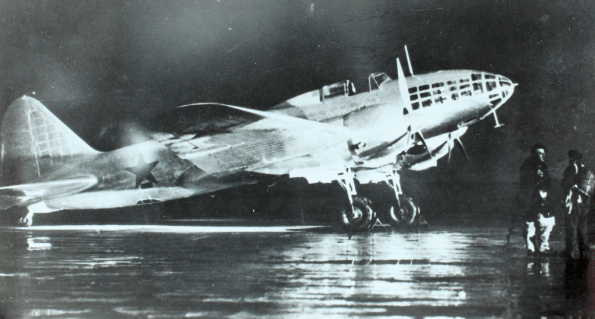
Il-4 at night.The production of this type will continue until 1944 and it will see service well into the Cold War. NATO code «Bob».

In the same afternoon of the 22nd of June 1941, day 1 of the war against the III. Reich,  formations of DB’s and Il-4’s attack the cities of Königsberg (Kaliningrad today) and Memel. They even go deeper into the adversary’s heart and attack concentrations of troops in the vicinity of Warsaw, covering distances of 600 kilometres from their home bases. These raids are not escorted by much needed fighters and the losses are appaling. The Luftwaffe masters the skies. They will attack in the following days the Romanian oil industry in Ploesti from the Black Sea Fleet bases in Crimea. Due to their long range performance they are the suitable airplane model for the task, but once again, with no fighter escort, for many Soviet aviators their first mission will be the last one. Romania is patrolled by her own Air Force Hurricane’s and Luftwaffe Messerschmitt‘s.

This twin engine bomber is already well known by the Luftwaffe before starting the Eastern Front operations. A few months before, the Ilmavoimat (Finnish Air Force) delivers a captured (from the Winter War 1939-40) DB-3M to the Germans for evaluation.

Il-4 over berlin
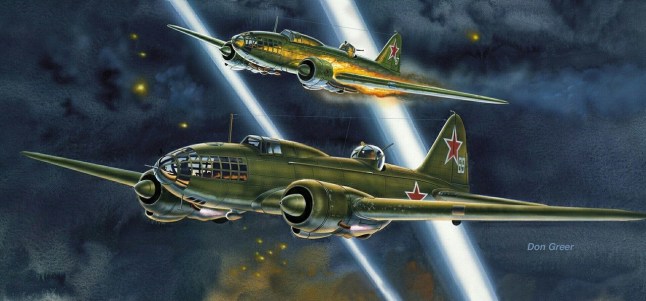
Ilyushin’s over Berlin. In spite of this dramatized drawing, no bombers are shot down the first night as the surprise is complete. As a matter of fact the German press will blame the British R.A.F. with the resposibility of the raid. [Art by Don Greer].

7th of August 1941: In their naval aviation station on Ösel island 15 DB-3T (a navalized variant) warm up engines for a very special mission. The fuel upload is maximum making the warload not too significant, due to the fact that the target is almost beyond the combat radius of the Soviet twin engine bombers. Berlin is the target. With the rapid advance of the Wehrmacht into the USSR there are just 3 types of aircraft that could do the job: the Yer-2, the Pe-8 and the machine of Ilyushin. The task is given to the  Baltic Fleet’s 1 MTAP. As aforementioned its base is 900 kilometres from Hitler’s capital city…

Did you find this article interesting? Leave your comments below…

Follow other posts in Twitter @barbarroja0300h

Dornier Do-17

[English version at the end]

 MÁQUINAS DE BARBARROJA

¡Ya a la venta Barbarroja 03:00 hrs!

BOMBARDERO BIMOTOR DORNIER Do-17

dornier do-17z2
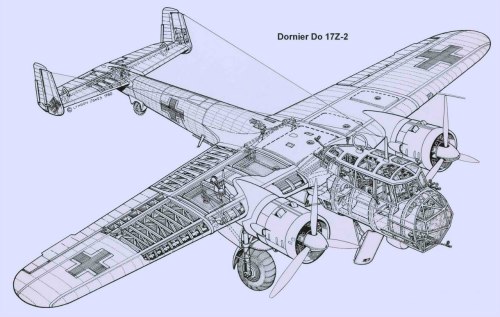
Diagrama del bombardero Dornier Do-17Z-2. Esta versión, con motores sobrepotenciados Bramo 323P Fafnir, es capaz de trasportar hasta 1.000 kg. de bombas. Es el doble que las versiones anteriores, pero a costa de reducir su radio de acción a sólo 330 km.

Inicialmente concebido en 1933 como avión de pasaje y carga, es rechazado por la compañía Deutsche Lufthansa, que había encargado el proyecto, por ser demasiado exigua su cabina. Pero por su velocidad y características se le adapta como aparato de bombardeo rápido (420 km/h. en altura). Como muchos otros diseños de la época participa en la Guerra Civil Española y en las primeras fases de la Segunda Guerra Mundial. No obstante ya en la Batalla de Inglaterra pone en evidencia su inadecuado armamento defensivo y poca carga bélica, por lo que lentamente se le va relegando a misiones de reconocimiento. La variante más producida puede transportar hasta 1.000 kg. de carga bélica. Hasta 23 Staffeln (escuadrillas) de reconocimiento de largo alcance se equiparán con este tipo. Por su característico fuselaje estilizado adquiere el apelativo de «Lápiz Volador».

En el asalto a la Unión Soviética el 22 de junio de 1941 participan versiones Do-17Z-2 asignados al I. y III./KG 2 y al III./KG 3 operando en el sector del Grupo de Ejércitos Centro. Concretamente bajo el 2. Luftflotte (2ª Flota Aérea) de Kesselring. Hay un total de 98 aparatos en plantilla y 62 operativos. Las primeras salidas de los Dornier vuelan contra los aeródromos soviéticos, contra los cuales lanzan pequeñas bombetas de 2 kilogramos de explosión retardada. Son las SD-2. Mientras los bimotores Heinkel del KG 53, desde bases cercanas a Varsovia, se encargan de los aeródromos entre Bielostok y Minsk, los Dornier Do-17Z del KG 2 lo hacen con aquellos más al norte entre Grodno y Vilnius. En el sector sur el KG 3 despega de Demblin en curso a objetivos entre Brest y Kobrin… Sus tripulaciones vuelan entre cuatro y seis misiones, mientras que los bombarderos en picado y cazas realizan hasta ocho; el esfuerzo físico es extenuante para los aviadores.

Do-17Z-2 ilmavoimat sa-kuva
Otros paises tienen en inventario al Do-17Z-2. En este caso, la Fuerza Aérea Finlandesa (Ilmavoimat). También Croacia volará este modelo en la campaña del este integrados en el 10.(Kroat)/KG 3. [Cortesía SA-Kuva].

La Operación Barbarroja cambia de fase aérea y se produce el primer gran bombardeo de Moscú en julio. A las 22:25 horas (hora de Moscú) 127 aparatos Junkers Ju-88, Heinkel He-111 y Dornier Do-17Z de nueve diferentes Kampfgeschwader (alas de bombardeo), lanzados en cuatro oleadas consecutivas desde pistas próximas a Minsk, Orsha, Vitebsk y Chatalovska (Bielorrusia), sobrevuelan la capital de Stalin. Es un intento por iniciar una campaña estratégica, pero la Luftwaffe no está concebida como una fuerza de estas características, ni es capaz de mantener el esfuerzo indefinidamente. La aviación militar del Reich se ha gestado con carácter táctico de apoyo a las operaciones en tierra.

El Oberfeldwebel (brigada) Broich, miembro de la tripulación de un Do-17 del 3./KG 2 describe su primera noche sobre los cielos de Moscú:

«Nachtangriff auf die Stadt Moskau (Ataque aéreo sobre la ciudad de Moscú). Altitud del bombardeo de 3.000 metros. Esas eran nuestras órdenes. Nuestros Do-17 no habían sido camuflados de negro para operaciones nocturnas y no nos encontrábamos particularmente entusiasmados por ello. Había una evidente cierta inquietud entre la tripulación ya que esto era algo totalmente diferente a nuestras misiones normales.

Nuestro vuelo hasta el objetivo nos pareció muy largo, sin duda porque estábamos persiguiendo el amanecer, cuyos resplandores ya podíamos ver en el cielo.  Al aproximarnos a Moscú nos apercibimos de que el ataque ya se estaba llevando a cabo delante de nosotros.

do-17-z-2 formacion
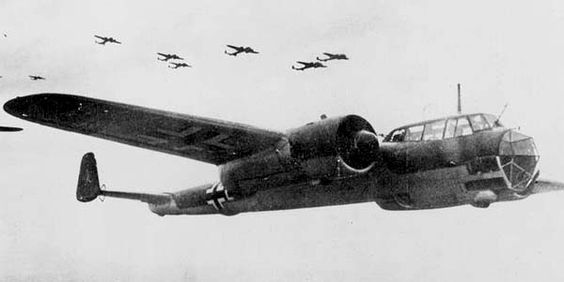
Una formación de «Lápices voladores», como se les conoce por su alargado y estrecho fuselaje. En el verano-otoño de 1940 en la ofensiva aérea contra Gran Bretaña pone en evidencia sus limitaciones como aparato de bombardeo.

En cuanto lanzamos las bombas sobre nuestra designada zona de objetivos un reflector nos iluminó. Casi instantáneamente treinta más se concentraron sobre nosotros y los primeros proyectiles empezaron a detonar a nuestro alrededor. Lanzamos el resto de las bombas y empezamos una carrera para zafarnos de la artillería antiaérea. Nuestro piloto, el Unteroffizer (subteniente) Heimann lo intentó todo para despistarla…virajes fuertes, cambios de altura, cortes de motor, todo ello mientras nuestro ingeniero de vuelo, Hans, empezaba a lanzar por la borda periódicos y octavillas (como solíamos hacer sobre Inglaterra) pero nada daba resultado. Peter [Heimann] nos sacó de aquello lanzando al aparato en un picado pronunciado y saliendo hacia un sector menos defendido de la ciudad…” .

¿Querrías conocer los detalles del día a día de la Operación Barbarroja? Deja tu comentario abajo…

¡Adquiere la obra cronológica Barbarroja 03:00h en edición de coleccionista!

Comprar Ahora Button

Sigue interesantes referencias también en Twitter @barbarroja0300h


[English version]

BARBAROSSA’S MACHINES

TWIN ENGINE BOMBER DORNIER Do-17

Do-17 cockpit
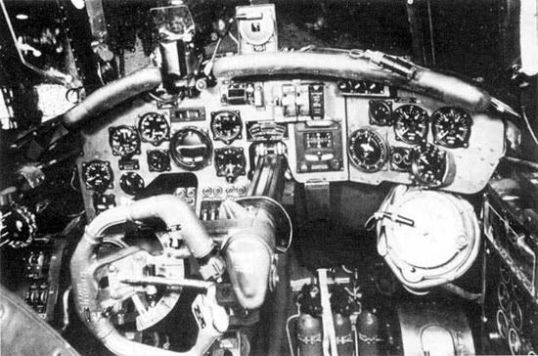
Dornier Do-17 cockpit. Note the single control column. The right hand side post is devoted for the bombardier.

In spite of being initially designed in 1933 as a passenger and cargo aircraft, it is rejected by the civilian company Deutsche Lufthansa (the petitioner of the project) due to its too narrow passenger cabin. But because of its speed and overall performance it finds a quick role as a fast bomber (420 km/h.). Like many other types of the time, it participates in the Spanish Civil War (1936-39) and the first stages of WWII. However, already during the Battle of Britain, it shows weaknesses due to its insufficient self-defense  armament and a limited bomb load. The most manufactured version, the Do-17Z-2 is able to carry up to 1,000 kg of warload. Slowly it will yield the job to the heavier Junkers Ju-88, taking itself the reconnaissance role. There will be 23 long-range Staffeln (squadrons) equipped with this type. Due to its slenderness it gains the nickname of «Flying pencil».

In the assault to the USSR on the 22nd of June 1941, Do-17Z-2‘s assigned to I., III./KG 2 (Kampfgruppe<>Bomber Group) and III./KG 3 will fly in the Army Group Centre’s theatre of operations. These are under Kesselring‘s 2. Luftflotte (2nd Air Fleet). Out of 98 in total, 62 are airworthy on the 22nd of June 1941. The first Dornier sorties are launched against the Soviet aerodromes where they drop small 2 kg. bomblets with delay fuzes. They are called SD-2. While the Heinkels from the KG 53, take care of those bases between Bielostok and Minsk, Dornier Do-17Z from the KG 2 work out those between Grodno and Vilnius. More to the south the KG 3 take off from Demblin (Poland) against targets between Brest and Kobrin…They will carry out 4-6 missions a day, while dive bombers and fighters do up to 8; the physical and mental strain for the crews is maximum.

do-17z-2 downed 7aug41
This Do-17Z-2 has been shot down on the 7th of August 1941. It belongs to a long-range reconnissance squadron. The yellow band and wingtips identify the machine as participating in the Eastern Front.

Operation Barbarossa shifts into a new air phase soon as the Moscow bombing campaign starts in July 1941. At 22:25 hours (Moscow time) 127 Junkers Ju-88, Heinkel He-111 and Dornier Do-17Z belonging to 9 different bomber wings fly 4 consecutive waves from runways near Minsk, Orsha, Vitebsk and Chatalovska towards the Soviet capital city.

Oberfeldwebel Broich, one of the 3./KG 2 crew members describes his first night over Moscow:

do-17z bombardier
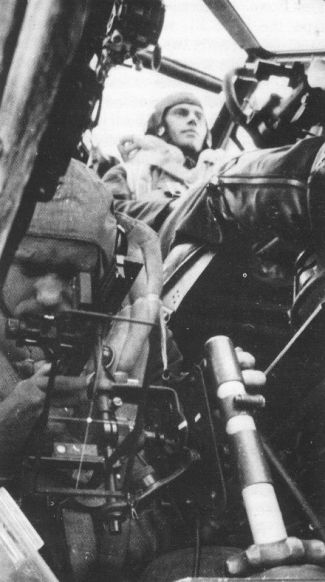
Interesting view of the narrow cockpit where the pilot and bombardier work shoulder to shoulder. Note the Lotfe bomb sight.

“Nachtangriff auf die Stadt Moskau” (air raid against Moscow city). Altitude 3,000 meters. Those were our orders. Our Do-17’s hadn’t been painted black for night operations and we were not happy about it. There was some restlessness amongst the crews due to this, being this task way different from our standard missions.

Our flight towards the target seemed to us excessively long because we were chasing the sunrise, its glare already seen in the sky. Approaching Moscow we realized that the bombing had already taken place in front of us. As soon as we dropped the bombs on our target area a searchlight found us. Almost at once 30 more homed in on us and the first antiaircraft projectiles started exploding around us. We launched the rest of the bomb load and started a race against the antiaircraft  artillery. Our pilot, Unteroffizier Heimann tried everything to dodge it…tight turns, altitude changes, power changes, all of that as our flight engineer, Hans, commenced to dump overboard newspapers and leaflets (as we used to do over England), but to no avail. Peter [Heimann] got away with it diving  the machine steeply and levelling it off over a less defended sector of Moscow…”.

Did you find this article interesting? Leave your comments below…

Follow other articles in Twitter @barbarroja0300h
BT-2

[English version at the end]

LAS MÁQUINAS DE BARBARROJA

¡Ya a la venta Barbarroja 03:00 hrs!

CARRO DE COMBATE VELOZ-LIGERO BT-2 (Bystrokhodnyi Tank)

bt-2
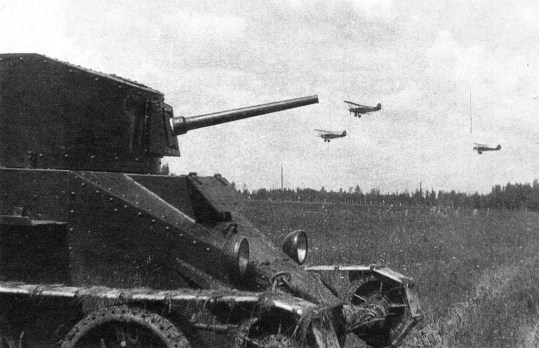
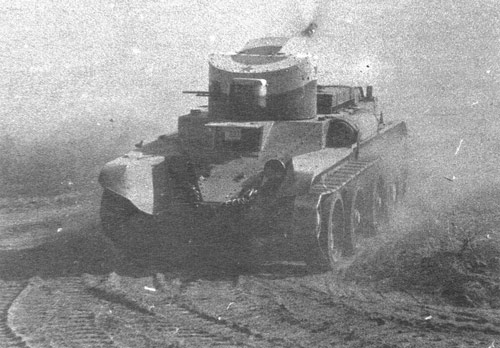
Un BT-2 en maniobras. Una vez usado en operaciones reales de combate, su cañón de 37 mm. se demostrará insuficiente frente al de 45mm. que equipa a modelos contemporáneos como el T-26. Su adición dará lugar a la serie BT-5.

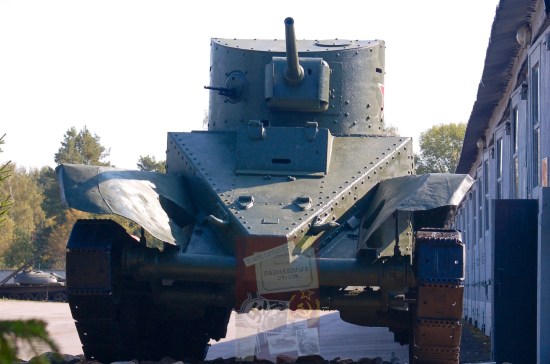
Es el sucesor del BT-1. La familia de vehículos acorazados BT constituye una saga de blindados tremendamente veloces y maniobreros (la abreviatura BT <Bystrokhodnyi Tank> significa “carro de combate veloz”). Deriva el proyecto inicial de un modelo estadounidense (del constructor John Walter Christie), del que una delegación soviética que visita los EE.UU. compra dos unidades M1931 Christie, documentación técnica y la licencia de construcción. A la variante producida ya en la URSS (factoría de Kharkov) en 1931 se le añade una torreta (las unidades adquiridas en EE.UU. venían sin ellas) y más ruedas (será capaz así de desplazarse por carreteras sin cadenas a la asombrosa velocidad de 72 km/h.). Las diferentes variantes de este tipo pasan por estar dotadas de una sola ametralladora DT, tres, un cañón B-3 de 37 mm. y de este cañón más ametralladora. A 300 metros, el cañón B-3 puede penetrar unos 3 centímetros de blindaje. Está tripulado por dos hombres.

La URSS adquiere 2.000 motores Liberty estadounidenses, pero al acrecentarse la demanda, los equipos de diseño soviéticos Klimov acaban por producir un motor equivalente denominado M-5 de 400 C.V.

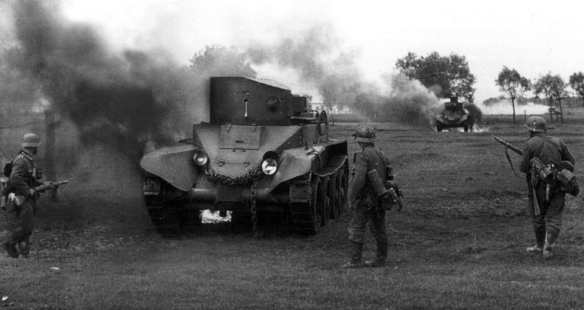
bt-2 en llamas barbarroja
BT-2 alcanzado por fuego alemán en las primeras semanas de la operación de invasión de la URSS.

Según algunas fuentes, una partida de BT-2 es enviada a España para combatir en la guerra civil al servicio del gobierno republicano (sin confirmar). En 1939 toma parte en las operaciones del oeste de Ucrania y posiblemente en la campaña del general G. K. Zhukov en Mongolia contra las tropas del Imperio del Sol Naciente (Khalkhin Gol). A finales de ese año 82 unidades BT-2 participan en la invasión de Finlandia (Guerra de Invierno 1939-40). Para el inicio de la invasión de la Unión Soviética, Operación Barbarroja el 22 de junio de 1941, este vehículo ya obsoleto aún sigue en el inventario del RKKA (Ejército Rojo). Alrededor del 50% de la producción inicial (587 unidades) aún está en servicio. Más de la mitad de ellos, no obstante, han sido entregados a  las escuelas de carros de combate para instrucción. En el mismo Barbarossatag (día de Barbarroja) unidades de este blindado encuadradas en el 6º Cuerpo Mecanizado (general-maior D. K. Mostovenko) y 11er Cuerpo Mecanizado (general-maior M. G. Khastilevich) pasan al contraataque  y entran en contacto con el 2. Panzergruppe del Generaloberst (teniente general) Heinz Guderian en el area de Kobrin. Sin radio (hecho común al inicio de las hostilidades contra el Eje, excepto en los vehículos de mando), muy débilmente blindado y con un cañón ligero de 37 mm. modelo 1930, su única cualidad es su velocidad. Sufrirá pérdidas catastróficas.

bt-2 museo kubinka
Vista lateral del «Bystrokhodnyi Tank» BT-2 expuesto hoy día en el museo de Kubinka.

La doctrina del Ejército Rojo de empleo de estos modelos establece infiltraciones veloces de este tipo de material, antes de un ataque propio para actuar tras las líneas enemigas. El objeto es batir objetivos de oportunidad de modo que contribuyan al caos y la desorganización en la retaguardia del adversario. La incursión de los carros BT según dicha doctrina debe ser realizada al menos media hora antes del ataque principal. Pero el escenario del verano de 1941 no permitirá acciones ofensivas coordinadas del RKKA, que además está bajo constante acoso de la Luftwaffe y tácticas Panzer superiores. Las pérdidas del BT-2, como se acaba de mencionar, serán prácticamente totales en las primeras semanas de la campaña de Hitler contra Stalin

¿Te ha resultado de interés este artículo? Deja tu comentario abajo…

¡Adquiere la obra cronológica Barbarroja 03:00h en edición de coleccionista!


Comprar Ahora Button

Sigue interesantes referencias también en Twitter @barbarroja0300h

——————————-[English version]——————————
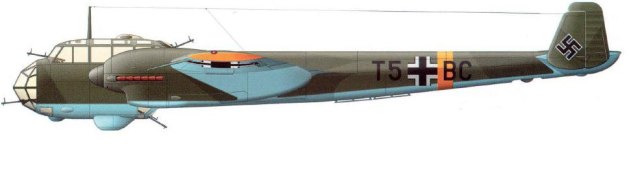
BARBAROSSA’S MACHINES

FAST-LIGHT TANK BT-2 (Bystrokhodnyi Tank)

bt-2 en accion
BT-2 in action. Its cilynder-type turret will make it obvious before the next generation of BT-5’s and BT-7’s

It is the successor of the BT-1. The family of BT armoured vehicles make a tank saga of very fast and maneouvreable tanks (BT <Bystrokhodnyi Tank> means “fast tank”). It derives from a US model ingeniered by the constructor John Walter Christie, who meets a visiting Soviet delegation that decides to acquire 2 M1931 Christie units, technical manuals and license. The variant made in the Kharkov factory in 1931 receives a  turret (the units purchased en the U.S.A. do not have) and extra wheels (it is capable then to drive trackless on roads  at the incredible speed of 72 km/h.). Different versions will be built fitted with single machine guns, three, a single B-3 37 mm. cannon and the latter plus a machine gun. This weapon is capable to pierce 3 cm. of armour at 300 metres. It is crew by 2 men.

The USSR acquires 2,000 US Liberty engines, but when the demand exceeds the numbers, the Soviet Klimov team develops a similar engine named M-5 (400 H.P.).

bt-2-kubinka-frente
BT-2 nowadays at Kubinka tank proving grounds in Moscow. This variant is fitted with the B-3 37 mm. gun plus a DT 7.62 mm. machine gun

According to some sources a party of BT-2’s are sent to Spain to fight in the civil war under the Spanish Republican government (yet to be confirmed). In 1939 it participates in operations in Western Ukraine and possibly in General G. K. Zhukov’s campaign in Mongolia, against the soldiers of the Empire of the Rising Sun (Khalkhin Gol). Late this year 82 BT-2‘s will take part in the invasion of Finland (Winter War 1939-40). By the start of the Axis attack on the USSR, Operation Barbarossa on the 22nd of June 1941,  this outdated vehicle is still in the RKKA (Red Army) inventory. Around 50% of the original number of produced BT-2‘s (587) are still in service. Nevertheless, more than half of them have been withdrawn to tank schools for the instruction of new crews. On the same Barbarossatag (day of Barbarossa) tanks of this type belonging to the 6th Mechanized Corps (general-maior D. K. Mostovenko) and 11th Mechanized Corps (general-maior M. G. Khastilevich) counterattack and make contact with Generaloberst (teniente general) Heinz Guderian‘s 2. Panzergruppe around Kobrin. Since it doesn’t carry a wireless set (a common fact until well into the Eastern campaign), it is too very lightly armoured and with just a 37 mm. model 1930 cannon, its only quality relies in its fast speed. The attrition rate will be unsustainable.

The employment doctrine of these BT tanks calls for deep penetrations into the rear of the enemy defenses and wreak as much havoc as possible finding opportunity targets. Following this Soviet doctrine this actions should be carried out 30 minutes before the main attack. But in the Barbarossa scenario these RKKA coordinated offensive actions will not take place (always under constant Luftwaffe punishment and superior Panzer tactics). Virtually all BT-2 will be lost in the summer  of 1941…

Did you find this article interesting? Leave your comments below…

Follow other articles in Twitter @barbarroja0300h