MESSERSCHMITT Bf-109F contra POLIKARPOV I-153 CHAIKA
Dos clásicos adversarios en las primeras semanas de la campaña de invasión de la Unión Soviética. A pesar de ser ya un aparato obsoleto en el escenario del frente oriental de 1941, el biplano I-153 Chaika (gaviota) es altamente maniobrable y está bien armado con 4 ametralladoras. Dispone de un motor Shvetsov M-62 de 1.000 C.V. que le proporciona una velocidad de tan sólo 424 km/h. a 5.000 metros. No obstante su escasa carga alar de 79,72 kg/m2 lo hace tremadamente ágil. Al amanecer del 22 de junio de 1941 centenares serán destruidos en sus aparcamientos, pero aún así muchos saldrán a combatir a la Luftwaffe.
Por contra la ventaja principal del Messerschmitt Bf-109F reside en su capacidad de trepada y velocidad. Su motor de inyección Daimler-Benz 601A de 1.200 C.V. le proporciona 600 km/h. en altura (casi 170 km/h. más que el pequeño diseño de Polikarpov). Pero pesa unos 500 kg. más que el I-153 (carga alar 196 kg/m2) lo que le sitúa en desventaja en cuanto a agilidad. Por ello enseguida los pilotos de caza alemanes adoptarán la táctica de «golpear y escapar», usando su exceso de velocidad para volver a ganar altura y posicionarse para un nuevo ataque. Caer en la trampa de un combate evolucionante a baja altura y baja velocidad contra un adversario mucho más maniobrero puede costar caro.
Con todo, en el escenario del verano de 1941, los pilotos de la Luftwaffe se encuentran entre los mejores del mundo y la VVS (Fuerza Aérea Soviética), con limitadas excepciones, no está a la altura ni en cuanto a entrenamiento, ni en calidad técnica de la mayoría de sus aviones en plantilla. Se están empezando a recibir los primeros lotes de cazas modernos, tipo MiG-3, LaGG-3 y Yak-1, pero en números relativos son pocos y las tripulaciones aún están entrenándose. No olvidemos que en esta fase de la Blitzkrieg en Rusia, la espina dorsal de la fuerza de caza roja está compuesta por Chaika y los monoplanos I-16, también obsoletos. Ambos serán relegados en breve a misiones aire-suelo…
Messerschmitt Bf-109F-2 de Werner Mölders. JG 51 Polikarpov I-153 «Chaika». Este aparato «rojo 14» es capturado el primer día de «Barbarroja»
¿Te ha resultado de interés este artículo? ¿Querrías conocer los detalles de esta y las demas operaciones?
Deja tu comentario abajo y sígue CONQUISTAR RUSIA punteando en la opción «SEGUIR / FOLLOW» a la izquierda de la página
[English version]
BARBAROSSA’S TACTICS
MESSERSCHMITT Bf-109F vs. POLIKARPOV I-153 CHAIKA
Both, two classic enemies in the first weeks of operation Barbarossa. In spite of being an obsolete aircraft in the 1941 Eastern Front scenario, the biplane I-153 Chaika (seagull) is highly maneuverable and well armed with 4 machine guns. It is powered by a 1,000 H.P. ShvetsovM-62 engine, with a top speed of only 424 km/h. at 5,000 metres. Nevertheless its low wing surface to weight ratio (79.72 kg/sqm) makes it extremely agile. At dawn the 22nd of June 1941, hundreds will be destroyed in German air attacks on their very same bases. But still, many will fly and challenge the Luftwaffe in the skies.
The main advantage of the Messerschmitt Bf-109F consisted of its greater speed and climb-out performance. Its fuel injection 1,200 H.P. Daimler-Benz 601A engine makes it 600 km/h. fast (almost 170 km/h. faster than the Polikarpov’s design). As a disadvantage, it is heavier than the I-153 (wing surface to weight ratio, 196 kg/sqm). Therefore it cannot outmaneouvre its adversary. Due to this factor, Luftwaffe fighter pilots will soon learn to maximize the hit and run tactics and not to get engaged in slow-turning dogfights against a much more maneuverable aeroplane. Being lured into a low level air combat with the biplane is certainly a bad idea.
All in all, in the 1941 scenario Luftwaffe pilots are amongst the best of the world and the VVS (Soviet Air Force) is, with limited exceptions), below training standards and relatively short of modern fighters such as the MiG-3’s, LaGG-3‘s or Yak-1’s. Still the backbone of the Red fighter force is composed by these Chaikas and the I-16’s monoplanes, obsolete types as well…
Did you find this article interesting? Leave your comments below and follow us clicking on «SEGUIR / FOLLOW» at the left of the page
Extraído de la obra cronológica «Barbarroja 03:00 h».
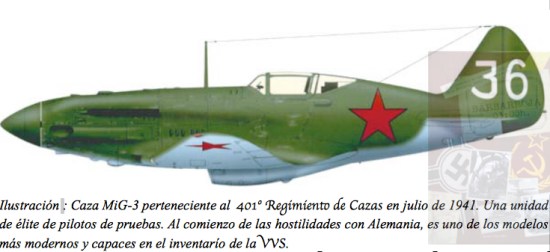
El MiG-3 (de la oficina de diseño de Mikoyan y Gurevich) es junto con la primera variante del caza de Yakovlev el interceptador más avanzado en el inventario de la VVS (Fuerza Aérea Soviética) en el verano de 1941. Es un tipo de aeroplano veloz, de líneas muy aerodinámicas, con una velocidad máxima de 640 km/h, próximo en características al Messerschmitt Bf-109F. Con fama de difícil manejo, en el momento de la operación Barbarroja hay entregados más de 1.200 ejemplares, habiéndose iniciado su despliegue a las unidades de combate tan solo en el diciembre anterior.
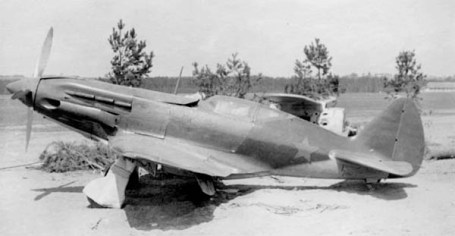
En la zona de Belostok el 9 SAD (9ª división Aérea Mixta) del general Chyornykh está equipado con dos centenares de modernos MiG-3 al amanecer del domingo 22 de junio de 1941. Una fuerza importante que cuenta con ocho regimientos aéreos de este modelo. Sin embargo en las primeras horas del Barbarossatag (día de Barbarroja) y debido a su expuesto despliegue próximo a la frontera con el Reich, decenas son destruidos sin remisión en el suelo por los ataques sorpresa del VIII. Fliegerkorps (8º Cuerpo Aéreo) del Generaloberst Dr. Wolfram von Richthofen.
MiG-3 en aparcamiento. Está pintado en dos tonos de verde y la panza en el estándar soviético azul celeste. Tras él apenas es visible un «Chaika».
Por orden de Moscú, el 1 de julio de 1941 el 401 IAP (401 Regimiento Aéreo de Caza, una unidad de elite de pilotos de pruebas) es enviado al combate entre los ríos Berezina y Dnieper para probar nuevos tipos de aparatos en servicio. La Blitzkrieg de Hitler es imparable y la Luftwaffe domina los cielos. El teniente coronal Stepan Suprun organiza cinco regimientos para el combate bajo iniciativa suya. Tienen como misión arrebatar a los germanos la superioridad aérea y dar ejemplo de como usar con efectividad los nuevos modelos de MiG. Recién llegados a su zona de despliegue ya consiguen derribos el mismo 1 de julio, entre el que cabe destacar el conseguido por el mismo Suprun. Pero estos éxitos están reservados para pilotos de la talla de Stepan Suprun, pues el MiG-3 por lo general no es contrincante para los Messerschmitt Bf-109F-2 de la veterana JG 51 (Ala de Caza nº51). Es la unidad de los veteranos del teniente coronel Werner Mölders…
¿Te ha resultado de interés este artículo? Deja tu comentario abajo…
Sigue interesantes referencias también en Twitter @barbarroja0300h
…………………………………[English version]………………………………
BARBAROSSA’S MACHINES
MIKOYAN-GUREVICH MiG-3
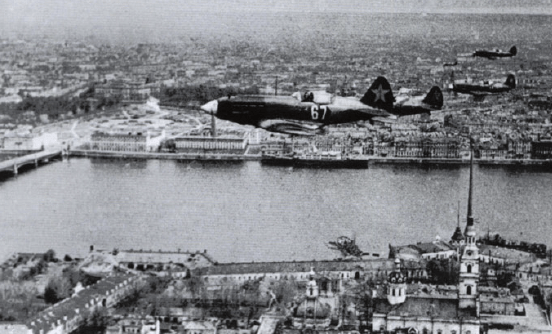
A MiG-3 flight over Leningrad. They belong to the 7th Fighter Air Corps, in charge of the defense of the legendary city, cradle of Bolshevism soon under siege by the Wehrmacht.
The MiG-3 (Mikoyan and Gurevich bureau of designs) is along with the first fighter of Yakovlev, the most modern aircraft in the VVS (Soviet Air Force) inventory in the summer 1941. It is a very fast interceptor with a maximum speed of 640 Km/h, close in performance to the German aMesserschmitt Bf-109F. Famous for having tricky handling characteristics, at the time of Barbarossa 1,200 units are already equipping many regiments of the VVS. A good number indeed, having in mind that the production started by the previous December.
The 9 SAD (9th Mixed Air Division) under general Chyornykh’s command, in the area of Belostok fields 200 modern MiG-3. It is a powerful force with up to 8 combat-ready air regiments; but in the first hours of the 22nd of June 1941 and due to their exposed nearby deployment to the Reich´s frontier, dozens are destroyed on the ground. It is the sneak air to ground action of the VIII. Fliegerkorps (Colonel General Dr. Wolfram von Richthofen’s 8th Air Corps).
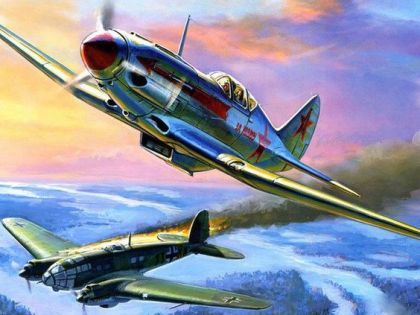
Color drawing depicting a MiG-3 shooting down a German twin engine bomber Heinkel He-111
Under Moscow’s direct orders on the 1st of July 1941 the 401 IAP (401st Fighter Air Regiment, a test pilot unit) is sent to combat. It is being deployed between the rivers Berezina and Dniepr, with the objective to test new models in service. Hitler’s Blitzkrieg is there in full swing and the Luftwaffe masters the skies. Lieutenant Colonel Stepan Suprun, under his own responsibility, organizes 5 test air regiments for combat. Their difficult task is to conquer the air superiority and to set example, new tactics and doctrine about how to use the new soviet fighters in service. On the very same day upon their arrival to the frontline, 401 IAP’s pilots claim the first air victories, including Suprun’s first kill. However, these feats are normally reserved to a few skilled men like Suprun, because the MiG-3 is generally no match for the Messerschmitt Bf-109F’s of the JG 51 (51st Fighter Wing): the seasoned fighter pilots’ Wing of Lieutenant Colonel Werner Mölders.
Did you find this article interesting? Leave your comments below…
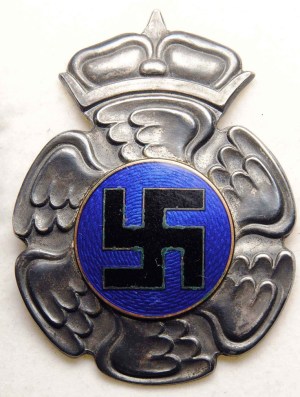
Distintivo de la Fuerza Aérea finlandesa (Ilmavoimat) 1918-1945. A pesar de no tener significación política, presiones de los aliados obligan a su sustitución al acabar la SGM.
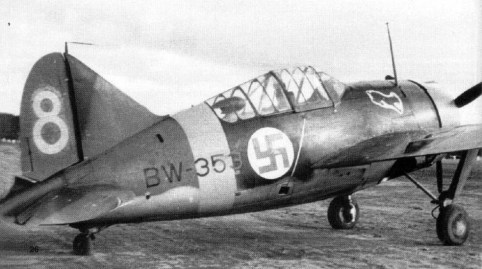
El Brewster 239 es más famoso en las filas de la U.S. Navy al principio de la Segunda Guerra Mundial, que en las de las Fuerzas Aéreas Finesas (Ilmavoimat), pero no por haber sido un aparato destacado contra los cazas Zero japoneses, sino precisamente por su inferioridad en características y la tasa de pérdidas que sufre en el teatro de operaciones del Pacífico. Es, sin embargo, durante la OperaciónBarbarroja donde el pequeño y robusto aeroplano muestra su valía en la Guerra de Continuación entre Finlandia y la URSS. Finlandia, que comienza su andadura como estado independiente al secesionarse de Rusia en 1918 (Tratado de Brest-Litovsk), es 1941 un aliado valioso del Eje en el que Hitler tiene grandes expectativas para la Operación Barbarroja, entre otras, la colaboración en la captura de Leningrado. Es en este conflicto donde los aviadores fineses escribirán las páginas más brillantes de su joven historia y el aeroplano norteamericano será pieza fundamental.
El avión de Brewster nace tras un requerimiento para dotar a la Armada de los EE.UU. del primer caza monoplano embarcado. Recibe la denominación Brewster F2-A1 «Buffalo». No obstante, de la primera partida, un lote se vende a Finlandia con la designación Brewster 239 en un momento en que este país está en un momento crítico al hallarse en guerra con la URSS (Guerra de Invierno 1939-40). El modelo finés monta una planta motriz Wright R-1820 G5 de 950 c.v. y 9 cilindros. Su velocidad es de 484 km/h. a 5.200 metros, lo que le da ventaja sobre sus adversarios soviéticos iniciales I-15, I-153 e I-16. Su armamento no es desdeñable para la época: 4 ametralladoras Browning M2 del calibre 0,50 (14,7 mm.). Con estas características el aparato de Brewster conseguirá la tasa de victorias más espectacular de la Segunda Guerra Mundial: 32 a 1.
Durante los últimos días de la Guerra de Invierno, ya tarde para intervenir en ella, se recibe la partida de cazas, que ya han sido ensamblados por mecánicos noruegos en Trollhättan, Suecia. La base inicial de despliegue es el aeropuerto de Malmi (Helsinki) bajo el mando del jefe de escuadrón, el reputado comandante Magnusson.
La increíble tasa de victorias conseguida en este modelo en las manos de los pilotos finlandeses es realmente notable y en cierta manera irónico al comparar los pobres resultados del modelo de la Armada de los EE.UU. en la campaña del Pacífico.
El Brewster 239 es la montura de Eino Ilmari «Illu» Juutilainen (LeLv 24), el as más destacado de la Fuerza AéreaFinlandesa y del mundo (no germano) con un total de 94 victorias. También es el avión más numeroso de la flota de cazas de la Ilmavoimat al comienzo de las hostilidades contra la Unión Soviética en 1941. Esta cuenta con un conglomerado de aviones de muy diferentes nacionalidades: norteamericanos, holandeses, italianos, británicos, soviéticos, alemanes…
Finlandia comienza una nueva guerra contra la URSS el 26 de junio de 1941, tras Stalin autorizar ataques preventivos contra bases finlandesas el día 25.
«El 25 de junio de 1941 llegó la noticia bomba. Estábamos acostados en nuestros catres en pijama cuando las sirenas empezaron a sonar. ¡Alarma…los cazas al aire…más instrucciones por radio! Una vez en el aire recibimos notificación de un bombardeo enemigo sobre la ciudad de Heinola. Una escuadrilla de nuestro escuadrón había sido transferida a la base aérea de Selänpää, que ya había recibido a los «huéspedes no invitados». Ninguno de los 12 bombarderos de la formación sobrevivió a la incursión para contar en casa cómo les había ido». [«Double Fighter Knight» ISBN 952-5026-04-03, pág. 48]
Las operaciones terrestres, por contra, no comenzarán hasta julio. No obstante en el espacio aéreo se producirán combates contra los aviones de la VVS (Voenno-Vozdushnye Sily – Fuerza Aérea Soviética) desde el mismo comienzo de las hostilidades. El 9 de julio los duelos aéreos se repiten un día más en el frente finlandés, con una actuación más que satisfactoria de los Brewster 239 contra los cazas Polikarpov en Lahdenpohja. Según palabras de «Illu» Juutilainen, el rechoncho avión parecido a una abeja es ágil, veloz, maniobrero y está bien armado, además de disponer de blindaje tras el asiento del piloto y bajo él. El general Waldemar Ehrfurt, designado como oficial de enlace alemán en el cuartel general de la Fuerza Aérea Finesa, notifica que sus pilotos de caza “se las pueden ver a solas” contra un enemigo muy superior. Numerosas batallas aéreas ponen de manifiesto las grandes capacidades y alta moral de estos finlandeses, a su modo de ver.
¿Te ha resultado de interés este artículo? Deja tu comentario abajo…
Sigue interesantes referencias también en Twitter @Barbarroja0300h
…………………………………[English version]………………………………
BARBAROSSA’S MACHINES
BREWSTER 239
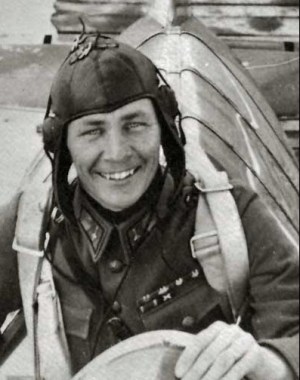
Eino Ilmari «Illu» Juutilainen, Finnish top scoring ace. 34 of his credited 94 kills are claimed at the controls of the Brewster fighter.
The Brewster 239 becomes more famous in the U.S. Navy at the beginning of WWII than in the Finnish Air Force (Ilmavoimat), but not precisely for being a good performer against the Japanese Zero fighter, but on the contrary for its general inferiority and the appalling losses suffered in the Pacific theatre of operations. It is, on the contrary, during Operation Barbarossa where the little and robust fighter plane shows its potential in the so-called Continuation War between Finland and the USSR. Finland, that becomes independent from Russia in 1918 (Treaty of Brest-Litovsk), is a Hitler’s much appreciated ally, expected to help in the capture of Leningrad. It is precisely in this struggle where the Finnish pilots will write their finest pages in the History of their young Aviation and the North American airplane will play a key role.
Brewster’s fighter is born after a requirement to deliver the first aircraft-carrier monoplane to the U.S. Navy. It is known as the Brewster F2-A1 «Buffalo». From the first batch of machines, a few are sold to Finland as Brewster 239. This country is in a critical moment as it is waging a war against the USSR (The Winter War 1939-40). The Finnish variant is powered by a 9 cylinder 950 H.P. Wright R-1820 G5 engine. Its top speed of 484 km/h. at 5,200 metres gives it an edge over its initial Soviet adversaries, I-15, I-153 and I-16. It is fitted with 4×0.50 calibre Browning M2 machine guns, an excellent firepower capability at its time. With these characteristics Brewster’s pursuit aeroplane will achieve the impressive 32:1 kill ratio, surpassing any other type in WWII.
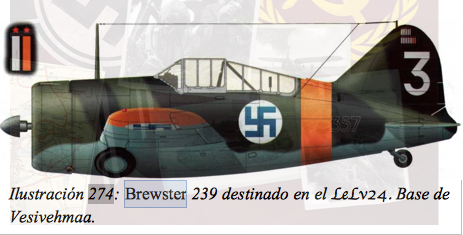
Brewster 239. LeLv24.
During the last days of the Winter War, although too late to take part in it, the first batch of these airplanes is assembled by Norwegian mechanics at Trollhättan, Sweden. They are later ferried to Malmi airport (Helsinki) as an initial deployment under the orders of the capable Squadron Commander, Major Magnusson.
The Brewster 239 is Eino Ilmari «Illu» Juutilainen’s machine (LeLv 24), the world’s top scoring ace (non-German) with 94 total air victories. It is also Finland’s most numerous fighter type at the start of the battle against the USSR in 1941. The Ilmavoimat counts on an array of aircraft from many different nationalities: US, Dutch, Italian, British, Soviet, German…
Finland starts a new war versus the USSR on the 26th of June 1941, after Stalin authorized the day prior pre-emptive air strikes against Finnish bases.
A classical head-on engagement in the Gulf of Finland. This time an I-153 «Chaika» and a Brewster 239.
«On 25 June 1941 the big bang came. We were lying in our beds wearing pajamas when the sirens started to howl. Scramble alarm…fighters get into the sky…more information to followby radio! When we were airborne we received a report of an enemy bomb raid on the town of Heinola. One flight from our squadron had been transferred to the Selänpää Air Base, which had already received uninvited guests. None of the airplanes in the 12 bomber formation survived the raid to tell how it had gone at home». [«Double Fighter Knight» ISBN 952-5026-04-03, page 48]
Land operations, though, will not commence until next July, nevertheless in the skies air combats take place against VVS (Voenno-Vozdushnye Sily – Soviet Air Force) aircraft from that very same 26th of June. Especially on the 9th of July the Brewster 239‘s will satisfactorily perform against the Polikarpov‘s in Lahdenpohja. As «Illu» Juutilainen wrote, the fat machine, looking like a bee, is agile, fast, maneouvreable and it is well armed. On top of that, it has an armour plate behind the pilot’s seat and under it. German General Waldemar Erfurt, appointed liaison officer in the Ilmavoimat HQ, reports that her fighter pilots are fully up to all expectations against a vast superior enemy. Many air battles prove the skills and motivation of these Finns, from his point of view…
Did you find this article interesting? Leave your comments below…
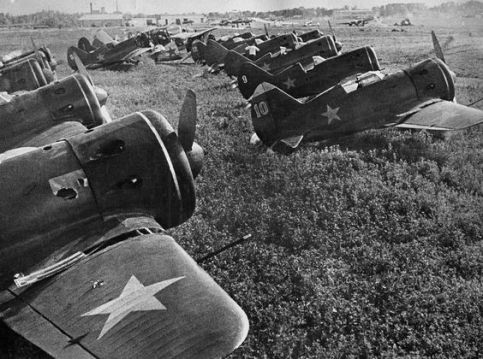
Línea de Polikarpov I-16 «Ishak». Forman la espina dorsal de la aviación de caza al comienzo de la operación «Barbarroja».
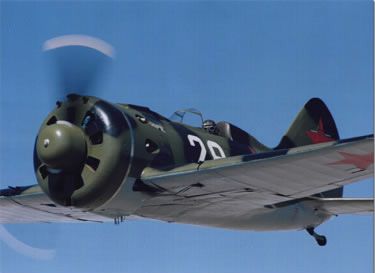
El Polikarpov I-16 es el primer diseño de monoplano de caza de gran velocidad que ve la luz en 1933. Interviene en Extremo Oriente contra los japoneses, en la Guerra Civil Española y en la Guerra de Invierno de 1939-40 contra Finlandia. El pequeño Polikarpov I-16 “Ishak” se hace con una reputación de avión tremendamente maniobrero ya antes de la Segunda Guerra Mundial. El “Rata” o “Mosca”, como se le denomina en la Guerra Civil Española (los alemanes aún lo denominarán «Rata» así durante las operaciones en el frente oriental), es aún junto con su antecesor, el I-15, la espina dorsal de la fuerza de caza de la Voenno Vozdushnye Sily (las Fuerzas Aéreas Soviéticas) al comienzo de la campaña. Pero en ese momento ya es un aparato veterano, escasamente rival para los potentes y veloces Messerschmitt.
I-16 en la actualidad. El monoplano adquiere fama y notoriedad en la Guerra Civil Española. Curiosamente 2 años acabada la contienda, volverá a medirse contra su viejo adversario, el Messerschmitt Bf-109.
No obstante, como reza el viejo adagio del combate aéreo, “no es la máquina, sino el hombre”, en manos capaces presenta tenaz oposición contra los aviones del Eje. El mismo Barbarossatag, día 22 de junio de 1941, los aviadores alemanes se empiezan a percatar del fanatismo de algunos pilotos enemigos cuando esa jornada un solitario I-16 “Ishak” arremete deliberadamente contra un Heinkel He-111 en Ucrania. Con terrible regularidad empiezan a darse casos similares en la Blitzkrieg (guerra relámpago) contra Stalin cuando los pilotos soviéticos se quedan sin munición. Es la táctica suicida TARÁN.
Cuatro fábricas en la URSS (nº 39 Moscú, nº 21 Novgorod, nº 153 Novosibirsk y nº 458 Rostov del Don) producirán desde 1934 a 1942 la impresionante cifra de 10.292 unidades. La última variante, el I-16 tipo 29, estará impulsado por un motor Shvetsov M-63 de 1.100 c.v. a nivel del mar, con una velocidad máxima de 470 km/h. a 4.500 metros (nótese que su adversario directo, el Bf-109F, le superará en unos 120 km/h.)
Muchos ases soviéticos, hombres como Safonov, Antonenko o Brinko, adquirirán fama y derribos en la primeras semanas de hostilidades contra el III Reich en el pequeño diseño de Polikarpov. El aparato será utilizado también en el rol de aire-suelo…
¿Te ha resultado de interés este artículo? Deja tu comentario abajo…
Sigue interesantes referencias también en Twitter @barbarroja0300h
…………………………………[English version]………………………………
“BARBAROSSA’S” MACHINES
POLIKARPOV I-16 «ИШАК«
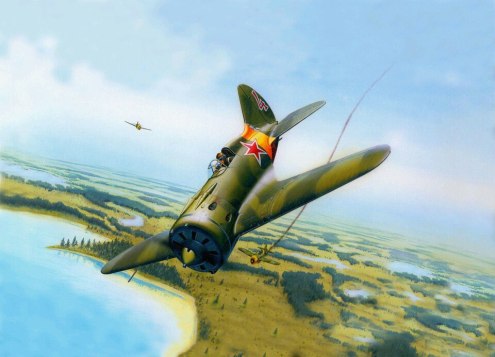
I-16 dogfighting a Finnish Brewster 239 in the Karelian isthmus. The small Polikarpov design made a reputation of a highly maneouvreable airplane.
The Polikarpov I-16 is the first monoplane high-speed fighter, born in 1933. It sees combat in the Far East against the Japanese, in the Spanish Civil War (1936-39) and in the Winter War against Finland (1939-40). The tiny Polikarpov I-16 “Ishak” gains the reputation of being highly maneuvreable even before World War Two. The “Rata” (Rat) or “Mosca” (Fly), as it was called during the Spanish Civil War (later the name of “Rata” will still be used by the Germans in the Eastern front campaing). It is along with its older brother, the I-15, the fighting workhorses of the Voenno-Vozdushnye Sily, the Soviet Air Force at the start of hostilities. However, it is at that stage a too veteran aircraft, barely a good match for the new powerful and fast Messerschmitts.
Lieutenant Pyotr Brinko (left), serving in the 13 IAP-KBF after one of his missions at Hanko airbase. He will be credited with 14 kills before his death in action on the 14th of September’ 41.
Nevertheless, as the old saying goes “it is not the machine, but the man”, in capable hands flies to fight day after day the Axis aviation. On the very same Barbarossatag day, on the 22nd of June’ 41, German aviators start realizing the deadly determination of some enemy pilots when a lone I-16 rams deliberately a Heinkel He-111 bomber in the Ukraine. On a frantic regular basis these cases start happening in the Blitzkrieg (lightning war) against Stalin when the Soviet pilots run out of ammunition. It is the so called suicidal TARAN tactic.
Four factories in the USSR (no. 39 Moscow, no. 21 Novgorod, n0. 153 Novosibirsk and no. 458 Rostov upon Don) will produce between 1934 until 1942 the impressive output of 10,292 units. The last variant, I-16 type 29, will be powered by a Shvetsov M-63 1,100 H.P. engine at sea level, with a speed of 470 km/h. at 4,500 metres (worth noting is its main counterpart’s performance, the Bf-109F, which will overspeed the Polikarpov model by about 120 km/h.).
Many Soviet aces, men like Safonov, Antonenko or Brinko, will acquire fame and aerial victories in the first weeks of the conflict at the controls of the tiny Polikarpov’s design. The machine will also be used in the air-to-ground role…
Did you find this article interesting? Leave your comments below…
Bf-109F-2 de Hans von Hahn en Lutsk (Ucrania), julio de 1941. I./JG 3. El 9 del mismo mes recibirá la Cruz de Caballero de la Cruz de Hierro por sus 21 victorias aéreas.
El Messerschmitt Bf-109F (“Fritz” o “Friedrich”) es el sucesor a principios de 1941 de la variante “Emil”, de la familia de cazas del profesor Messerschmitt más construida en la historia de Alemania. Para muchos, de todas las versiones fabricadas hasta la finalización del conflicto, el modelo Bf-109F es sin duda el más conseguido. Combina maniobrabilidad, potencia y velocidad, aunque a costa de no ir excesivamente armado, con “sólo” dos ametralladoras de 7,92 mm. sobre el capó del motor y un cañón que dispara a través del buje de la hélice.
Teniente Kurt Ubben y su Bf-109F. III./JG 77.
En el momento del Barbarossatag el Bf-109F es la montura de la mayor parte de los pilotos de caza que entran en combate en la URSS. Y la mayor parte de sus contrincantes directos, principalmente veteranos cazas Polikarpov, no son técnicamente rivales para los alemanes. Los soviéticos, no obstante tienen en inventario cazas MiG-1 y 3 y Yak-7, que pueden hacer frente al Messerschmitt. Pero cantidades ingentes de ellos serán destruidos en el suelo en las primeras horas del 22 de junio de 1941. Con general superioridad técnica, táctica y de entrenamiento, los pilotos de caza de la Luftwaffe empezarán a amasar victorias aéreas, convirtiendo el peligroso oficio de la guerra en una especie de competición personal en muchos casos…
¿Te ha resultado de interés este artículo? Deja tu comentario abajo…
Sigue interesantes referencias también en Twitter @barbarroja0300h
…………………………………[English version]………………………………
“BARBAROSSA’S” MACHINES
MESSERSCHMITT Bf-109F
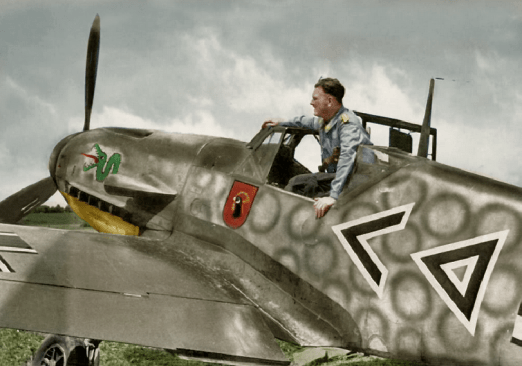
Bf-109F-2. Johannes Trautloft. JG 54. The unit symbol of the 54th Fighter Wing is a green heart «Grünhertz» by the cockpit. Trautloft is a seasoned veteran of the Spanish Civil War
The Messerschmitt Bf-109F (“Fritz” or “Friedrich”) is the replacement in early 1941 of the “Emil” variant, professor Messerschmitt’s most built German fighter family in German History. For many of its pilots, from all the different versions until the end of WWII, the Bf-109F is undoubtedly the best balanced. It mixes maneuverability with power and speed. However it is lightly armed, with “only” two 7.92 mm. machines guns on the engine cowling and a canon firing through the propeller hub.
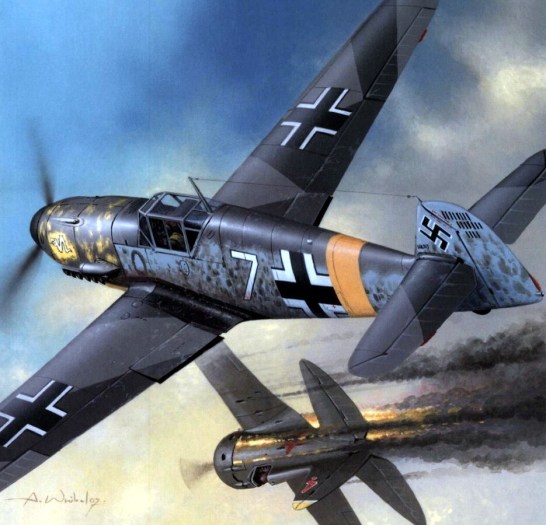
Bf-109F belonging to the JG 3 «Udet» dogfighting a Polikarpov I-16 «Ishak». The author’s drawing, Arkadiusz Wrobel, presents Oberleutnant Robert Olejnik, Staffelkapitän 1./ JG 3 in Shepetovka, 1941
At Barbarossatag the Bf-109F is the standard machine of most of the fighter wings which see combat in the USSR. Most of its adversaries, namely obsolescent Polikarpov fighters, are no match for the Germans. The Soviets, nevertheless are slowly introducing modern types like the MiG-1, MiG-3 and Yak-7 which can face the Messerschmitts. However, large quantities of them will be destroyed on their bases in the early morning hours of the 22nd of June’ 1941. Generally the Luftwaffe pilots (except a number of cases) will enjoy the benefits of better technology, tactics and training and will soon claim amazing numbers of air kills. For many, the dangerous business of war will turn into a personal contest…
Did you find this article interesting? Leave your comments below…
A finales de los años 20 la URSS adquiere entre otros modelos británicos de la firma Vickers, 26 unidades del Carden-Lloyd Mk.VI. Este responde a una especificación de vehículo de reconocimiento y enseguida comienza su desarrollo inicial en la URSS en 1930-31. Se le monta un ametralladora DT de 7,62 mm.
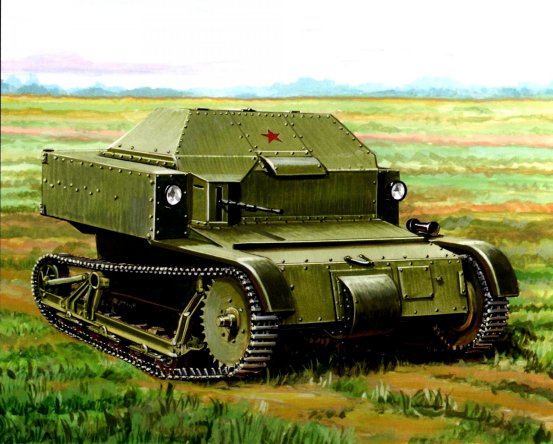
T-27A. Impresión artística. Ya obsoleto para «Barbarroja», queda relegado a tareas de remolque de piezas de artillería de 45 mm. y abastecimiento.
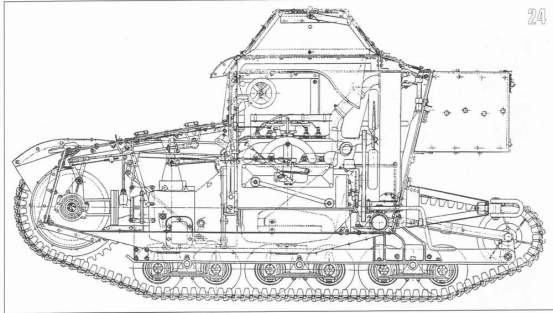
La variante ya de serie T-27A sale a continuación con motor soviético y chasis alargado. Pesa 2,7 toneladas. Así se diferencia de su predecesor británico, aunque conservando la configuración para un conductor y un comandante-ametrallador, que por el angosto espacio habilitado para ellos deben de ser de corta estatura. Como es común en los vehículos soviéticos de la época, no montan radio, debiendo confiar en banderines de señales la maniobra en el campo de batalla. Posteriormente saldrán de las factorías un número reducido de esta tanqueta con radio, denominada T-27V.
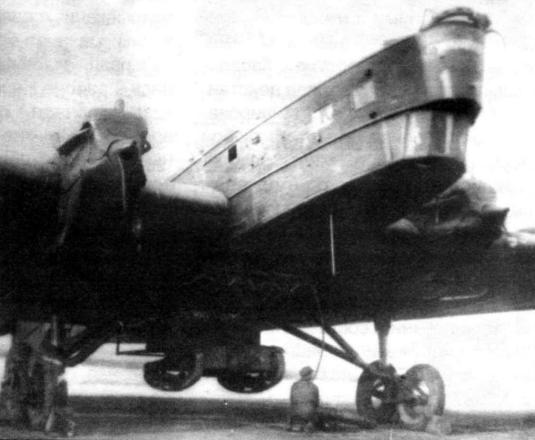
Como curiosidad es digno de mencionar que se llevan a cabo diversos ensayos de dotar a fuerzas aerotransportadas con T-27, que se transportarían bajo la fuselaje de bombarderos cuatrimotores TB-3. Otros ensayos igualmente fantasiosos, como versiones estancas sumergibles o tanquetas con alas, no verán tampoco la luz.
T-27A. Corte seccional. El diminuto habitáculo para sus dos hombres de dotación obliga a seleccionar tripulantes de corta estatura.
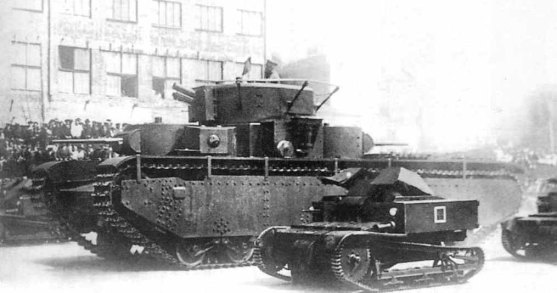
Para 1932 la tanqueta T-27 forma la columna vertebral de las fuerzas blindadas de reconocimiento. Así intervienen en la invasión de Polonia en 1939 y la guerra ruso-finesa del invierno 1939-40. Para entonces demuestran ser vehículos obsoletos con cadenas demasiado estrechas para sortear superficies embarradas o nevadas.
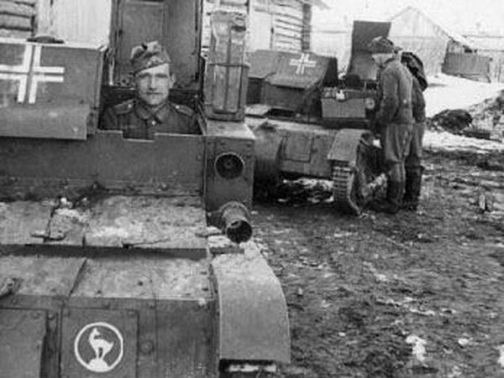
Al inicio de “Barbarroja” hay en servicio aún unos 1.000 de ellos, como tractores de remolque de piezas de artillería de 45 mm. o en labores de retaguardia…
¿Te ha resultado de interés este artículo? Deja tu comentario abajo…
Sigue interesantes referencias también en Twitter @barbarroja0300h
…………………………………[English version]………………………………
BARBAROSSA’S MACHINES
RECONNAISSANCE TANKETTE T-27
T-27A. The Wehrmacht will capture a number of them that will pay service in rearguard duties. Note the small size of the machine and its relative dimensions regarding its crew.
In the late 20’s the USSR acquires, amongst other types, 26 units of the Carden-Lloyd Mk.VI tankette from the British Vickers company. It is born from a requirement for a reconnaissance vehicle and soon starts its initial development in the USSR in 1930-31. It is fitted with a standard 7.62 mm. DT machine gun.
The version T-27A is already produced with a Soviet engine and a longer chassis. It weighs 2.7 tons. This way it can be differentiated from its British predecessor, but still keeping its 2 crew configuration (for a driver and the commander-gunner). Being the compartment small, so must be its crew members. As usual in the Soviet vehicles of the time, it won’t carry a radio set. Signal flags need to be carried for the coordination in the battlefield. Later variants, just a few of them designated as T-27V will be fitted with radio sets for command vehicles.
T-27 under the belly of a TB-3. The objective is to provide airborne troops with armoured support for operations in depth.
Some tests are carried out to provide airborne troops with T-27 tankettes. These would be transported under the fuselages of 4 engine TB-3 bombers. Other not less fantastic trials will consist of underwater vehicles or winged T-27’s, but none of them will be developed.
T-27 with a «big brother» T-35. The narrow tracks of the T-27A will prove inadequate for muddy or snowed out terrain.
Already in 1932 the T-27 is the backbone of the light armoured reconnaissance force of the RKKA. They will take part in the Poland invasion in 1939 as well as in the russo-finnish “Winter War” (1939-40). They will prove already obsolescent with inadequate fine tracks for rough or snowy surfaces.
At Barbarossa start there are still +1,000 in service, but in second line duties as artillery prime movers (45 mm. guns) or supply vehicles…
Did you find this article interesting? Leave your comments below…







 ¡ CONQUISTAR RUSIA !