Dornier Do-17

[English version at the end]

 MÁQUINAS DE BARBARROJA

¡Ya a la venta Barbarroja 03:00 hrs!

BOMBARDERO BIMOTOR DORNIER Do-17
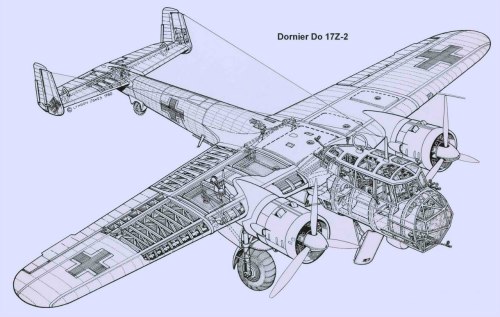
dornier do-17z2
Diagrama del bombardero Dornier Do-17Z-2. Esta versión, con motores sobrepotenciados Bramo 323P Fafnir, es capaz de trasportar hasta 1.000 kg. de bombas. Es el doble que las versiones anteriores, pero a costa de reducir su radio de acción a sólo 330 km.

Inicialmente concebido en 1933 como avión de pasaje y carga, es rechazado por la compañía Deutsche Lufthansa, que había encargado el proyecto, por ser demasiado exigua su cabina. Pero por su velocidad y características se le adapta como aparato de bombardeo rápido (420 km/h. en altura). Como muchos otros diseños de la época participa en la Guerra Civil Española y en las primeras fases de la Segunda Guerra Mundial. No obstante ya en la Batalla de Inglaterra pone en evidencia su inadecuado armamento defensivo y poca carga bélica, por lo que lentamente se le va relegando a misiones de reconocimiento. La variante más producida puede transportar hasta 1.000 kg. de carga bélica. Hasta 23 Staffeln (escuadrillas) de reconocimiento de largo alcance se equiparán con este tipo. Por su característico fuselaje estilizado adquiere el apelativo de «Lápiz Volador».

En el asalto a la Unión Soviética el 22 de junio de 1941 participan versiones Do-17Z-2 asignados al I. y III./KG 2 y al III./KG 3 operando en el sector del Grupo de Ejércitos Centro. Concretamente bajo el 2. Luftflotte (2ª Flota Aérea) de Kesselring. Hay un total de 98 aparatos en plantilla y 62 operativos. Las primeras salidas de los Dornier vuelan contra los aeródromos soviéticos, contra los cuales lanzan pequeñas bombetas de 2 kilogramos de explosión retardada. Son las SD-2. Mientras los bimotores Heinkel del KG 53, desde bases cercanas a Varsovia, se encargan de los aeródromos entre Bielostok y Minsk, los Dornier Do-17Z del KG 2 lo hacen con aquellos más al norte entre Grodno y Vilnius. En el sector sur el KG 3 despega de Demblin en curso a objetivos entre Brest y Kobrin… Sus tripulaciones vuelan entre cuatro y seis misiones, mientras que los bombarderos en picado y cazas realizan hasta ocho; el esfuerzo físico es extenuante para los aviadores.

Do-17Z-2 ilmavoimat sa-kuva
Otros paises tienen en inventario al Do-17Z-2. En este caso, la Fuerza Aérea Finlandesa (Ilmavoimat). También Croacia volará este modelo en la campaña del este integrados en el 10.(Kroat)/KG 3. [Cortesía SA-Kuva].

La Operación Barbarroja cambia de fase aérea y se produce el primer gran bombardeo de Moscú en julio. A las 22:25 horas (hora de Moscú) 127 aparatos Junkers Ju-88, Heinkel He-111 y Dornier Do-17Z de nueve diferentes Kampfgeschwader (alas de bombardeo), lanzados en cuatro oleadas consecutivas desde pistas próximas a Minsk, Orsha, Vitebsk y Chatalovska (Bielorrusia), sobrevuelan la capital de Stalin. Es un intento por iniciar una campaña estratégica, pero la Luftwaffe no está concebida como una fuerza de estas características, ni es capaz de mantener el esfuerzo indefinidamente. La aviación militar del Reich se ha gestado con carácter táctico de apoyo a las operaciones en tierra.

El Oberfeldwebel (brigada) Broich, miembro de la tripulación de un Do-17 del 3./KG 2 describe su primera noche sobre los cielos de Moscú:

«Nachtangriff auf die Stadt Moskau (Ataque aéreo sobre la ciudad de Moscú). Altitud del bombardeo de 3.000 metros. Esas eran nuestras órdenes. Nuestros Do-17 no habían sido camuflados de negro para operaciones nocturnas y no nos encontrábamos particularmente entusiasmados por ello. Había una evidente cierta inquietud entre la tripulación ya que esto era algo totalmente diferente a nuestras misiones normales.

Nuestro vuelo hasta el objetivo nos pareció muy largo, sin duda porque estábamos persiguiendo el amanecer, cuyos resplandores ya podíamos ver en el cielo.  Al aproximarnos a Moscú nos apercibimos de que el ataque ya se estaba llevando a cabo delante de nosotros.
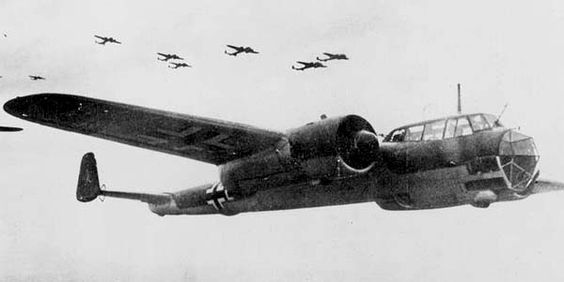
do-17-z-2 formacion
Una formación de «Lápices voladores», como se les conoce por su alargado y estrecho fuselaje. En el verano-otoño de 1940 en la ofensiva aérea contra Gran Bretaña pone en evidencia sus limitaciones como aparato de bombardeo.

En cuanto lanzamos las bombas sobre nuestra designada zona de objetivos un reflector nos iluminó. Casi instantáneamente treinta más se concentraron sobre nosotros y los primeros proyectiles empezaron a detonar a nuestro alrededor. Lanzamos el resto de las bombas y empezamos una carrera para zafarnos de la artillería antiaérea. Nuestro piloto, el Unteroffizer (subteniente) Heimann lo intentó todo para despistarla…virajes fuertes, cambios de altura, cortes de motor, todo ello mientras nuestro ingeniero de vuelo, Hans, empezaba a lanzar por la borda periódicos y octavillas (como solíamos hacer sobre Inglaterra) pero nada daba resultado. Peter [Heimann] nos sacó de aquello lanzando al aparato en un picado pronunciado y saliendo hacia un sector menos defendido de la ciudad…” .

¿Querrías conocer los detalles del día a día de la Operación Barbarroja? Deja tu comentario abajo…

¡Adquiere la obra cronológica Barbarroja 03:00h en edición de coleccionista!

Comprar Ahora Button

Sigue interesantes referencias también en Twitter @barbarroja0300h


[English version]

BARBAROSSA’S MACHINES

TWIN ENGINE BOMBER DORNIER Do-17
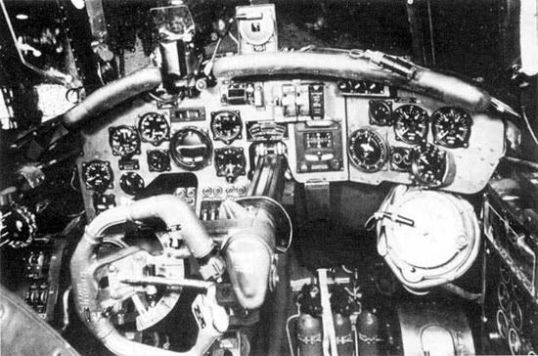
Do-17 cockpit
Dornier Do-17 cockpit. Note the single control column. The right hand side post is devoted for the bombardier.

In spite of being initially designed in 1933 as a passenger and cargo aircraft, it is rejected by the civilian company Deutsche Lufthansa (the petitioner of the project) due to its too narrow passenger cabin. But because of its speed and overall performance it finds a quick role as a fast bomber (420 km/h.). Like many other types of the time, it participates in the Spanish Civil War (1936-39) and the first stages of WWII. However, already during the Battle of Britain, it shows weaknesses due to its insufficient self-defense  armament and a limited bomb load. The most manufactured version, the Do-17Z-2 is able to carry up to 1,000 kg of warload. Slowly it will yield the job to the heavier Junkers Ju-88, taking itself the reconnaissance role. There will be 23 long-range Staffeln (squadrons) equipped with this type. Due to its slenderness it gains the nickname of «Flying pencil».

In the assault to the USSR on the 22nd of June 1941, Do-17Z-2‘s assigned to I., III./KG 2 (Kampfgruppe<>Bomber Group) and III./KG 3 will fly in the Army Group Centre’s theatre of operations. These are under Kesselring‘s 2. Luftflotte (2nd Air Fleet). Out of 98 in total, 62 are airworthy on the 22nd of June 1941. The first Dornier sorties are launched against the Soviet aerodromes where they drop small 2 kg. bomblets with delay fuzes. They are called SD-2. While the Heinkels from the KG 53, take care of those bases between Bielostok and Minsk, Dornier Do-17Z from the KG 2 work out those between Grodno and Vilnius. More to the south the KG 3 take off from Demblin (Poland) against targets between Brest and Kobrin…They will carry out 4-6 missions a day, while dive bombers and fighters do up to 8; the physical and mental strain for the crews is maximum.
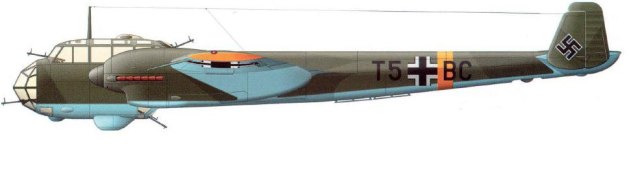
do-17z-2 downed 7aug41
This Do-17Z-2 has been shot down on the 7th of August 1941. It belongs to a long-range reconnissance squadron. The yellow band and wingtips identify the machine as participating in the Eastern Front.

Operation Barbarossa shifts into a new air phase soon as the Moscow bombing campaign starts in July 1941. At 22:25 hours (Moscow time) 127 Junkers Ju-88, Heinkel He-111 and Dornier Do-17Z belonging to 9 different bomber wings fly 4 consecutive waves from runways near Minsk, Orsha, Vitebsk and Chatalovska towards the Soviet capital city.

Oberfeldwebel Broich, one of the 3./KG 2 crew members describes his first night over Moscow:
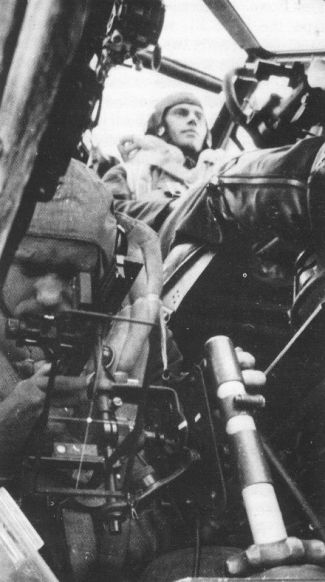
do-17z bombardier
Interesting view of the narrow cockpit where the pilot and bombardier work shoulder to shoulder. Note the Lotfe bomb sight.

“Nachtangriff auf die Stadt Moskau” (air raid against Moscow city). Altitude 3,000 meters. Those were our orders. Our Do-17’s hadn’t been painted black for night operations and we were not happy about it. There was some restlessness amongst the crews due to this, being this task way different from our standard missions.

Our flight towards the target seemed to us excessively long because we were chasing the sunrise, its glare already seen in the sky. Approaching Moscow we realized that the bombing had already taken place in front of us. As soon as we dropped the bombs on our target area a searchlight found us. Almost at once 30 more homed in on us and the first antiaircraft projectiles started exploding around us. We launched the rest of the bomb load and started a race against the antiaircraft  artillery. Our pilot, Unteroffizier Heimann tried everything to dodge it…tight turns, altitude changes, power changes, all of that as our flight engineer, Hans, commenced to dump overboard newspapers and leaflets (as we used to do over England), but to no avail. Peter [Heimann] got away with it diving  the machine steeply and levelling it off over a less defended sector of Moscow…”.

Did you find this article interesting? Leave your comments below…

Follow other articles in Twitter @barbarroja0300h
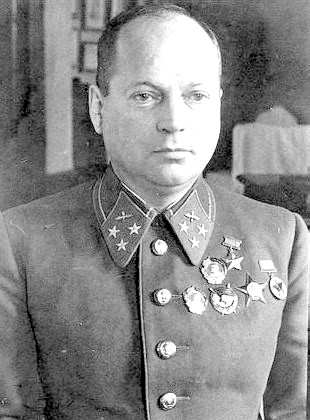
PTUKHIN, Evgenyi Savvich. General-leitenant.

[English version at the end]

 PERSONAJES DE BARBARROJA

¡Ya a la venta Barbarroja 03:00 hrs!


GENERAL-LEITENANT EVGENYI SAVVICH PTUKHIN (1902-1942)

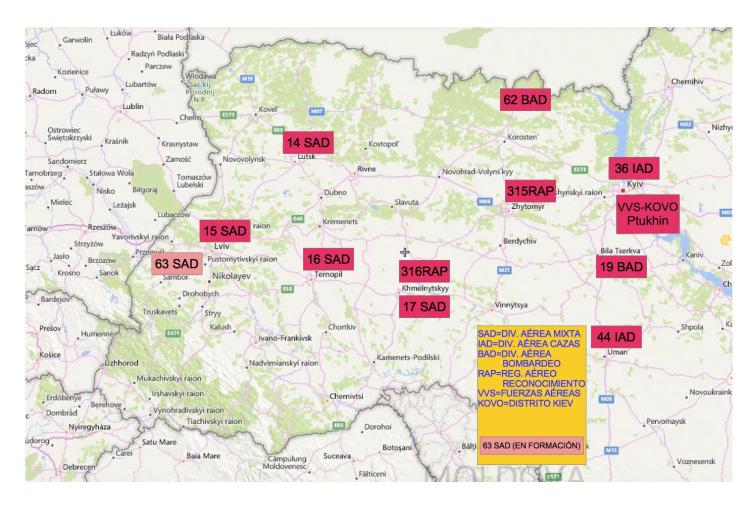
ptukhin vvs-kovo
Retrato del Jefe de las fuerzas aéreas del Distrito Militar Especial de Kiev. General Evgenyi Savvich Ptukhin. Veterano de la Guerra Civil Española, acabará trágicamente su carrera como consecuencia de los desastrosos eventos del verano de 1941.

Como su camarada de armas, el Comandante de las fuerzas aéreas del Frente Occidental, el general-maior Ivan Ivanovich Kopets, Ptukhin es un veterano de la Guerra Civil Española. En la primavera de 1937 Ptukhin es destacado a España como asesor militar del gobierno republicano hasta su retorno a la URSS al año siguiente. Se le conoce con el sobrenombre de «General José» estando además al mando 26º Grupo de Caza. Se le atribuyen 2 derribos compartidos en el área de Madrid y Segovia. Es condecorado como Héroe de la Unión Soviética en 1940. Tambien participa en el conflicto ruso-finés como Comandante de las fuerzas aéreas del Frente Noroccidental, la Guerra de Invierno 1939-40.

En la histórica fecha del 22 de junio de 1941, Evgenyi Savvich Ptukhin es el Comandante del VVS-KOVO (fuerzas aéreas del Distrito Especial Militar de Kiev). Sus unidades aéreas dependen del Jefe del mencionado Distrito, general Kirponos. Dispone de la impresionante cifra de 2.061 aeronaves (entre ellas hay 466 bombarderos y 1.343 cazas, de los que casi 200 son del nuevo modelo MiG-3) [fuente: http://www.v3let.ru/]. La fuerza a la que se van a enfrentar son los aparatos del 4. Luftflotte del Generaloberst Alexander Löhr, que cuenta con 390 bombarderos y 321 cazas [Fuente http://www.lexikon-der-wehrmacht.de]. La relación de efectivos es desfavorable para el Eje, pero la efectividad  y los resultados conseguidos por la Luftwaffe serán espectaculares.

Mientras las unidades de la VVS  están siendo en gran medida neutralizadas por los ataques sorpresa de la Luftwaffe en el sector septentrional y central del extenso «frente ruso», en el sur la aviación roja aún permanece activa y con capacidad de devolver los golpes. El primer ataque alemán ha sido serio, pero existen docenas de aeródromos dispersos por toda Ucrania, muchos de los cuales ni siquiera están en las carpetas de objetivos de los pilotos germanos. Ptukhin reacciona. Ha dado instrucciones desde las primeras horas de atacar aeródromos enemigos, áreas de concentración de tropas y de defender con cazas a las unidades de primera línea.

La cantidad de aparatos soviéticos destruidos en sus mismas bases aumenta a cada hora que pasa, pero desde los más alejadas pistas de las unidades de bombardeo de Ptukhin se planea ya un segundo ataque. En el Frente Sudoccidental (de Distrito Militar pasa a constituirse en «Frente» en la misma jornada) la VVS presenta cara. A pesar de todo y del arrojo de sus aviadores las pérdidas aumentan y las misiones de bombardeo se suelen saldar con numerosos derribos de sus aparatos Tupolev SB. Su fuerza aérea al igual que en los otros teatros de operaciones también se desangra.

Así el 24 de junio (algunas fuentes señalan días más tarde) es relevado del mando y puesto bajo arresto, siguiendo la “expeditiva vía” de Moscú de dar ejemplo en los campos de batalla. Será fusilado en 1942. Tras la muerte de Stalin, como en otros casos, su nombre será rehabilitado en 1954…


vvs-kovo
Unidades aéreas del Distrito Especial Militar de Kiev a disposición de Ptukhin. Diferentes fuentes señalan diferentes dislocaciones y unidades. [fuente: «Aviación Soviética durante la Gran Guerra Patria en cifras». 1962].

¿Querrías conocer los detalles del día a día de la Operación Barbarroja? Deja tu comentario abajo…

¡Adquiere la obra cronológica Barbarroja 03:00h en edición de coleccionista!


Comprar Ahora Button

Sigue interesantes referencias también en Twitter @barbarroja0300h


[English version]

BARBAROSSA’S PROTAGONISTS


LIEUTENANT-GENERAL EVGENYI SAVVICH PTUKHIN (1902-1942)


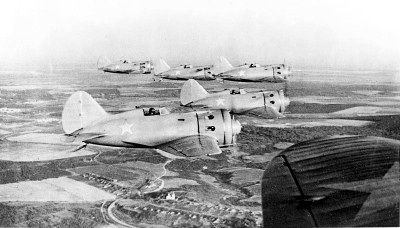
i-16 formation
Ptukhin’s large fighter force is mainly comprised by obsolete Polikarpov’s, like the I-16’s depicted.

Like his ill-fated comrade, Ivan Ivanovich Kopets, general-maior and Commander of the Western Front air forces (VVS-Zapadnyi Front), Ptukhin is too a veteran of the Spanish Civil War. In spring 1937 Ptukhin is detached to Spain serving as a military advisor for the Republican Government, until his return to the USSR on the next year. He is known by the nickname «General José» and he is given the command of the 26th Fighter Group as well. During the air combats in the area of Madrid and Segovia he claims 2 shared air victories. In 1940 he is decorated as Hero of the Soviet Union. He also participates in the russo-finnish conflict (Winter War 1939-40) as the Commander of the Northwestern Front air forces.

On the dramatic 22nd of June 1941, Evgenyi Savvich Ptukhin is this time the Commander of the VVS-KOVO (Kiev Special Military District air forces). His numerous air units depend on the Commander of the aforementioned District, General Kirponos. His powerful command consists of 2,061 airplanes (amongst them 466 bombers and 1,343 fighters, out of the latter almost 200 belong to the modern type MiG-3) . He will be forced to fight off Alexander Löhr’s 4. Luftflotte, which add up to 390 bombers and 321 fighters . The ratio of assets are quite unbalanced, but the results will be quite succesful for the German wings.

While the VVS squadrons have been greatly decimated by the Luftwaffe’s surprise attacks in the central and northern theatres of operations, in the south the «red air force» is still active and capable to fight. The German blow has been serious, but the Soviets have dozens of aerodromes spread out across the Ukraine and not all of them are in the German target folders. Ptukhin reacts. He issues orders from the early morning hours to attack adversaries’ aerodromess, troop assembly areas and to defend the army on the front lines.

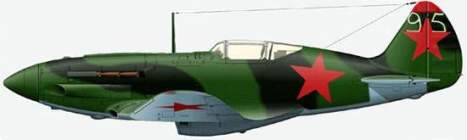
mig-3 1941
Ptukhin has almost 200 modern MiG-3’s. One of his units equipped with this new type, the 15 SAD (15th Mixed Air Division), is based too close to the border in the Lvov area. It will suffer great losses within the very first hours of the German onslaught.

The number of destroyed Soviet aircraft increase by the hour; the German punishment starts again and again in consecutive waves, but Ptukhin has ordered already a second attack from his far still untouched bases. In the Southwestern Front the VVS flies and fights. However, and in spite of the courage of its pilots, the losses grow relentlessly to alarming proportions. Bombing missions usually end up with too many Tupolev SB’s shot down. Like on the other sectors of the front, his air forces bleed off slowly…

This way, on the 24th of June 1941 (this vary according to different sources) he is arrested and relieved from command following «the expeditious Moscow style» in order to set an example for the other commanders. He will face the execution squad in 1942. As in other cases, his name will be rehabilitated in 1954 after Stalin’s death…


Did you find this article interesting? Leave your comments below…

Follow other articles in Twitter @barbarroja0300h
Kleist, Ewald von. Generaloberst.

[English version at the end]

 PERSONAJES DE BARBARROJA

¡Ya a la venta Barbarroja 03:00 hrs!


GENERALOBERST EWALD VON KLEIST (1881-1954)

kleist-panzer-iii
Impersión artística de Ewald von Kleist en su vehículo de mando en la operación de invasión de la URSS. [Juan Carlos Ciordia].

El Generaloberst Ewald von Kleist va a constituirse en la pieza clave de la estrategia de ruptura de la línea defensiva del Frente Sudoccidental soviético (Yugo-zapadnyi front). Esta es la zona de responsabilidad del general Kirponos. El 1. Panzergruppe «Kleist» está encuadrado en el Grupo de Ejércitos Sur (Heeresgruppe Süd), uno de los tres grupos de ejército que abarcan el extenso frente desde el Mar Báltico hasta el Mar Negro. El grupo Panzer cuenta con 3 cuerpos motorizados y, entre ellos, con 5 divisiones acorazadas (728 blindados). A estas hay que sumar la Waffen SS Motorisierte Division “LSSAH” (Leibstandarte SS Adolf Hitler) y la Waffen SS Motorisierte Division  “Wiking”, ambas unidades móviles de élite.

Kleist, capitán en la época de la Primera Guerra Mundial, ya está retirado a mediados de los años 30. Pero los acontecimientos en los que se ve envuelta Alemania en 1939 hacen que vuelva a ser incorporado al servicio activo. Así participará en la campaña polaca de 1939 como jefe de un cuerpo motorizado y posteriormente en 1940 en la campaña de Francia al mando del famoso Panzergruppe «Kleist». En abril de 1941 interviene en la campaña yugoslava.

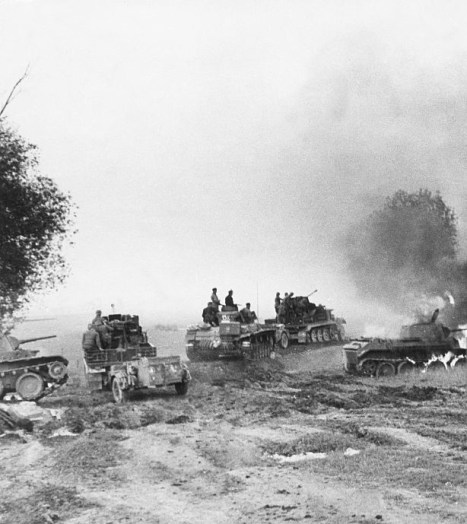
panzergruppe kleist on the march across ukraine
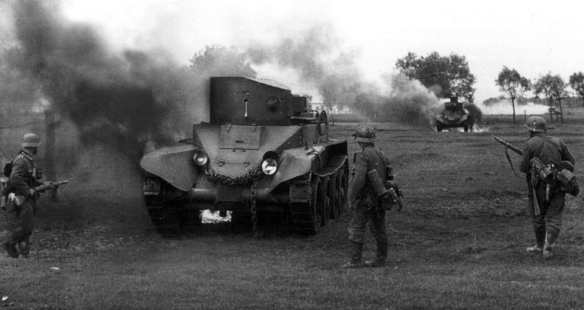
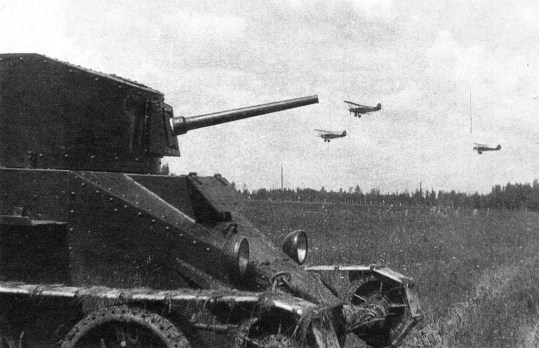
Blindados del 1. Panzergruppe «Kleist» a través de Ucrania. Dos carros soviéticos BT-5 fuera de combate.

El 22 de junio de 1941 Kleist es la principal baza del Grupo de Ejércitos Sur del mariscal de campo von Ründstedt. Penetra en cuña en la zona adyacente entre el general Potapov (5º Ejército) y Muzychenko (6º Ejército). La maniobra resulta exitosa y los Panzer se internan peligrosamente sin el apoyo de los Landser (apelativo común del soldado alemán). La infantería de a pie no puede seguir el ritmo de las fuerzas móviles. En este momento de la guerra, la Wehrmacht no está motorizada en su mayoría. Es una fuerza hipomóvil. Debido a la inferioridad numérica de Kleist contra las fuerzas acorazadas del general Kirponos (3.400 carros de combate) y su desprecio por la seguridad de sus flancos en su carrera hacia el interior de Ucrania, va a estar en un serio aprieto en la primera semana de la Operación Barbarroja. Para suerte del germano, los soviéticos, a pesar de superarle en casi 4 a 1 en número de carros de combate, están mal coordinados en la ejecución del contraataque. Van llegando al combate escalonadamente. Kleist supera además en la táctica de la maniobra a Kirponos y recibe el apoyo vital de la Luftwaffe (4. Luftflotte). Kleist saldrá airoso en última instancia tras varias jornadas de la mayor batalla de carros de combate de la historia hasta la fecha: La batalla del triángulo Brody-Lutsk-Dubno.

Resuelta la crisis, una vez capturado Zhitomir y con sus Panzer ya próximos a Kiev, va a recibir la sorpresiva orden de no asaltar la capital de Ucrania, sino de girar 90 grados a la derecha y dirigirse hacia el sureste, dejando al gran río Dnieper a su izquierda. El objeto es embolsar a un gran contingente soviético. La orden sorprenderá tanto a alemanes como al estado mayor soviético, que ya se preparaba para la defensa a ultranza. Hasta ese momento, von Ründstedt, no ha sido capaz de asestar un golpe decisivo al enemigo del estilo de las bolsas en el sector bielorruso. Von Kleist consiguirá finalmente poner el cerrojo a 90.000 adversarios en la famosa bolsa de Uman en la primera semana de agosto de 1941.

Acto seguido en septiembre, una gigantesca maniobra en tenaza entre su grupo acorazado y el 2. Panzergruppe de Guderian conseguirán el mayor embolsamiento de la historia de las guerras: más de 600.000 soviéticos quedarán copados al este de Kiev…


¿Querrías conocer los detalles día a día de la Operación «Barbarroja»? Deja tu comentario abajo…

¡Adquiere la obra cronológica Barbarroja 03:00h en edición de coleccionista!


Comprar Ahora Button

Sigue interesantes referencias también en Twitter @barbarroja0300h


[English version]

BARBAROSSA’S PROTAGONISTS


COLONEL-GENERAL EWALD VON KLEIST (1881-1954)


Kleist portrait
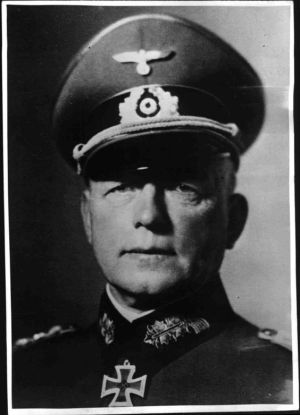
Portrait of the Knight’s Cross of the Cross of Iron’s holder, Colonel-General Ewald von Kleist.

Generaloberst Ewald von Kleist becomes himself the key of the rupture strategy of the Southwestern Front defensive lines (Yugo-zapadnyi front). This is the area of responsibility of General Kirponos. His 1. Panzergruppe is under the hierarchy of Army Group South (Heeresgruppe Süd), the force in charge of the southern sector of the vast Eastern Front. It stretches from the Baltic Sea to the Black Sea. 1. Panzergruppe  consists of 3 motorized corps and within them, 5 armoured divisions (728 tanks). In addition he will be assigned the Waffen SS Motorisierte Division “LSSAH” (Leibstandarte Adolf Hitler) and the Waffen SS Motorisierte Division  “Wiking”, both elite mobile units.

Kleist, already a Captain during the First World War, is retired in the 30’s. But the evolving circumstances affecting Germany shortly after will see him recalled to active duty. Thus, he will command a motorized corps during the Polish campaign in 1939 and later in 1940 a full armoured group, the famous Panzergruppe «Kleist» in France. He will also participate in April 1941 in the Yugoslavian campaign.

panzergruppe kleist
One of the Panzer divisions  belonging to the 1. Panzergruppe «Kleist» across the Ukraine. The highly visible «K» painted on the vehicles identify his forces. [Inventar-Nr.: Gm WII0035-15A]

On the 22nd of June 1941, Kleist is the main asset of von Ründstedt’s Army Group South. As a wedge he pierces the adjacent area between General Potapov (5th Army) and Muzychenko (6th Army), launching his tanks in a successful breakthrough. The Panzer move forward withouth the help pf the slow moving Landser (usual nickname of the German soldier). Contrary to the common knowledge the Wehrmacht is not a motorized force at this stage. Still relies on horses and the feet of its soldiers. Due to the numerical inferiority of Kleist versus Kirponos’ armoured units (+3,400 tanks) and ignoring his flanks in his penetration throughout the Ukraine, he will face the first crisis during the first week of Operation Barbarossa. Luckily and in spite of being overnumbered 4-1 in tanks, the Soviets launch their counter-attack uncoordinatedly and piece-meal. Kleist is tactically superior to Kirponos and enjoys a tremendous air superiority (4. Luftflotte). After a few critical days, he will have the upper hand in the largest up to-date tank battle in History: the battle of the triangle Brody-Lutsk-Dubno.

Kleist briefings Italian allies

Kleist briefs his Italian allies

Once the crisis is resolved and Zhitomir is captured, approaching his Panzer to Kiev he will receive the surprising order of not to assault the Ukraine’s capital city but to turn 90 degrees to the right and head to the southeast (leaving the Dniepr river left to the East). The purpose: To encircle a vast enemy force. This order will surprise either Germans and Soviets, the latter already consolidating Kiev’s defenses. Up to this moment von Ründstedt has not been able to deliver a decisive blow to the enemy as von Bock has done in Belarus. Von Kleist will lock up a force of 90,000 enemy troops in the famous Uman “cauldron» within the first week of August 1941.

Shortly therefter in September, a gigantic pincer maneouvre between his armoured group and Guderian’s 2. Panzergruppe will manage to encircle the largest enemy contingent of troops: More than 600,000 soviet soldiers will be trapped due East of Kiev…


Did you find this article interesting? Leave your comments below…

Follow other articles in Twitter @barbarroja0300h
KIRPONOS, Mikhail Petrovich. General-leitenant.

[English version at the end]

 PERSONAJES DE BARBARROJA

¡Ya a la venta Barbarroja 03:00 hrs!


TENIENTE GENERAL MIKHAIL PETROVICH KIRPONOS (1892-1941)

kirponos, mikhail petrovich
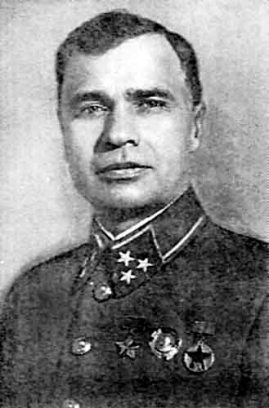
General-leitenant Mikhail Petrovich Kirponos. Es el Jefe del Distrito Especial Militar de Kiev. El mismo día 22 de junio de 1941 (Barbarossatag) su circunscripción militar pasa a constituirse como «Frente Sudoccidental». Kirponos morirá en combate en septiembre de este año al intentar escapar de la bolsa de Kiev.

El teniente general M. P. Kirponos, Jefe del Distrito Especial Militar de Kiev (inmediatamente redesignado como Yugo-zapadnyi front o Frente Sudoccidental), tendrá que reaccionar contra la cuña acorazada de von Kleist (1. Panzergruppe) en Ucrania. Para ello dispone de un poderoso contingente de blindados encuadrados en varios cuerpos mecanizados, con los que  iniciará una contraofensiva con el objeto de aislar la maniobra de los Panzer. Pero la dislocación de sus unidades acorazadas es demasiado grande en un vasto territorio. Lanzará al combate hasta 6 cuerpos mecanizados, pero llegarán al combate sin coordinación, desde distancias de hasta 400 kilómetros, escalonadamente a lo largo de varias jornadas y bajo implacable acoso de la Luftwaffe.

Sus cuerpos mecanizados totalizan de hecho una cantidad de efectivos bastante superior a los alemanes y con ellos, a diferencia de su compañero de armas, Pavlov, Jefe del Frente Occidental, va a poner en serios aprietos a von Kleist en el triángulo Dubno-Lutsk-Brody en la primera semana de Barbarroja. Se va a dar el mayor enfrentamiento de carros de combate hasta ese momento de la Historia. Un hecho de armas tan ingente como desconocido. Más de 3.800 blindados combatirán en una batalla prácticamente olvidada en Occidente. El mundo no sabrá de nada igual hasta la batalla del saliente de Kursk en 1943 (Operación «Zitadelle»). Kleist se verá superado casi 4 veces en número de carros de combate. La balanza, empero, se inclinará a favor del lado germano, cuyas divisiones se las arreglarán para neutralizar las oleadas de ataques en secuencia de Kirponos. La mayor parte del material de Kirponos lo constituyen T-26 y rápidos modelos BT. Es aquí donde los carristas alemanes se dan de bruces por vez primera contra los monstruosos KV-1 y KV-2. Cuando los Panzer abren fuego sobre ellos, la munición sencillamente rebota como si tal cosa. No obstante, y a costa de gravosas pérdidas (por ambas partes), el general soviético se verá obligado a ceder terreno irremisiblemente en dirección a Kiev.

Kirponos, ucraniano de nacimiento, es veterano de la Primera Guerra Mundial y de la Guerra Civil Rusa. En 1939 participa en la Guerra de Invierno contra Finlandia con mando en división, tras la que es condecorado Héroe de la Unión Soviética.

t-28 and t-26 drawing dubno
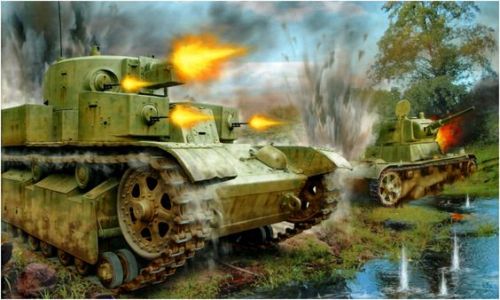
Impresión artística de los combates en el triángulo Dubno-Lutsk-Brody. Un T-28 y al fondo un T-26 alcanzado por fuego del adversario.

El 22 de junio de 1941, su poderoso Distrito Militar ocupa aproximadamente lo que son las regiones occidentales de Ucrania. Tiene bajo su mando a las siguientes fuerzas:

  • 5º Ejército (M. I. Potapov)
  • 6º Ejército (I. N. Muzychenko)
  • 12º Ejército (P. G. Ponedelin)
  • 26º Ejército (F. Ya. Kostenko)
  • PVO <Defensa antiaérea> (A. I. Danilov)
  • VVS <Fuerzas Aéreas> (E. S. Ptukhin)

En un primer compás el 1. Panzergruppe “Kleist” se abre paso en cuña entre la división geográfica del 5º y 6º ejércitos soviéticos. La maniobra es un éxito. Tras los blindados progresan los Landser (apelativo común del soldado alemán) del 6º Ejército de Reichenau, que a pesar de la resistencia de Potapov, asegura los flancos y la retaguardia de los veloces medios acorazados. Como se menciona más arriba, Kirponos ordena el repentino contrataque cuyo objetivo es cercar a Kleist y progresar hacia el interior de Polonia hasta la población de Lublin…

Imágenes de Kirponos en Kiev con su estado mayor [Cortesía net-film.ru]

¿Querrías conocer los detalles de esta y las demas operaciones? Deja tu comentario abajo…

¡Adquiere la obra cronológica Barbarroja 03:00h en edición de coleccionista!


Comprar Ahora Button

Sigue interesantes referencias también en Twitter @barbarroja0300h


[English version]

BARBAROSSA’S PROTAGONISTS


LIEUTENANT-GENERAL MIKHAIL PETROVICH KIRPONOS (1892-1941)


kv-2
KV-2 heavy tank abandoned at Pelcha, near Dubno on the first week of the tank clash in the triangle. Only the 88 mm. cannon and high caliber howitzers have a chance against this juggernaut.

Lieutenant-General Kirponos is the Commander in Chief of the Kiev Special Military District (immediately renamed as Yugo-zapadnyi front or Southwestern Front). He will be forced to fight back von Kleist’s 1. Panzergruppe in the Ukraine. He has a powerful armoured force, fielded in several mechanized corps that will counterattack with the aim of strangling von Kleist’s maneouvre. But his units are spread out across a too vast territory. He will order up to 6 of these corps to face the Germans at once and, therefore, they will arrive into combat uncoordinated, some having to travel 400 kilometres, piece-meal within a few days and under Luftwaffe action.

His mechanized corps totalize many more tanks than the German Gruppe. With them, unlike his comrade of arms, Pavlov, Commander in Chief of  the Western Front, he will provoke the first crisis to the attackers. This action will take place in the triangle Dubno-Lutsk-Brody during the first week of Barbarossa. At that stage the largest tank battle in History will occur. A fairly unknown clash of colossus. +3,800 tanks will fight in a battle almost forgotten in the Western media. The world will not see anything alike until 1943, Operation Zitadelle, in the Kursk salient. Kleist will see himself overwhelmed by almost 4 times as many tanks. The balance in the end will favor the German side, its divisions managing to neutralize Kirponos’ piece-meal attacks. Most of the Soviet tanks are T-26’s and fast BT’s models. It is here during these days when the Germans meet the monstruous KV-1’s and KV-2’s. When the Panzer units open fire at standard distances on them, the shots simply bounce off. Nevertheless and with high losses (on both sides), the RKKA (Red Army) General is forced to retreat towards Kiev.

Map of Dubno 24-25 june 1941
Situation map of the tringle Dubno-Brody-Lutsk during the 24th and 25th of June 1941. The German armoured thrust is attacked north and south by Kirponos’ mechanized corps. The fierce battle will still rage on for a few more days. [From «Barbarroja 03:00 hrs» ISBN: 978-84-9095-610-6].

Mikhail Petrovich Kirponos, born in the Ukraine, is already a veteran of the First World War and the Russian Civil War. He participates against the Finns in the 1939-40 Winter War, commanding a division. For his actions he is decorated as Hero of the Soviet Union.

On the 22nd of June 1941, his powerful Military District is mainly responsible of the western regions of the Ukraine. The following forces are under his command:

  • 5th Army (M. I. Potapov)
  • 6th Army (I. N. Muzychenko)
  • 12th Army (P. G. Ponedelin)
  • 26th Army (F. Ya. Kostenko)
  • PVO <Anti-air defenses> (A. I. Danilov)
  • VVS <Air Forces> (E. S. Ptukhin)

Swiftly, the 1. Panzergruppe “Kleist” breaks as a wedge through the adjacent sectors of the Soviet 5th and 6th armies. The maneouvre succeeds. After the fast tanks, the Landser (as the German soldier is called) belonging to the 6th German Army (Reichenau), secures the flanks and rearguard. Potapov offers resistance to no avail. As mentioned above, Kirponos orders the immediate counter-attack with the objective of strangling von Kleist and to advance into Lublin (Poland)…

Footage of Kirponos in Kiev with staff [Courtesy net-film.ru]

Did you find this article interesting? Leave your comments below…

Follow other articles in Twitter @barbarroja0300h
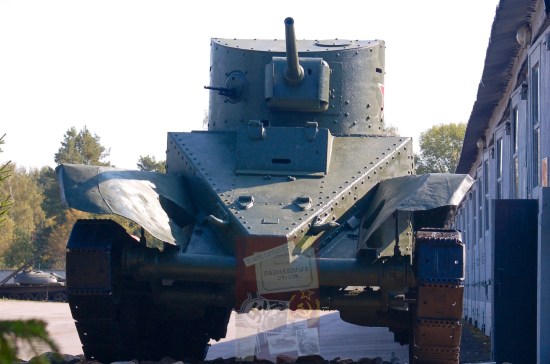
BT-2

[English version at the end]

LAS MÁQUINAS DE BARBARROJA

¡Ya a la venta Barbarroja 03:00 hrs!

CARRO DE COMBATE VELOZ-LIGERO BT-2 (Bystrokhodnyi Tank)

bt-2
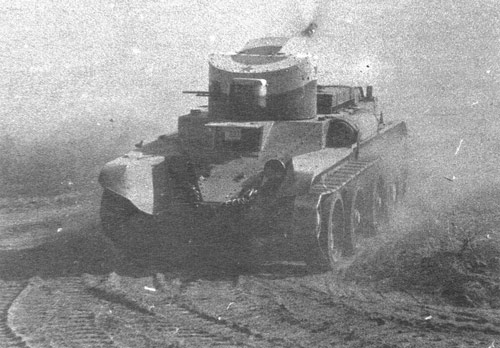
Un BT-2 en maniobras. Una vez usado en operaciones reales de combate, su cañón de 37 mm. se demostrará insuficiente frente al de 45mm. que equipa a modelos contemporáneos como el T-26. Su adición dará lugar a la serie BT-5.

Es el sucesor del BT-1. La familia de vehículos acorazados BT constituye una saga de blindados tremendamente veloces y maniobreros (la abreviatura BT <Bystrokhodnyi Tank> significa “carro de combate veloz”). Deriva el proyecto inicial de un modelo estadounidense (del constructor John Walter Christie), del que una delegación soviética que visita los EE.UU. compra dos unidades M1931 Christie, documentación técnica y la licencia de construcción. A la variante producida ya en la URSS (factoría de Kharkov) en 1931 se le añade una torreta (las unidades adquiridas en EE.UU. venían sin ellas) y más ruedas (será capaz así de desplazarse por carreteras sin cadenas a la asombrosa velocidad de 72 km/h.). Las diferentes variantes de este tipo pasan por estar dotadas de una sola ametralladora DT, tres, un cañón B-3 de 37 mm. y de este cañón más ametralladora. A 300 metros, el cañón B-3 puede penetrar unos 3 centímetros de blindaje. Está tripulado por dos hombres.

La URSS adquiere 2.000 motores Liberty estadounidenses, pero al acrecentarse la demanda, los equipos de diseño soviéticos Klimov acaban por producir un motor equivalente denominado M-5 de 400 C.V.

bt-2 en llamas barbarroja
BT-2 alcanzado por fuego alemán en las primeras semanas de la operación de invasión de la URSS.

Según algunas fuentes, una partida de BT-2 es enviada a España para combatir en la guerra civil al servicio del gobierno republicano (sin confirmar). En 1939 toma parte en las operaciones del oeste de Ucrania y posiblemente en la campaña del general G. K. Zhukov en Mongolia contra las tropas del Imperio del Sol Naciente (Khalkhin Gol). A finales de ese año 82 unidades BT-2 participan en la invasión de Finlandia (Guerra de Invierno 1939-40). Para el inicio de la invasión de la Unión Soviética, Operación Barbarroja el 22 de junio de 1941, este vehículo ya obsoleto aún sigue en el inventario del RKKA (Ejército Rojo). Alrededor del 50% de la producción inicial (587 unidades) aún está en servicio. Más de la mitad de ellos, no obstante, han sido entregados a  las escuelas de carros de combate para instrucción. En el mismo Barbarossatag (día de Barbarroja) unidades de este blindado encuadradas en el 6º Cuerpo Mecanizado (general-maior D. K. Mostovenko) y 11er Cuerpo Mecanizado (general-maior M. G. Khastilevich) pasan al contraataque  y entran en contacto con el 2. Panzergruppe del Generaloberst (teniente general) Heinz Guderian en el area de Kobrin. Sin radio (hecho común al inicio de las hostilidades contra el Eje, excepto en los vehículos de mando), muy débilmente blindado y con un cañón ligero de 37 mm. modelo 1930, su única cualidad es su velocidad. Sufrirá pérdidas catastróficas.

bt-2 museo kubinka
Vista lateral del «Bystrokhodnyi Tank» BT-2 expuesto hoy día en el museo de Kubinka.

La doctrina del Ejército Rojo de empleo de estos modelos establece infiltraciones veloces de este tipo de material, antes de un ataque propio para actuar tras las líneas enemigas. El objeto es batir objetivos de oportunidad de modo que contribuyan al caos y la desorganización en la retaguardia del adversario. La incursión de los carros BT según dicha doctrina debe ser realizada al menos media hora antes del ataque principal. Pero el escenario del verano de 1941 no permitirá acciones ofensivas coordinadas del RKKA, que además está bajo constante acoso de la Luftwaffe y tácticas Panzer superiores. Las pérdidas del BT-2, como se acaba de mencionar, serán prácticamente totales en las primeras semanas de la campaña de Hitler contra Stalin

¿Te ha resultado de interés este artículo? Deja tu comentario abajo…

¡Adquiere la obra cronológica Barbarroja 03:00h en edición de coleccionista!


Comprar Ahora Button

Sigue interesantes referencias también en Twitter @barbarroja0300h

——————————-[English version]——————————

BARBAROSSA’S MACHINES

FAST-LIGHT TANK BT-2 (Bystrokhodnyi Tank)

bt-2 en accion
BT-2 in action. Its cilynder-type turret will make it obvious before the next generation of BT-5’s and BT-7’s

It is the successor of the BT-1. The family of BT armoured vehicles make a tank saga of very fast and maneouvreable tanks (BT <Bystrokhodnyi Tank> means “fast tank”). It derives from a US model ingeniered by the constructor John Walter Christie, who meets a visiting Soviet delegation that decides to acquire 2 M1931 Christie units, technical manuals and license. The variant made in the Kharkov factory in 1931 receives a  turret (the units purchased en the U.S.A. do not have) and extra wheels (it is capable then to drive trackless on roads  at the incredible speed of 72 km/h.). Different versions will be built fitted with single machine guns, three, a single B-3 37 mm. cannon and the latter plus a machine gun. This weapon is capable to pierce 3 cm. of armour at 300 metres. It is crew by 2 men.

The USSR acquires 2,000 US Liberty engines, but when the demand exceeds the numbers, the Soviet Klimov team develops a similar engine named M-5 (400 H.P.).

bt-2-kubinka-frente
BT-2 nowadays at Kubinka tank proving grounds in Moscow. This variant is fitted with the B-3 37 mm. gun plus a DT 7.62 mm. machine gun

According to some sources a party of BT-2’s are sent to Spain to fight in the civil war under the Spanish Republican government (yet to be confirmed). In 1939 it participates in operations in Western Ukraine and possibly in General G. K. Zhukov’s campaign in Mongolia, against the soldiers of the Empire of the Rising Sun (Khalkhin Gol). Late this year 82 BT-2‘s will take part in the invasion of Finland (Winter War 1939-40). By the start of the Axis attack on the USSR, Operation Barbarossa on the 22nd of June 1941,  this outdated vehicle is still in the RKKA (Red Army) inventory. Around 50% of the original number of produced BT-2‘s (587) are still in service. Nevertheless, more than half of them have been withdrawn to tank schools for the instruction of new crews. On the same Barbarossatag (day of Barbarossa) tanks of this type belonging to the 6th Mechanized Corps (general-maior D. K. Mostovenko) and 11th Mechanized Corps (general-maior M. G. Khastilevich) counterattack and make contact with Generaloberst (teniente general) Heinz Guderian‘s 2. Panzergruppe around Kobrin. Since it doesn’t carry a wireless set (a common fact until well into the Eastern campaign), it is too very lightly armoured and with just a 37 mm. model 1930 cannon, its only quality relies in its fast speed. The attrition rate will be unsustainable.

The employment doctrine of these BT tanks calls for deep penetrations into the rear of the enemy defenses and wreak as much havoc as possible finding opportunity targets. Following this Soviet doctrine this actions should be carried out 30 minutes before the main attack. But in the Barbarossa scenario these RKKA coordinated offensive actions will not take place (always under constant Luftwaffe punishment and superior Panzer tactics). Virtually all BT-2 will be lost in the summer  of 1941…

Did you find this article interesting? Leave your comments below…

Follow other articles in Twitter @barbarroja0300h

PAVLOV, Dmitrii Grigorievich. General Armii

[English version at the end]

 PERSONAJES DE BARBARROJA

¡Ya a la venta Barbarroja 03:00 hrs!


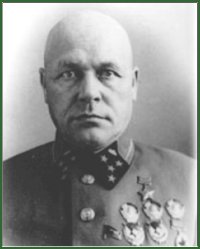
GENERAL DEL EJÉRCITO DMITRII GRIGORIEVICH PAVLOV (1897-1941)

pavlov, dmitrii grigorievich
General del Ejército Dmitrii Grigorievich Pavlov, Comandante del Distrito Especial Militar Occidental. La designación cambiará el mismo día 22 de junio de 1941 y pasará a ser el Comandante del «Frente Occidental». Su jefatura, de corta duración, tendrá un fatal desenlace.

A las 01:00 horas del 22 de junio de 1941, el mariscal Kliment Voroshilov, Comisario del Pueblo para la Defensa, telefonea al general Dmitrii Grigorievich Pavlov, Comandante del Distrito Militar Especial Occidental, para informarse de primera mano sobre cuál es la situación real tras la frontera. Al Kremlin han ido llegando numerosos indicios de actividad inusual y ruido de motores en el lado alemán. Sólo quedan 2 horas para que Hitler lance su Operación Barbarroja:

– ¿Cómo vais? ¿Está todo en orden?

Pavlov constata, efectivamente, movimientos importantes de tropas germanas tras la frontera, tras lo cual se le transmiten las consignas de Stalin:

– Cálmate y no te asustes. En todo caso, reúne mañana a tu estado mayor por la mañana; puede ser que ocurra cualquier situación desagradable, pero no te dejes llevar por la menor provocación y en caso de provocaciones aisladas, llámame.”

Pavlov va a soportar la titánica tarea de intentar parar la embestida del Grupo de Ejércitos Centro (mariscal de campo Fedor von Bock), que emplea dos imponentes cuñas acorazadas: La de Hermann Hoth (3. Panzergruppe) y Heinz Guderian (2. Panzergruppe).  El malogrado general cuenta con cuatro ejércitos (3º, 4º, 10º y 13º) peligrosamente desplegados en un saliente desde cuyos extremos, Von Bock, inicia una maniobra de tenaza. Ante la rapidez y furiosidad de la acometida de los generales germanos, Pavlov se ve forzado a reaccionar sin verdadero conocimiento de la situación en el campo de batalla, ni apenas informes de las unidades y con su sistema de mando y control en la práctica deshecho. El 2. Luftflotte de Albert Kesselring está atacando con devastadora efectividad nudos vitales de comunicaciones y puestos de mando. En numerosas ocasiones debe despachar oficiales de enlace para intentar contactar con unidades “perdidas”.

Dmitrii Grigorievich Pavlov, militar curtido, ha participado en la Guerra Civil Española al mando de una brigada acorazada soviética al servicio de la República Española (1936-37) e incluso ha combatido en la Batalla del Jarama en 1937. Sus experiencias en el conflicto ibérico le valen para ser condecorado Héroe de la Unión Soviética y jefe de las fuerzas acorazadas y motorizadas.

Pero en Barbarroja, tras sufrir desastre tras desastre intentando resistir el rodillo de la Wehrmacht, con grandes unidades copadas y en continua retirada, Pavlov será relevado y arrestado el 4 de julio de 1941 por orden de Moscú y puesto frente al pelotón de ejecución con numerosos cargos, entre ellos cobardía y negligencia criminal. Incluso se le acusará de participar en una trama antisoviética.  El 16 de julio el GKO (Gosudarstvennyi Komitet Oborony – Comité Estatal para la Defensa) dicta su sentencia de muerte. Después de la muerte de Stalin, su nombre sería rehabilitado en 1957.

¿Te ha resultado de interés este artículo? Deja tu comentario abajo…

¡Adquiere la obra cronológica Barbarroja 03:00h en edición de coleccionista!


Comprar Ahora Button

Sigue interesantes referencias también en Twitter @barbarroja0300h


[English version]

BARBAROSSA’S PROTAGONISTS


GENERAL OF THE ARMY DMITRII GRIGORIEVICH PAVLOV (1897-1941)

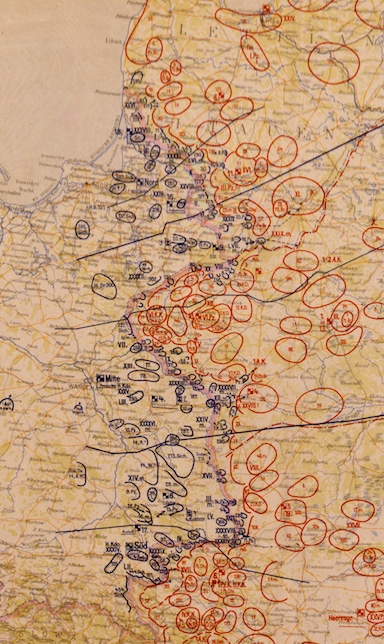
Byelostok salient german map
The central sector presents a «C» shape salient towards the West that is the German Army Group «Centre» resposibility. Von Bock will conduct his 2 armoured wedges from the top and bottom of the salient trapping thousands of hopeless Soviet troops. Note the red symbology depicting the forward deployment of those armies. [Lage Ost Karte 22.juni.41]

At 01:00 hours, June 22nd 1941, Marshall Kliment Voroshilov, People’s Commissar for Defence, phones General Dmitrii Grigorievich Pavlov, Commander of the Western Special Military District, in order to obtain a first hand report of the real situation, just a 2 hours before Hitler unleashes his attack. Numerous evidences of unusual German activity and engine noise reports have been arriving to the Kremlin:

– How’s it going? All in order?

Pavlov reports indeed significant troop activity behind the border. Right after he is communicated Stalin’s standing orders:

– Stay calm and don’t worry. Just summit your Staff tomorrow morning. A nasty situation might arise tomorrow, but don’t react to any provocations and in case of isolated incidents just give me a call.

Pavlov will be committed in a few hours to stop the gigantic assault of Army Group Centre (Generalfeldmarschall Fedor von Bock), with its two powerful armoured wedges: Hermann Hoth’s 3. Panzergruppe and Heinz Guderian’s 2. Panzergruppe. The ill-fated general counts on 4 powerful armies (3rd, 4th, 10th and 13th) which are dangeroulsy exposed inside a salient.  Von Bock will take advantage of this deployment to lauch his Panzer force in a pincer maneouvre to encircle the Soviets. Before the swift and decisive movement of the German generals he will just react almost blindly with no knowledge of the battlefield current events, practically without unit’s combat reports and with his command and control system in shambles. Albert Kesselring‘s 2. Luftflotte is inflicting severe damage to his comunications networks and command posts. He will be forced to dispatch couriers who will need to find «missing» units throughout his theater of operations to obtain first hand reports.

Dmitrii Gregorievich Pavlov, a seasoned officer, has taken part in the Spanish Civil War in command af a Soviet tank brigade under the Spanish Republican flag (1936-37). He has even participated in the famous Battle for the Jarama in 1937. His feats in the Iberian conflict grant him the title of Hero of the Soviet Union and he is appointed Chief of Armoured and Mechanized Forces.

But during Barbarossa trying to withstand the Wehrmacht‘s onslaught, defeat after defeat, with large units being encircled and always retreating, Pavlov will be relieved from command and arrested by Moscow’s orders on the 4th of July 1941. He will face the firing squad under charges of cowardice and criminal negligence. He will be even charged with participating in an anti-soviet complot. On the 16th of July the GKO (Gosudarstvennyi Komitet Oborony – Defence State Committee) will sign his death sentence. His name would be rehabilitated after Stalin’s death, in 1957.


Did you find this article interesting? Leave your comments below…

Follow other articles in Twitter @barbarroja0300h
Sd.Kfz. 221/222/223

[English version at the end]

LAS MÁQUINAS DE BARBARROJA

¡Ya a la venta Barbarroja 03:00 hrs!

BLINDADO DE RUEDAS SERIES SD.KFZ. 221/222/223 (leichter Panzerspägwagen)

sdkfz 221 lssah
Sd.Kfz 221 de la unidad de reconocimiento de las Waffen SS Leibstandarte Adolf Hitler. El emblema blanco junto a la matrícula denota la pertenencia a esta unidad de élite.

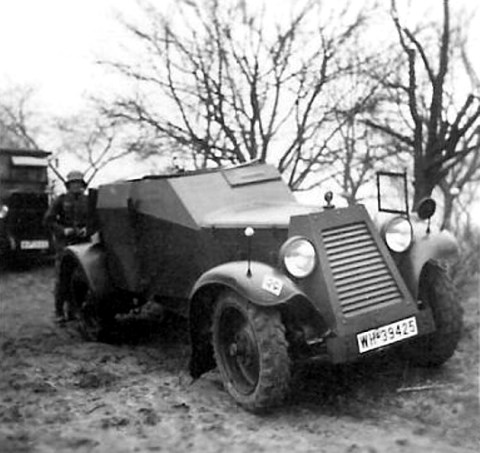
Es uno de los vehículos blindados de reconocimiento más famosos del inventario de la Wehrmacht. El padre de esta serie y de todas las posteriores de blindados de ruedas germanos es el Kfz.13 (Maschinengewehrkraftwagen), desarrollado contra los restrictivos términos del Tratado de Versalles impuesto por los aliados a Alemania tras la Primera Guerra Mundial.

Para la doctrina alemana de operaciones de reconocimiento, se necesita un vehículo de cadenas o ruedas, lo suficientemente veloz y con capacidad todoterreno, cuya labor sea recopilar información del adversario, evitando en lo posible el combate a no ser que sean fuerzas tan débiles que se puedan batir con el armamento de abordo. Normalmente operan a unos 30 km. en vanguardia de su batallón.

El Sd.Kfz.221 (Sonderkraftfahrzeug – vehiculo de propósito especial) es uno de estos todoterreno, producido desde 1936 a 1939 y armado con una ametralladora MG de 7,92 mm. Se le adaptará otra panoplia de armamento en subsiguientes modificaciones, como rifle contracarro Mauser sPzB P.41 o el Schwere Panzerbüsche de 2,8 cm. Su tripulación es de 2 hombres.

Su capacidad campo a través se comprueba limitada en la Operación de invasión de la URSS, Barbarroja. No obstante irán paulatinamente retirándose de primera línea y su papel se verá restringido a labores de patrulla en la retaguardia y operaciones contra partisanos.

kfz 13
El Maschinengewehrkraftfehrzeug 13 (Kfz. 13). Es el vehículo original desarrollado para labores de reconocimiento en Alemania tras la IGM.

Su descendiente directo será el Leichter Panzerspähwagen Sd.Kfz.222. Utiliza un chasis completamente renovado, más grande y capaz de montar armamento más pesado. La producción, igual en los comienzos de la variante anterior, se lleva a cabo desde 1936 hasta 1943. El vehículo de serie va armado con el cañón de 2,0 cm. de la firma Rheinmetall y se aumenta su dotación a 3 hombres, quedando la ametralladora MG coaxial al armamento principal. Ya para 1938 será el principal vehículo de reconocimiento de la Wehrmacht y también equipará los escuadrones de reconocimiento de las SS. Alcanza la nada desdeñable cifra de 85 km/h. en carretera con un alcance de 300 km.

El Panzerspähwagen (Fu) Sd.Kfz.223 será finalmente un Sd.kfz.222 equipado con radio FuG 10/12, que utilizará de nuevo la torreta del 221. Se producirá hasta 1944. El típico escuadrón de reconocimiento consiste en un 223 por cada tres Sd.Kfz.222.

¿Te ha resultado de interés este artículo? Deja tu comentario abajo…

¡Adquiere la obra cronológica Barbarroja 03:00h en edición de coleccionista!


Comprar Ahora Button

Sigue interesantes referencias también en Twitter @barbarroja0300h

——————————-[English version]——————————

BARBAROSSA’S MACHINES

ARMOURED SCOUT CAR SERIES SD.KFZ. 221/222/223 (leichter Panzerspägwagen)

sdkfz 222
Reconnaissance armoured vehicle Sd.Kfz 222. This time, as a difference with its predecessor, it is fitted with a 2.0 cm. gun.

It is one of the most iconic reconnaissance vehicles in the Wehrmacht’s inventory. The «father» of this series and all of the further developments is the Kfz.13 (Maschinengewehrkraftwagen), produced against the restricitive terms of the Versailles Treaty, imposed by the victorious Allies over Germany after World War I.

The German reconnaissance doctrine requires a fast, maneouvreable, all-terrain tracked or wheeled vehicle. Its main task is just to collect information about the enemy, avoiding any combat unless the adversaries are weak enough so as to employ onboard weapons with success. Normally recconnaissance patrols operate 30 km. ahead of their parent battalions.

The Sd.Kfz.221 (Sonderkraftfahrzeug-Special purpose vehicle) is an all-terrain wheeled vehicle produced between 1936-1939 with an MG 7.92 mm. machine gun. It will be fitted in subsequent versions with different weapons, like the anti-tank rifle Mauser sPzB P.41 or the 2.8 cm. Schwere Panzerbüsche. It is crewed by 2 men.

During Hitler’s invasion of the USSR, Barbarossa, its all-terrain capability is questioned in the almost non-existant Soviet road network. They will be withdrawn from frontline service slowly, serving in rearguard roles and anti-partisan missions.

sdkfz 221 panzerbuesche
Artistic view of a Sd.Kfz 221 with a Panzerbüsche. This 2.8 cm. caliber weapon is effective against light medium Soviet tanks during Operation «Barbarossa», summer 1941. Although the vehicle isn’t meant for frontal combat.

Its next «descendant» will be the Leichter Panzerspähwagen Sd.Kfz.222. It will use a fully new chassis, actually larger, thus capable of carrying heavier weaponry. The production will cover 1936-1943, well into World War Two. The series vehicle will be fitted with a 2.0 cm. Rheinmetall gun, with a coaxial 7.92mm. MG machine gun and will be crewed by 3 men. Thus, in 1938 already it will be the main reconnaissance platform in the Wehrmacht, fielded also in the recce squadrons of the Waffen SS. It develops 85 km/h. on road with a range of 300 km.

Finally the Panzerspähwagen (Fu) Sd.Kfz.223 will be an adapted Sd.Kfz.222 equipped with a radio set FuG 10/12 that once again uses surplus Sd.Kfz.221 turrets. It will see production until 1944. The typical reconnaissance squadron would consist of one 223 per every three Sd.Kfz.222.

Did you find this article interesting? Leave your comments below…

Follow other articles in Twitter @barbarroja0300h
38.M TOLDI

[English version at the end]

LAS MÁQUINAS DE BARBARROJA

¡Ya a la venta Barbarroja 03:00 hrs!


toldi carro de combate hungaro
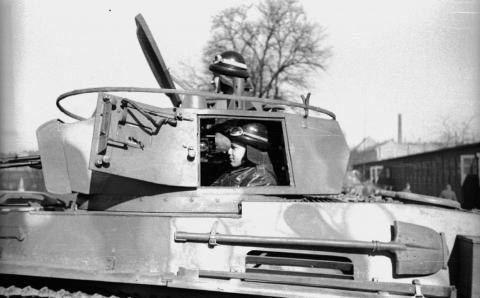
Un 38M/43M «Toldi» en columna de viaje junto a tropas germanas en algún lugar de la URSS.

CARRO DE COMBATE LIGERO 38.M TOLDI

El carro de combate húngaro Toldi porta su nombre en honor al histórico caballero medieval del siglo XIV, Miklos Toldi.  El diseño deriva de un modelo sueco, el Landsverk L-60 (uno de los más avanzados diseños del mundo en 1934), que se empieza a producir bajo licencia en Hungría en 1937. Siendo Checoslovaquia la amenaza nacional considerada del momento, Hungría estima que un carro ligero es más que adecuado para sus fuerzas blindadas y se le equipa con un pequeño cañón 36M de 20 mm. Con una tripulación de 3 hombres, también se le monta una radio de 30 kilómetros de alcance.

En diciembre de 1940 el regente húngaro, el almirante Miklos Horthy y Hitler mantienen un tratado de Paz duradera y amistad eterna y en base a esto y un «extraño» ataque aéreo acaecido el 26 de junio a la ciudad de Kassa (supuestamente por la aviación de Stalin), Hungría se lanza a la guerra contra el bolchevismo. En la misma jornada la aviación húngara ((Magyar Királyi Honvéd Légierő (MKHL)) bombardeará Stanislav (actual Ivano-Frankivsk) y la declaración de guerra se hará formalmente al día siguiente.

A principios de 1941 el 38.M Toldi cambia de denominación y pasa a ser el Toldi I. Para el comienzo de la intervención húngara en la Operación Barbarroja 81 unidades están listas de la variante Toldi I. Como vehículo ligero, veloz y maniobrero, demuestra buenas cualidades en el campo de batalla. No obstante, naturalmente su cañón de 20 mm. es totalmente ineficaz contra T-34 y carros pesados KV. Esta es quizá su mayor limitación. Seguirán otras versiones, el Toldi II y III, pero su escasa potencia de fuego será casi una constante en las series producidas.

Toldi tank
Toldi I. A pesar de ser un carro de combate de apreciables características, su cañón de 20 mm. es demasiado limitado como para ser usado en batallas entre blindados.

Como nueva aliada del III Reich, Hungría decide lanzar su Grupo de Ejército de los Cárpatos, bajo mando del teniente general Ferenc Szombathelyi, contra la URSS el 1 de julio de 1941 (bajo dependencia operativa del Grupo de Ejércitos Sur del mariscal Gerd von Ründstedt). Los Toldi estarán encuadrados en su Gyorshadtest o Cuerpo de Ejército Móvil (1ª Brigada Motorizada, 2ª Brigada Motorizada y 1ª Brigada de Caballería). Cada una de estas brigadas dispone de un batallón de reconocimiento, con diversos modelos de blindados más los Toldi I.

El 13 de julio de 1941 el 9º Batallón Acorazado del la 1ª Brigada Motorizada entra en combate con elementos del RKKA cerca de Antonovka. El Toldi del jefe de unidad es alcanzado por fuego de una pieza contracarro y al acabar la jornada otros 6 Toldi son destruidos igualmente.

En su progresión a través de Ucrania sus tripulaciones se verán involucradas en combates entre blindados, principalmente contra los T-26 y BT. Pero este diseño húngaro puede ofrecer sólo maniobrabilidad y, por contra, poca potencia de fuego y blindaje (33 mm. de espesor de coraza en su parte frontal y 13 mm. en la lateral). No siendo estos modelos del RKKA (Ejército Rojo) especialmente notables, pero al contar ellos con el cañón estándar de 45 mm., los Toldi no pueden competir. Participarán en combates junto a la 16. Panzer Division (Generalmajor Hans-Valentin Hube) y la Waffen SS Leibstandarte Adolf Hitler (Obergruppenführer-SS Josef «Sepp» Dietrich) en la zona de Kharkov. La tasa de pérdidas será prohibitiva y así, para 1942, los Toldi supervivientes serán relegados a tareas de reconocimiento, servicio para el cual su radio demostrará ser idónea para la transmisión de los movimientos adversarios…


¿Te ha resultado de interés este artículo? Deja tu comentario abajo…

¡Adquiere la obra cronológica Barbarroja 03:00h en edición de coleccionista!


Comprar Ahora Button

Sigue interesantes referencias también en Twitter @barbarroja0300h


——————————-[English version]——————————

BARBAROSSA’S MACHINES


LIGHT TANK 38.M TOLDI

toldi hungarian tank turret detail
Turret detail of the Hungarian light tank TOLDI. The type is designed for a crew of 3 men: Commander, gunner and driver.

The Hungarian light tank Toldi is named after the famous XIV century medieval knight, Miklos Toldi. The design derives from a license-built Swedish type, the Landsverk L-60 (one of the world’s most advanced designs in 1934) and is tested in 1937. Being Czechoslovakia the assessed threat to Hungary at the time, the Military is just satisfied with a light tank design for its armoured forces and it is fitted with a small 36M 20mm. gun. Crewed by 3 men, it is also equipped with a 30 km. range radio set.

In December 1940, the Hungarian Regent, Admiral Miklos Horthy and Adolf Hitler are bound by a treaty of constant peace and eternal friendship between the two countries. Based on this and a «bizarre» air raid suffered on the Hungarian city of Kassa on June 26th (allegedly by the Stalinist Aviation), Hungary joins the struggle against the Bolshevism. On this very same day the Hungarian Air Force ((Magyar Királyi Honvéd Légierő (MKHL)) bombs Stanislav (today Ivano-Frankivsk). The war will be declared to the USSR on the 27th.

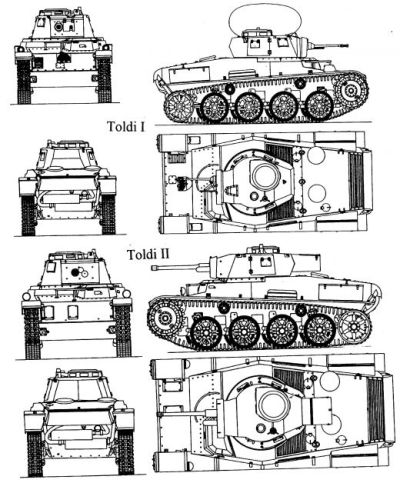
toldi diagrams
Toldi tanks I and II.

In the first quarter of 1941, the 38.M Toldi changes its name into Toldi I. For Operation Barbarossa Hungary’s participation will count on 81 units ready for action (Toldi I). It proves then to be a maneuverable, fast and light tank in the battlefield. However, its 20mm. gun is totally ineffective versus T-34’s and KV’s. This is its major shortfall. However, even though other upgunned versions will follow, Toldi II’s and III’s, their lack of effective fire-power will be almost a constant.

As a III Reich‘s new ally, Hungary decides to launch its Carpathian Army Group, under Lieutenant-general Ferenc Szombathelyi‘s orders, against the USSR on the 1st of July 1941 in support of  Hitler’s Operation Barbarossa. This force is in turn under von Ründstedt’s Army Group South and the Toldi’s will be fielded in its Gyorshadtest or Mobile Corps (1st Motorized Brigade, 2nd Motorized Brigade and 1st Cavalry Brigade). Each one of the brigades counts with a recconaissance battalion with different types of armour plus the Toldi I.

On the 13th of July 1941, the 9th Armoured Batallion of the 1st Motorized Brigade engages the RKKA (Red Army) near Antonovka. The unit commander’s Toldi is hit by an anti-tank cannon and at the end of the day six additional  Toldi‘s are taken out too.

During their combat duty across the Ukraine their crews will experience tank versus tank action, mostly against T-26’s and BT’s, where their best maneuverability and performance will be tested. Nevertheless, they will always be outgunned and almost defenseless lacking adequate protective armour (33 mm. on the front quarter and 13 mm. on the sides). These Soviet tanks are outdated at Barbarossa start, but their standard 45 mm. gun makes the Toldi vulnerable at a good distance. The Hungarian light tank will participate in combats in the area of Kharkov, along with the 16. Panzer Division (Generalmajor Hans-Valentin Hube) and the Waffen SS Leibstandarte Adolf Hitler (Obergruppenführer-SS Josef «Sepp» Dietrich). Its attrition rate will be unacceptably high and by 1942 the remaining Toldi’s will be relegated to the reconnaissance role. For this task, its radio set will prove helpful to report enemy troop movements…


Did you find this article interesting? Leave your comments below…

Follow other articles in Twitter @barbarroja0300h

45 mm. M1937 (53-K)

[English version at the end]

LAS ARMAS DE BARBARROJA

¡Ya a la venta Barbarroja 03:00 hrs!

CAÑÓN CONTRACARRO de 45 mm. M1937 (53-K)

Canon 45 mm RKKA
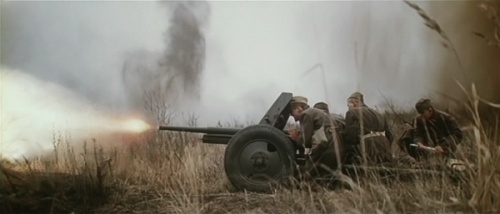
Una pieza de 45 mm. M1937 (53-K) en el momento de abrir fuego. Su baja silueta y potencia de fuego lo convierten en un arma letal para los blindados ligeros y medios de los países del Eje en la Operación «Barbarroja».

Esta pequeña pieza de artillería es sin duda una de los cañones más famosos del RKKA (Raboche-Krestianskaya Krasnaya Armiya o Ejército Rojo de Trabajadores y Campesinos) durante la Operación Barbarroja. Data de 1930 y está basado en el archifamoso diseño alemán de PaK 35/36 de 3,7 cm. producido por la firma alemana Rheinmetall. De hecho su parecido es tanto que es difícil diferenciarlos en algunas fotos de época. Entra en servicio en 1937 y tiene una dotación de 6 hombres.

canon 45mm museo
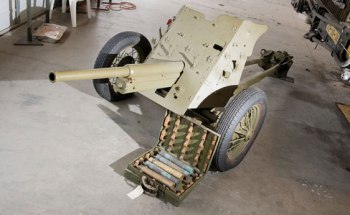
Un 53-k de 45 mm. en la actualidad. Es interesante apreciar la caja de munición con los proyectiles.

Puede hacer fuego efectivo directo hasta una distancia de 850 m. con proyectiles de hasta 2 kg. A 500 metros puede perforar una coraza de 43 mm. de grosor. Con estas características es efectivo contra los carros ligeros de la Wehrmacht del escenario del verano de 1941. No obstante para poner fuera de combate a un Panzer III o IV (o un StuG III) el disparo debe de efecturse a menor distancia…

¿Te ha resultado de interés este artículo? Deja tu comentario abajo…

¡Adquiere la obra cronológica Barbarroja 03:00h en edición de coleccionista o formato electrónico!


Comprar Ahora Button

Sigue interesantes referencias también en Twitter @barbarroja0300h

——————————–[English version]——————————

BARBAROSSA’S WEAPONS

45 mm. ANTI-TANK GUN M1937 (53-K)

canon 45 mm infantry advance support
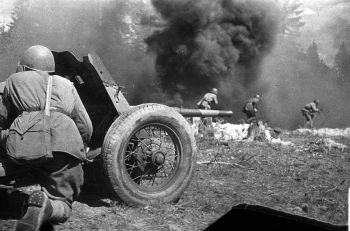
Dramatic moments for this infantry squad advancing under enemy fire. The 45 mm. gun is supporting the action of the riflemen.

This small artillery piece is undoubtedly one of RKKA’s most famous weapons during  Operation Barbarossa. Its historical background dates from 1930 and it is based on the famous German PaK 35/36 3.7 cm. gun build by Rheinmetall. As a matter of fact they look so much alike that it is hard to differenciate in some historical pictures. it joins the Red Army inventory in 1937 and it is crewed by 6 men.

45 mm. projectiles
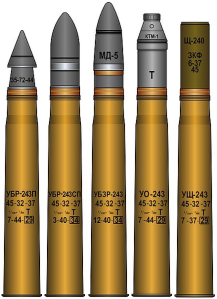
Different types of 45 mm. shells in the Soviet inventory.

The 53-K can make effective direct fire up to 850 meters (2 kg. heavy projectiles). It may pierce 43 mm. of armour at 500 metres. It is therefore capable of engaging German light-medium tanks in the summer 1941 scenario. However, in order to beat a Panzer III or IV (or a StuG III) the range should be less…

Did you find this article interesting? Leave your comments below…

Follow other articles in Twitter @barbarroja0300h
Panzerjäger I

[English version at the end]

LAS ARMAS DE BARBARROJA

¡Ya a la venta Barbarroja 03:00 hrs!


CAZACARROS PANZERJÄGER I (Sd.Kfz 101)

panzerjaeger I camuflado
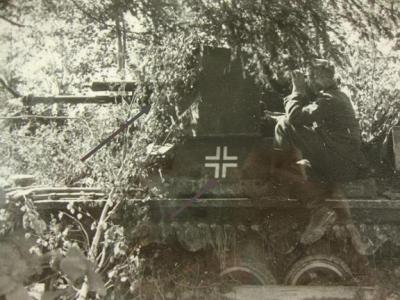
Panzerjäger I al acecho en una posición camuflada. El comandante del vehículo otea el horizonte en busca de blancos.

Utilizando el chasis de los obsoletos Panzerkampfwagen I, en 1939 se decide sacar partido de estos al existir aún un número de ellos en inventario. Con la experiencia de la campaña polaca, se decide montar sobre ellos una pieza contracarro y transformarlos en cañones autopropulsados. Se convierte así en el primer cazacarros de la Panzerwaffe (Arma Acorazada alemana). En dicha campaña las fuerzas blindadas germanas han sufrido bajas por acción de cañones contracarro polacos de pequeño calibre y esto anima a su modificación.

Una vez ocupada Checoslovaquia en 1939, se va a disponer de una pieza contracarro válida (de hecho más efectiva que el cañón estándar de 3,7 cm, de la Wehrmacht). Se trata de la excelente Skoda de 47 mm.

Anticipándose a la campaña en el oeste contra los aliados occidentales, se ordena la conversión de 200 vehículos Panzer I Ausf. B. La Wehrmacht estima que esta variante podrá hacer frente a los sólidos carros de combate de Francia. Los primeros salen de la cadena de montaje justo a tiempo en la primavera de 1940.

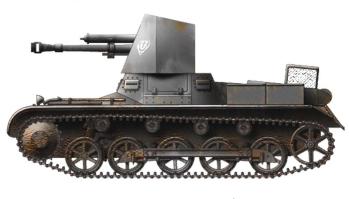
Perfil del Panzerjäger I. En esencia es un Panzer I al que se le sustituye la torreta por una pieza contracarro de orígen checo. La carena ofrece algo de protección frontal.

El Skoda PaK(t) 4.7 cm., como se le redesigna, tiene una buena “pegada”. A 500 metros es capaz de perforar hasta 50 mm. de blindaje. Y esto, como ya se ha mencionado es superior a la capacidad del PaK 35/36 normalizado en el inventario de la Wehrmacht. De hecho un Panzerjäger I al acecho a una distancia media-corta podría destruir un T-34 por su sector lateral o trasero.

Entran en combate en Francia, Balcanes, Yugoslavia, Grecia y la URSS.

Al comienzo de la Operación Barbarroja 5 batallones independientes de Panzerjäger I se distribuyen entre varios Armeekorps (cuerpos de ejército, que engloban a varias divisiones). No obstante, la mayoría se perderán para 1942…

El orden de batalla de estas unidades de apoyo es el que sigue:

Pz.Jg.Abt.4,7cm Sfl.521 asignado al XXIV. Armeekorps (mot.) (Bielorrusia)
Pz.Jg.Abt.4,7cm Sfl.529 asignado al VII. Armeekorps (Bielorrusia)
Pz.Jg.Abt.4,7cm 616 asignado al 4. Panzergruppe “Höpner” (Repúblicas Bálticas)
Pz.Jg.Abt.4,7cm Sfl.643 asignado al XXXIX. Armeekorps (mot.) (Bielorrusia)
4,7cm S.Fl.L.670 asignado al 1. Panzergruppe “Kleist” (Ucrania)


¿Te ha resultado de interés este artículo? Deja tu comentario abajo…

¡Adquiere la obra cronológica Barbarroja 03:00h en edición de coleccionista!


Comprar Ahora Button

Sigue interesantes referencias también en Twitter @barbarroja0300h
 

…………………………………[English version]………………………………

BARBAROSSA’S WEAPONS


TANK-DESTROYER PANZERJÄGER I (Sd.Kfz. 101)

panzerjaeger I destroyed
Knocked out Panzerjäger I. A Soviet soldier inspects the remains. Note the 2 hits on the left side of the vehicle. A third hit seems to have affected the central left bogie as well.

Germany decided in 1939 to get the most out of the obsolete Panzerkampfwagen I and to utilize its still available chassis. After the experience of the Polish campaign, it is requested to have them fitted with an antitank cannon and turn them into self-propelled anti-tank guns. This way it will become the first Panzerwaffe’s (German Armoured Arm) tank-destroyer. In the aforementioned campaign the German armoured forces have suffered numerous casualties by the effect of small anti-tank cannons and this fact triggers the project.

Once Czechoslovakia is fully occupied in 1939, Germany will have a very effective anti-tank gun (as a matter of fact, more powerful than the Wehrmacht’s standard PaK 35/36 3,7 cm. gun). It is the excellent Skoda 47 mm.

In anticipation of the incoming Western campaign against the Allies, thers is a requirement to convert 200 PzKpfw. I Ausf. B into Panzerjäger I. The Wehrmacht deems this platform will be capable to counter the solid French tanks. The first of the tank-destroyers will roll out from the assembly lines just in spring 1940.

Panzerjaeger I crew
The picture depicts the combat stations of the gunner and loader. The 14.7 mm. added fairing, offers protection just for small infantry arms and only on the frontal quarter.

The Skoda PaK(t) 4.7 cm., as it is renamed for German service, has indeed a good “punch”. It is capable of piercing up to 50 mm. of armor at 500 metres. A well ambushed Panzerjäger I at short-medium ranges could take out a T-34 with lateral or rear hits.

Consequently they will see action in France, the Balkans (Yugoslavia and Greece) and the USSR.

At Operation Barbarossa start 5 independent battalions (Abteilungen) of Panzerjäger I’s will be attached to different Army Corps (Armeekorps). Nevertheless by 1942 most of them will be lost…

The order of battle of these supporting battalions is as follows:

Pz.Jg.Abt.4,7cm Sfl.521 attached to XXIV. Armeekorps (mot.) (Belarus)
Pz.Jg.Abt.4,7cm Sfl.529 attached to VII. Armeekorps (Belarus)
Pz.Jg.Abt.4,7cm 616 assigned to 4. Panzergruppe “Höpner” (Baltic republics)
Pz.Jg.Abt.4,7cm Sfl.643 assigned to XXXIX. Armeekorps (mot.) (Belarus)
4,7cm S.Fl.L.670 assigned to 1. Panzergruppe “Kleist” (Ukraine)


Did you find this article interesting? Leave your comments below…

Follow other articles in Twitter @barbarroja0300h