Bf-109F contra POLIKARPOV I-153

[English version at the end]


LAS TÁCTICAS DE BARBARROJA

¡Ya a la venta «Barbarroja 03:00 hrs»!


MESSERSCHMITT Bf-109F contra POLIKARPOV I-153 CHAIKA


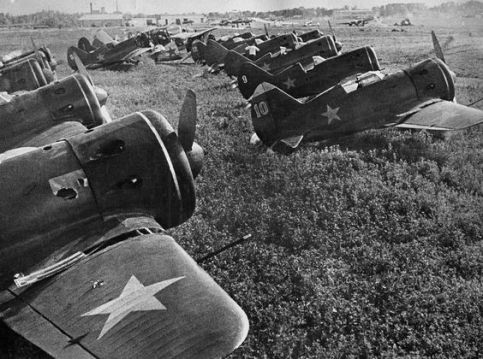
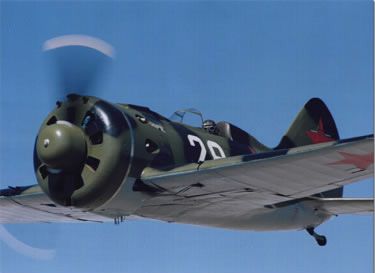
Dos clásicos adversarios en las primeras semanas de la campaña de invasión de la Unión Soviética. A pesar de ser ya un aparato obsoleto en el escenario del frente oriental  de 1941, el biplano I-153 Chaika (gaviota) es altamente maniobrable y está bien armado con 4 ametralladoras. Dispone de un motor Shvetsov M-62 de 1.000 C.V. que le proporciona una velocidad de tan sólo 424 km/h. a 5.000 metros. No obstante su escasa carga alar de 79,72 kg/m2 lo hace tremadamente ágil. Al amanecer del 22 de junio de 1941 centenares serán destruidos en sus aparcamientos, pero aún así muchos saldrán a combatir a la Luftwaffe.

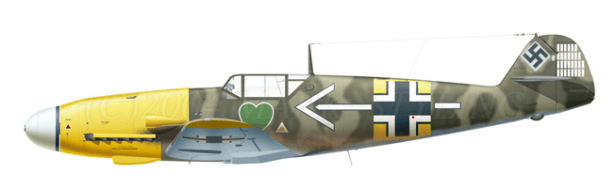
Por contra la ventaja principal del Messerschmitt Bf-109F reside en su capacidad de trepada y velocidad. Su motor de inyección Daimler-Benz 601A de 1.200 C.V. le proporciona 600 km/h. en altura (casi 170 km/h. más que el pequeño diseño de Polikarpov). Pero pesa unos 500 kg. más que el I-153 (carga alar 196 kg/m2) lo que le sitúa en desventaja en cuanto a agilidad. Por ello enseguida los pilotos de caza alemanes adoptarán la táctica de «golpear y escapar», usando su exceso de velocidad para volver a ganar altura y posicionarse para un nuevo ataque. Caer en la trampa de un combate evolucionante a baja altura y baja velocidad contra un adversario mucho más maniobrero puede costar caro.

Con todo, en el escenario del verano de 1941, los pilotos de la Luftwaffe se encuentran entre los mejores del mundo y la VVS (Fuerza Aérea Soviética), con limitadas excepciones, no está a la altura ni en cuanto a entrenamiento, ni en calidad técnica de la mayoría de sus aviones en plantilla. Se están empezando a recibir los primeros lotes de cazas modernos, tipo MiG-3, LaGG-3 y Yak-1, pero en números relativos son pocos y las tripulaciones aún están entrenándose. No olvidemos que en esta fase de la Blitzkrieg en Rusia, la espina dorsal de la fuerza de caza Roja está compuesta por Chaika y los monoplanos I-16, también obsoletos. Ambos serán relegados en breve a misiones aire-suelo…

bf109-moelders-jg51-rusia-1941
Messerschmitt Bf-109F-2 de Werner Mölders. JG 51
i153-chaika-vvs-barbarroja-urss
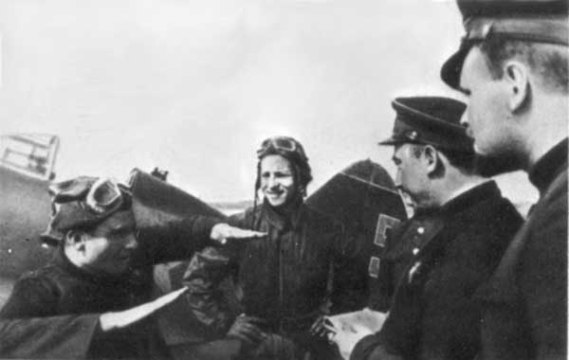
Polikarpov I-153 «Chaika». Este aparato «rojo 14» es capturado el primer día de «Barbarroja»


¿Te ha resultado de interés este artículo? Deja tu comentario abajo…

¡Adquiere la obra cronológica “Barbarroja 03:00h” en edición de coleccionista!



Comprar Ahora Button

Sigue interesantes referencias también en Twitter @barbarroja0300h

…………………………………[English version]………………………………

BARBAROSSA’S TACTICS


MESSERSCHMITT Bf-109F vs. POLIKARPOV I-153 CHAIKA


Both, two classic enemies in the first weeks of operation Barbarossa. In spite of being an obsolete aircraft in the 1941 Eastern Front scenario, the biplane I-153 Chaika (seagull) is highly maneuverable and well armed with 4 machine guns. It is powered by a 1,000 H.P. Shvetsov M-62 engine, with a top speed of only 424 km/h. at 5,000 metres. Nevertheless its low wing surface to weight ratio (79.72 kg/sqm) makes it extremely agile. At dawn the 22nd of September 1941, hundreds will be destroyed in German ground attacks on their very same bases. But still, many will fly and challenge the Luftwaffe in the skies.

The main advantage of the Messerschmitt Bf-109F consisted of its greater speed and climb-out performance. Its fuel injection 1,200 H.P. Daimler-Benz 601A engine makes it 600 km/h. fast (almost 170 km/h. faster than the Polikarpov’s design). As a disadvantage, it is heavier than the I-153 (wing surface to weight ratio 196 kg/sqm). Therefore it cannot outmaneouvre its adversary. Due to this factor Luftwaffe fighter pilots will soon learn to maximize the hit and run tactics and not to get engaged in slow-turning dogfights against a much more maneuverable aeroplane. Being lured into a low level air combat with the biplane is certainly a bad idea.

All in all, in the 1941 scenario Luftwaffe pilots are amongst the best of the world and the VVS (Soviet Air Force) is, with limited exceptions), below training standards and relatively short of modern fighters such as the MiG-3’s, LaGG-3‘s or Yak-1’s. Still the backbone of the Red fighter force is composed by these Chaikas and the I-16’s monoplanes, obsolete types too…


Did you find this article interesting? Leave your comments below…

Check other entries in Google+ too

Follow other articles in Twitter @barbarroja0300h
Mikoyan-Gurevich MiG-3

[English version at the end]

LAS MÁQUINAS DE BARBARROJA

¡Ya a la venta «Barbarroja 03:00 hrs»!

MIKOYAN-GUREVICH MiG-3

40-reg-caza-mig3-vvs-1941
Extraído de la obra cronológica «Barbarroja 03:00 h».

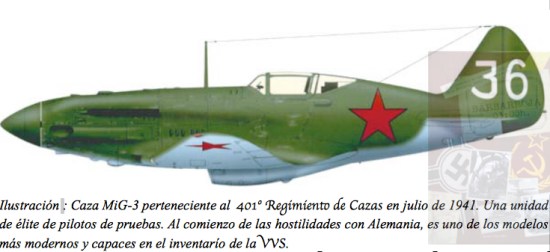
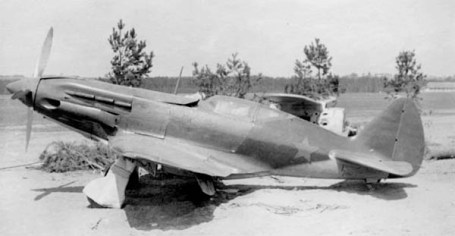
El MiG-3 (de la oficina de diseño de Mikoyan y Gurevich) es junto con la primera variante del caza de Yakovlev el interceptador más avanzado en el inventario de la VVS (Fuerza Aérea Soviética) en el verano de 1941. Es un tipo de aeroplano veloz, de líneas muy aerodinámicas, con una velocidad máxima de 640 km/h, próximo en características al Messerschmitt Bf-109F. Con fama de difícil manejo, en el momento de la operación Barbarroja hay entregados  más de 1.200 ejemplares, habiéndose iniciado su despliegue a las unidades de combate tan solo en  el diciembre anterior.

En la zona de Belostok el 9 SAD (9ª división Aérea Mixta) del general Chyornykh está equipado con dos centenares de modernos MiG-3 al amanecer del domingo 22 de junio de 1941. Una fuerza importante que cuenta con ocho regimientos aéreos de este modelo. Sin embargo en las primeras horas del Barbarossatag (día de Barbarroja) y debido a su expuesto despliegue próximo a la frontera con el Reich, decenas son destruidos sin remisión en el suelo por los ataques sorpresa del VIII. Fliegerkorps (8º Cuerpo Aéreo) del Generaloberst Dr. Wolfram von Richthofen.

mig3-1941-vvs
MiG-3 en aparcamiento. Está pintado en dos tonos de verde y la panza en el estándar soviético azul celeste. Tras él apenas es visible un «Chaika».

Por orden de Moscú, el 1 de julio de 1941 el 401 IAP (401 Regimiento Aéreo de Caza, una unidad de elite de pilotos de pruebas) es enviado al combate entre los ríos Berezina y Dnieper para probar nuevos tipos de aparatos en servicio. La Blitzkrieg de Hitler es imparable y la Luftwaffe domina los cielos. El teniente coronal  Stepan Suprun organiza cinco regimientos para el combate bajo iniciativa suya. Tienen como misión arrebatar a los germanos la superioridad aérea y dar ejemplo de como usar con efectividad los nuevos modelos de MiG. Recién llegados a su zona de despliegue ya consiguen derribos el mismo 1 de julio, entre el que cabe destacar el conseguido por el mismo Suprun. Pero estos éxitos están reservados para pilotos de la talla de Stepan Suprun, pues el MiG-3 por lo general no es contrincante para los Messerschmitt Bf-109F-2 de la veterana  JG 51 (Ala de Caza nº51). Es la unidad de los veteranos del teniente coronel Werner Mölders…


¿Te ha resultado de interés este artículo? Deja tu comentario abajo…

¡Adquiere la obra cronológica “Barbarroja 03:00h” en edición de coleccionista!


Comprar Ahora Button

Sigue interesantes referencias también en Twitter @barbarroja0300h

…………………………………[English version]………………………………

BARBAROSSA’S MACHINES

MIKOYAN-GUREVICH MiG-3

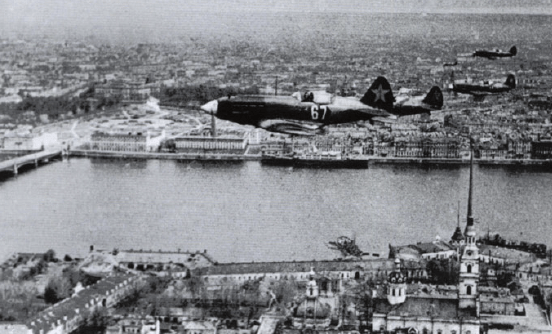
mig3-7-iak-leningrado-1941-bolchevismo
A MiG-3 flight over Leningrad. They belong to the 7th Fighter Air Corps, in charge of the defense of the legendary city, cradle of Bolshevism soon under siege by the Wehrmacht.

The MiG-3 (Mikoyan and Gurevich bureau of designs) is along with the first fighter of Yakovlev, the most modern aircraft in the VVS (Soviet Air Force) inventory in the summer 1941. It is a very fast interceptor with a maximum speed of 640 Km/h, close in performance to the German aMesserschmitt Bf-109F. Famous for having tricky handling characteristics, at the time of Barbarossa 1,200 units are already equipping many regiments of the VVS. A good number indeed, having in mind that the production started by the previous December.

The 9 SAD (9th Mixed Air Division) under general Chyornykh’s command, in the area of Belostok fields 200 modern MiG-3. It is a powerful force with up to 8 combat-ready air regiments; but in the first hours of the 22nd of June 1941 and due to their exposed nearby deployment to the Reich´s frontier, dozens are destroyed on the ground. It is the sneak air to ground action of the VIII. Fliegerkorps (Colonel General Dr. Wolfram von Richthofen’s 8th Air Corps).

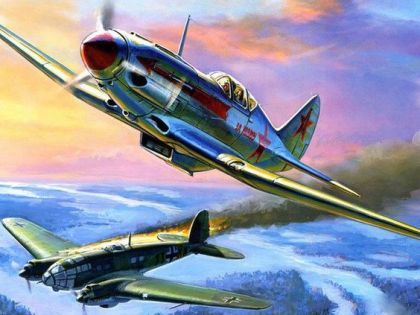
mig3-derriba-he111-dibujo-color-frente-ruso
Color drawing depicting a MiG-3 shooting down a German twin engine  bomber Heinkel He-111

Under Moscow’s direct orders on the 1st of July 1941  the 401 IAP (401st Fighter Air Regiment, a test pilot unit) is sent to combat. It is being deployed between the rivers Berezina and Dniepr, with the objective to test new models in service. Hitler’s Blitzkrieg is there in full swing and the Luftwaffe masters the skies. Lieutenant Colonel Stepan Suprun, under his own responsibility, organizes 5 test air regiments for combat. Their difficult task is to conquer the air superiority and to set example, new tactics and doctrine about how to use the new soviet fighters in service. On the very same day upon their arrival to the frontline, 401 IAP’s pilots claim the first air victories, including Suprun’s first kill. However, these feats are normally reserved to  a few skilled men like Suprun, because the MiG-3 is generally no match for the Messerschmitt Bf-109F’s of the JG 51 (51st Fighter Wing): the seasoned fighter pilots’ Wing of  Lieutenant Colonel Werner Mölders.


Did you find this article interesting? Leave your comments below…

Check other entries in Google+ too

Follow other articles in Twitter @barbarroja0300h
Polikarpov I-16 «Ishak»

[English version at the end]

LAS MÁQUINAS DE “BARBARROJA”

¡Ya a la venta «Barbarroja 03:00 hrs»!

POLIKARPOV I-16 «ИШАК«

Polikarpov vvs
Línea de Polikarpov I-16 «Ishak». Forman la espina dorsal de la aviación de caza al comienzo de la operación «Barbarroja».

El Polikarpov I-16 es el primer diseño de monoplano de caza de gran velocidad que ve la luz en 1933. Interviene en Extremo Oriente contra los japoneses, en la Guerra Civil Española y en la Guerra de Invierno de 1939-40 contra Finlandia. El pequeño Polikarpov I-16 “Ishak” se hace con una reputación de avión tremendamente maniobrero ya antes de la Segunda Guerra Mundial. El “Rata” o “Mosca”, como se le denomina en la Guerra Civil Española (los alemanes aún lo denominarán «Rata» así durante las operaciones en el frente oriental), es aún junto con su antecesor, el I-15, la espina dorsal de la fuerza de caza de la Voenno Vozdushnye Sily (las Fuerzas Aéreas Soviéticas) al comienzo de la campaña. Pero en ese momento ya es un aparato veterano, escasamente rival para los potentes y veloces Messerschmitt.

Polikarpov i16 vvs hoy
I-16 en la actualidad. El monoplano adquiere fama y notoriedad en la Guerra Civil Española. Curiosamente 2 años acabada la contienda, volverá a medirse contra su viejo adversario, el Messerschmitt Bf-109.

No obstante, como reza el viejo adagio del combate aéreo, “no es la máquina, sino el hombre”, en manos capaces presenta tenaz oposición contra los aviones del Eje. El mismo Barbarossatag, día 22 de junio de 1941, los aviadores alemanes se empiezan a percatar del fanatismo de algunos pilotos enemigos cuando esa jornada un solitario I-16 “Ishak” arremete deliberadamente contra un Heinkel He-111 en Ucrania. Con terrible regularidad empiezan a darse casos similares en la Blitzkrieg (guerra relámpago) contra Stalin cuando los pilotos soviéticos se quedan sin munición. Es la táctica suicida TARÁN.

Cuatro fábricas en la URSS (nº 39 Moscú, nº 21 Novgorod, nº 153 Novosibirsk y nº 458 Rostov del Don) producirán desde 1934 a 1942 la impresionante cifra de 10.292 unidades. La última variante, el I-16 tipo 29, estará impulsado por un motor Shvetsov M-63 de 1.100 c.v. a nivel del mar, con una velocidad máxima de 470 km/h. a 4.500 metros (nótese que su adversario directo, el Bf-109F, le superará en unos 120 km/h.)

Muchos ases soviéticos, hombres como Safonov, Antonenko o Brinko, adquirirán fama y derribos en la primeras semanas  de hostilidades contra el III Reich en el pequeño diseño de Polikarpov. El aparato será utilizado también en el rol de aire-suelo…

¿Te ha resultado de interés este artículo? Deja tu comentario abajo…

¡Adquiere la obra cronológica “Barbarroja 03:00h” en edición de coleccionista!


Comprar Ahora Button

Sigue interesantes referencias también en Twitter @barbarroja0300h

…………………………………[English version]………………………………

“BARBAROSSA’S” MACHINES

POLIKARPOV I-16 «ИШАК«

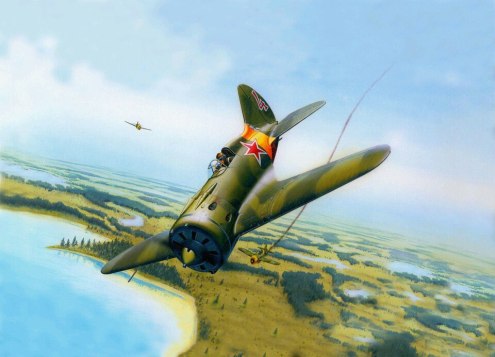
Polikarpov I-16 soviético derriba Brewster 239 Fuerza Aérea finlandesa
I-16 dogfighting a Finnish Brewster 239 in the Karelian isthmus. The small Polikarpov design made a reputation of a highly maneouvreable airplane.

The Polikarpov I-16 is the first monoplane high-speed fighter, born in 1933. It sees combat in the Far East against the Japanese, in the Spanish Civil War (1936-39) and in the Winter War against Finland (1939-40). The tiny Polikarpov I-16 “Ishak” gains the reputation of being highly maneuvreable even before World War Two. The “Rata” (Rat) or “Mosca” (Fly), as it was called during the Spanish Civil War (later the name of “Rata” will still be used by the Germans in the Eastern front campaing). It is along with its older brother, the I-15, the fighting workhorses of the Voenno-Vozdushnye Sily, the Soviet Air Force at the start of hostilities. However, it is at that stage a too veteran aircraft, barely a good match for the new powerful and fast Messerschmitts.

polikarpov ace, Brinko vvs
Lieutenant Pyotr Brinko (left), serving in the 13 IAP-KBF  after one of his missions at Hanko airbase. He will be credited with 14 kills before his death in action on the 14th of September’ 41.

Nevertheless, as the old saying goes “it is not the machine, but the man”, in capable hands flies to fight day after day the Axis aviation. On the very same Barbarossatag day, on the 22nd of June’ 41, German aviators start realizing the deadly determination of some enemy pilots when a lone I-16 rams deliberately a Heinkel He-111 bomber in the Ukraine. On a frantic regular basis these cases start happening in the Blitzkrieg (lightning war) against Stalin when the Soviet pilots run out of ammunition. It is the so called suicidal TARAN tactic.

Four factories in the USSR (no. 39 Moscow, no. 21 Novgorod, n0. 153 Novosibirsk and no. 458 Rostov upon Don) will produce between 1934 until 1942 the impressive output of 10,292 units. The last variant, I-16 type 29, will be powered by a Shvetsov M-63 1,100 H.P. engine at sea level, with a speed of 470 km/h. at 4,500 metres (worth noting is its main counterpart’s performance, the Bf-109F, which will overspeed the Polikarpov model by about 120 km/h.).

Many Soviet aces, men like Safonov, Antonenko or Brinko, will acquire fame and aerial victories in the first weeks of the conflict at the controls of the tiny Polikarpov’s design. The machine will also be used in the air-to-ground role…

Did you find this article interesting? Leave your comments below…

Check other entries in Google+ too

Follow other articles in Twitter @barbarroja0300h
Keller, Alfred. Generaloberst

Keller-Alfred 1 luftflotte
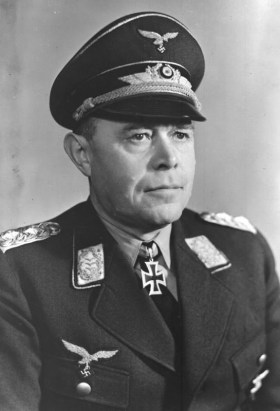
Generaloberst Alfred Keller. 1. Luftflotte. Grupo Ejércitos «Norte»

[English version at the end]

Generaloberst Alfred Keller. Está al mando del 1. Luftflotte (1ª Flota Aérea) asignada al teatro de operaciones del Grupo de Ejércitos “Norte”. Tiene como misión el apoyo desde el aire de las operaciones de Wilhelm Ritter von Leeb desde Prusia Oriental hasta las aguas del Dvina y posteriormente hasta Leningrado. Su cadena logística se gestiona desde Köningsberg, en Prusia Oriental.

Al igual que las otras unidades de la Luftwaffe de los otros teatros, participará al amanecer del 22 de junio en el ataque a bases aéreas de la VVS, la Fuerza Aérea Roja. La sorpresa será denominador común ocasionando pérdidas severas a las fuerzas aéreas del general Ionov (Distrito Especial Militar del Báltico). Entre otras alas de combate contará con la archifamosa Ala de Caza núm. 54 Grünherz, al mando de un líder muy capaz: el comandante Johannes Trautloft, veterano de la Guerra Civil Española.

Gracias a la intervención directa de los aviadores de Keller, se posibilita la progresión de las tropas de von Leeb hasta los arrabales de Leningrado. En las primeras semanas, los soviéticos reaccionan enviando a multitud de bombarderos Tupolev sin escolta de cazas, lo que engrosará la lista de victorias de los pilotos de Messerschmitt de Alfred Keller.

Pronto empezará a notar la falta de repuestos y cómo la operatividad de sus unidades desciende radicalmente, en un escenario bélico con las líneas de suministro sobreextendidas…

Esto y mucho más en la obra cronológica Barbarroja 03:00 hrs.


Comprar Ahora Button

———————————————[English version]———————————————

He is in command of the 1. Luftflotte (1st Air Fleet) assigned to Army Group “North”. His mission is to support von Leeb’s operations from Eastern Prussia to the waters of the river Dvina and further, towards Leningrad. His logistical support is managed from Königsberg (Eastern Prussia).

bf109 jg54 hannes traufloft
Johannes Trautloft’s personal Bf-109F-2. JG 54. 1.Luftflotte.

Like its other Luftwaffe sister units in the rest of the theatres of operations, at dawn on the 22nd of June 1941, he  will carry out surprise attacks against the airbases of the VVS, the Red Air Force. Under almost total surprise he will inflict severe losses on General Ionov‘s flying units (Baltic Special Military District). Apart from  bomber units, Alfred Keller will count on the famous JG 54 (54th Fighter Wing) Grünhertz commanded by a very capable leader: Major Johannes Trautloft, a seasoned veteran from the Spanish Civil War.

Thanks to Keller’s aviators, von Leeb will eventually arrive to the gates of Leningrad. In the first weeks the Soviets will react sending endless numbers of twin engine Tupolev bombers without fighter escort, fact that will greatly enlarge the list of victories of Keller’s Messerschmitt pilots.

However, this success will bring soon a decline of readiness, due to an acute lack of spare parts in a war scenario with over-extended logistic lines…


Volver

Se ha enviado tu mensaje

Advertencia
Advertencia
Advertencia

¡Aviso!

Kesselring, Albert. Generalfeldmarschall

kesselring albert 2 Luftflotte hgm
Generalfeldmarschall Albert Kesselring. 2. Luftflotte. Grupo Ejércitos «Centro»

[English version at the end]

Los generales de Barbarroja.

Está al mando del 2. Luftflotte (2ª Flota Aérea), integrado en el Grupo de Ejércitos Centro de von Bock. Inicialmente para su estrategia de ataques a tierra sorpresivos contra los aeródromos soviéticos cuenta con una muy entrenada fuerza de bombardeo y 3 alas de cazas (27ª, 51ª y 53ª). Una de ellas, la JG 51 (Jagdgeschwader 51) está al mando de una de las “estrellas” del momento en Alemania, el teniente coronel Werner Mölders. El adversario directo de Albert Kesselring será el general-maior I. I. Kopets y su aviación dependiente del Distrito Militar Occidental de Pavlov.

Luftwaffe Moelders 15jul41 100 victorias
Mölders regresa de una misión con 100 victorias. 15 julio 1941. JG 51 (2. Luftflotte)

La operación de Kesselring en su teatro de operaciones será similar al de los otros escenarios del frente ruso: 1) Una intensa campaña de destrucción del poder aéreo enemigo en el suelo, 2) apoyo directo cercano a las unidades acorazadas que abren camino hacia Minsk y Smolensk y 3) operaciones de interdicción (ataques a nudos de comunicaciones en profundidad para impedir en lo posible la afluencia de refuerzos del RKKA hacia el frente).

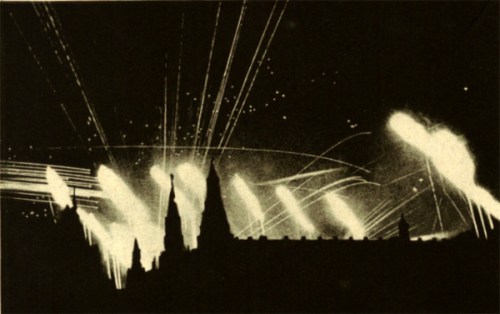
No obstante, el 19 de julio de 1941, los escuadrones de bombarderos de Kesselring, junto con otras especialmente desplegadas para la ocasión iniciarán una campaña de “bombardeo estratégico” de Moscú. Con base en aeródromos capturados en la zona de Smolensk-Orsha-Vitebsk, la Luftwaffe efectúa raid tras raid nocturno. Moscú, empero, no es pillado por sorpresa, sino que establece una formidable defensa de anillos sucesivos de artillería antiaérea, reflectores, un sistema experimental de radar de alerta temprana y, naturalmente, una espectacular fuerza de unos 500 interceptadores. La campaña distará mucho de ser catalogada como de “estratégica” por varias razones. La principal es que la Luftwaffe nunca fue diseñada para tal fin, sino como apoyo a las unidades de tierra.


[English version]

Moscow-21-jul-air-raid-Luftwaffe
Moscow under air attack. The Luftwaffe starts a strategic campaing on the 21-22 July 1941

He commands the 2. Luftflotte (2nd Air Fleet), which in turn is under von Bock’s Army Group Centre. Initially for his sneak attacks on Soviet aerodromes counts on a very seasoned force of bombers and the addition of 3 fighter wings (27th, 51st and 53rd). One of those, the JG 51 (Jagdgeschwader 51), is commanded by one of Germany’s “stars”, Lieutenant-Colonel Werner Mölders. Albert Kesselring’s direct adversary will be the general-maior I. I. Kopets and his Western Military District‘s Aviation (Pavlov).

Kesselring’s operation in this theatre of operations will be identical to the other sectors of the “Russian front”: 1) And intense campaign of air-to-ground attacks against the enemy’s air power, 2) close air support to the armoured leading divisions clearing their way towards Minsk and Smolensk and 3) interdiction missions (deep attacks into the Soviet rearguard against communication lines to avoid as much as possible the reinforcement of the RKKA).

However, in July 1941, Kesselring’s bomber squadrons, along with other deployed ad-hoc units for the task will commence a “strategic bombing campaign” against Moscow. These assets, based on captured aerodromes in the area of Smolensk-Orsha-Vitebsk (Belarus), will fly night after night towards Stalin’s Capital city. Moscow, however, is prepared for such a contingency. An impressive defensive system is set in the form of concentric anti-aircraft artillery rings, searchlights and an experimental early warning radar. Of course, all is complemented with a formidable force of +500 interceptors. Nevertheless the campaign will fall short of the strategic concept for several reasons. The main one is that the Luftwaffe was never designed as an strategic air force, but a support arm for the ground units.


Volver

Se ha enviado tu mensaje

Advertencia
Advertencia
Advertencia

¡Aviso!

Löhr, Alexander. Generaloberst

[English version at the end]

Löhr 4th Air fleet 3rd Reich Air Force
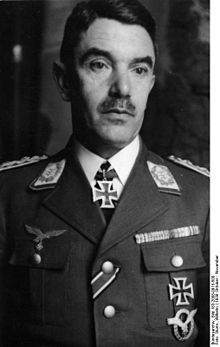
Generaloberst Alexander Löhr. 4. Luftflotte. Grupo Ejércitos «Sur» [Cortesía Bundesarchiv]

Está al mando del 4. Luftflotte (4ª Flota Aérea). En el teatro de operaciones meridional del gigantesco frente del este tiene como misión la cooperación con el Grupo de Ejércitos Sur de von Rundstedt, también desde  bases en Rumanía. En total el área de operaciones comprende unos 550 por 450 kilómetros si tenemos en cuenta los objetivos en la península de Crimea (o unos 900 kilómetros, si tenemos en cuenta la importante ciudad de Rostov, la puerta del Cáucaso).

Su V. Fliegerkorps (5º Cuerpo Aéreo) debe apoyar las acciones desde el sur de Polonia del 6º Ejército, el 17º Ejército y sobre todo de las fuerzas acorazadas, que abrirán cuña hasta el corazón de Ucrania: las del 1er Grupo Acorazado de Ewald von Kleist.

El otro Fliegerkorps hermano, el IV., con cazas Messerschmitt y bombarderos Heinkel He-111 en dotación, debe prestar apoyo al avance, no sólo del 11er Ejército alemán, sino también al del 3er y 4º Ejército Rumano. El flanco meridional del frente ruso es el más “internacional” de todos. Existe además un destacamento operativo de la Luftwaffe en Rumanía denominado Deutsche Luftwaffenmission Rümanien, un despliegue de gran interés estratégico para Hitler, pues su objetivo es la protección de la industria del petróleo de su aliado.

Frente a la aviación de Alexander Löhr se despliegan las tres flotas de la aviación roja en Ucrania: La correspondiente al Distrito Especial Militar de Kiev, la de Odessa y la de la  Flota del Mar Negro (445 aviones). Sólo en el Distrito de Kiev se reparten en unos 150 aeródromos hasta 20 regimientos de cazas (entre otros tipos de unidades). Indudablemente un contingente aéreo numeroso que cuenta entre sus filas con 185 de los modernos MiG-3 y 62 Yak-1. Teniendo en cuenta que Löhr dispone de aproximadamente un tercio de esa fuerza, debe contar con el factor sorpresa para neutralizar a la VVS (Fuerza Aérea Soviética)…

¡ESTO Y MUCHO MÁS EN BARBARROJA 03:00H!


Comprar Ahora Button

———————————————[English version]———————————————

He is in command of the 4. Luftflotte (4th Air Fleet). His mission in the gigantic Eastern front is to cooperate with von Rundstedt’s Army Group South with bases also located in Rumania. In all, his theatre of operations is 550 by 450 km., if taken into account targets in the Crimean peninsula (or 900 km. if considering the key city of Rostov, the gate of the Caucasus).

bf109 LG2 ihlefeld 1941 USSR Russian Front
Messerschmitt Bf-109E. Herbert Ihlefeld from LG 2, 4. Luftflotte. This Fighter Wing is supporting Army Group «South’s» offensive in the Ukraine.

His V. Fliegerkorps (5th Air Corps) is meant to support from Southern Poland the 6th Army, the 17th and specially the armored forces, in charge to open up a breech towards Ukraine’s heart: von Kleist’s 1. Panzergruppe.

ploesti oil refinery
Ploesti oil refinery in Romania. Once the war starts against the USSR, Romanian oil will be Hitler’s main source of petrol and lubricants. The defense of these installations are of the outmost importance.

Its sister air corps, the IV. Fliegerkorps, with Messerschmitt‘s and Heinkel He-111 medium bombers must provide with direct support to not only the German 11th Army, but to the 3rd and 4th Romanian armies. The southern flank of the Russian front is the most “international” of all of them. On top of that there is an operational Luftwaffe Command in Romania called Deutsche Luftwaffenmission Rümanien. For Hitler it is of the outmost importance to defend his ally’s oil industry.

In front of Löhr’s airplanes there are up to three «red air force» deployments in the Ukraine: Kiev Special Military District, Odessa and the Black Sea Fleet (445 airplanes). Only in the Kiev District there are 150 bases with not less than 20 fighter regiments. Undoubtedly a powerful force that needs to be neutralized as it counts on 185 modern MiG-3’s and 62 Yak-1’s. Considering that Alexander Löhr has about 1/3 of that force, he must count on the surprise factor in order to knock out the VVS (Voenno-Vozdushnye Sily or Air Force) on the ground…

Did you find this article interesting? Leave your comments below…


Volver

Se ha enviado tu mensaje

Advertencia
Advertencia
Advertencia

¡Aviso!