Bock, Fedor von. Generalfeldmarschall

[English version at the end]

 PERSONAJES DE BARBARROJA

¡Ya a la venta Barbarroja 03:00 hrs!

MARISCAL DE CAMPO FEDOR VON BOCK (1880-1945)

bock, fedor von
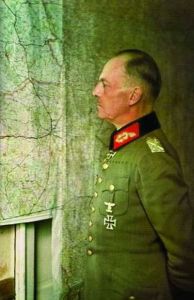
El Mariscal Fedor von Bock, llegará en una campaña exitosa a traves de Bielorrusia hasta las puertas de Moscú en diciembre de 1941. El mariscal no verá el final de la Segunda Guerra Mundial al morir por las heridas recibidas por un caza-bombardero británico el 4 de mayo de 1945. La fotografía corresponde a abril de 1940, siendo aún general antes de la campaña contra Francia. [Cortesía Bundesarchiv]

Moritz Albrecht Franz Friedrich Fedor von Bock nace en el seno de una familia prusiana aristocrática. Interviene ya en la Primera Guerra Mundial, donde participa como capitán y es ascendido en la postrimerías del conflicto a comandante. Por su excepcional determinación y bravura en combate al mando de un batallón recibe la prestigiosa condecoración Pour le Mérite.

En 1938 al mando de un grupo de ejércitos (temporalmente redesignado como 8º Ejército) entra en Austria en la histórica anexión con el III Reich (Anschluss). El mismo año participa en la también anexión de los Sudetes (hasta este momento territorio checoslovaco). Al estallar la nueva conflagración mundial en 1939 está al mando del Grupo de Ejércitos Norte y toma parte en la invasión de Polonia. La asombrosa rapidez de las operaciones germanas asombrará al mundo y pondrá a punto la nueva forma de hacer la guerra que los medios de comunicación tildarán de «guerra relámpago». Bock enlaza con los nuevos aliados del III Reich, la URSS, en la ciudad fortaleza de Brest-Litovsk. Mientras Alemania ocupa las regiones occidentales de Polonia, Stalin se queda con las orientales. Polonia como tal deja de existir. Francia será el próximo teatro de operaciones de von Bock en donde tendrá a su cargo al Grupo de Ejércitos B. Acabada brillantemente la campaña es ascendido a mariscal de campo el 19 de julio de 1940.

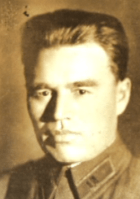
El ya mariscal de campo Fedor von Bock será quien se enfrente al general Dmitri Grigorievich Pavlov en Bielorrusia en el amanecer de la Operación Barbarroja, el domingo 22 de junio de 1941. Pavlov, comandante en jefe del Distrito Militar Occidental, cubre un extenso sector desde el sur de las antiguas repúblicas balticas hasta las casi impenetrables marismas del Pripyat. Por su parte, von Bock está al mando esta vez del poderoso Grupo de Ejércitos Centro. De los tres grupos de ataque sobre los que se basa la campaña de invasión de la Unión Soviética, el suyo es el más potente al contar con no uno, sino dos Panzergruppen. Son el 2. Panzergruppe de Heinz Guderian y el 3. Panzergruppe de Hermann Hoth (en total 9 divisiones Panzer y 7 motorizadas). Con todos los efectivos suman 14 cuerpos de ejército más reservas (dos cuerpos más, una división y una brigada). El orden de batalla del Heeresgruppe Mitte <> Grupo de Ejércitos Centro es que sigue:

  • 4º Ejército (Mariscal de campo von Kluge)
  • 9º Ejército (Teniente general A. Strauss)
  • 2. Panzergruppe (Teniente general H. Guderian)
  • 3. Panzergruppe (Teniente general H. Hoth)
  • 2. Luftflotte (Mariscal de campo A. Kesselring)
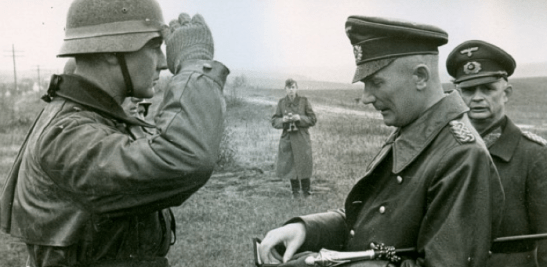
bock y ordenanza
Un mensajero se presenta ante von Bock para el traslado de órdenes. Frente del Este.

A pesar de lo que la literatura clásica postula sobre el objetivo en Rusia de von Bock, Moscú no es necesariamente este. La Directiva núm. 21 de la campaña establece de hecho tres ejes de ataque (a parte de operaciones accesorias en Finlandia y Noruega), pero el progreso de von Bock será siempre condicionado al éxito de la conducción de las operaciones de los grupos norte y sur, contra Leningrado y Ucrania. Muchos de los comandantes de Hitler asumen que Moscú es el objetivo natural de la invasión, pero este, sujeto a agrios debates al más alto nivel en julio-agosto de 1941, no está en la mente de Adolf Hitler, al menos antes de capturar Leningrado y Kiev. Incluso hoy en día, la Operación Barbarroja no es bien entendida en Occidente, ni sus objetivos están claros para el público en general (ver planeamiento de Barbarroja).

En tiempo récord el mariscal von Bock embolsará en varias pinzas gigantescas acorazadas a potentes formaciones del RKKA (Ejército Rojo de Trabajadores y Campesinos) en Bielostok, Novogrudok y área de Minsk (ver Batallas de cerco Bielorrusia). Tal será la velocidad de las operaciones con un adversario con su sistema de mando y control prácticamente inoperante, que las increibles noticias llegarán a Moscú como un mazazo.
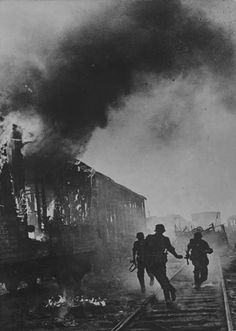
Smolensk
Las primeras tropas en entrar en Smolensk son las de la 29ª División Motorizada, pertenencientes al 2. Panzergruppe de Guerian. El cerco creado pretende la destrucción del 16º, 19º y 20º Ejércitos.

Sin respiro sus dos cuñas acorazadas, la de Hoth al norte, hacia el gran «puente de tierra» entre los ríos Dvina y Dnieper y la de Guderian al sur, cruzando este último, se preparan para su siguiente batalla de envolvimiento: Smolensk. Empero la captura de Smolensk supondrá más dificultades de las encontradas con Minsk. De hecho, Bock, no consigue asestar esta vez un golpe operacional esencial al Frente Occidental soviético. Muchos hombres del RKKA consiguen escapar esta vez a través de un estrecho corredor que Bock no conseguirá sellar. Tras la captura de Smolensk, el mariscal se ve forzado a hacer un alto en las operaciones para descanso de los hombres y las máquinas. Acabado este en agosto de 1941, llega la orden que muchos comandantes sobre el terreno no consiguen comprender: el 3. Panzergruppe de Hoth es ordenado a girar 90º hacia el norte para apoyar en la captura de Leningrado y Guderian se verá forzado contra su voluntad a hacer lo propio hacia el sur para apoyar en la captura de Kiev. Bock se ve así desprovisto de sus fuerzas blindadas, aunque se le permite seguir avanzado con sus hombres de a pie en lenta marcha hacia Moscú.

Cuando finalmente, tras la caída de Kiev en septiembre de 1941, Hitler le de luz verde para el renovado asalto a Moscú (Operación Tifón), von Bock se quedará a las puertas de la capital de Stalin, con unas líneas de suministro sobreextendidas, con gran nivel de atrición, sin equipación adecuada de invierno para la tropa y en el invierno más crudo del siglo (temperaturas que rondan los -40ºC). En estas condiciones y alegando motivos de salud, Hitler le relevará del mando el 19 de diciembre de 1941 de su Grupo de Ejércitos Centro, tras lo que pasará a la reserva del OKH (Oberkommando des Heeres<>Alto Mando del Ejército)…

¿Querrías conocer los detalles de esta y las demas operaciones?

¡Adquiere la obra cronológica Barbarroja 03:00h en edición de coleccionista!


Comprar Ahora Button

Sigue interesantes referencias también en Twitter @barbarroja0300h

Deja tu comentario abajo…


[English version]

BARBAROSSA’S PROTAGONISTS

FIELD-MARSHALL FEDOR VON BOCK (1880-1945)
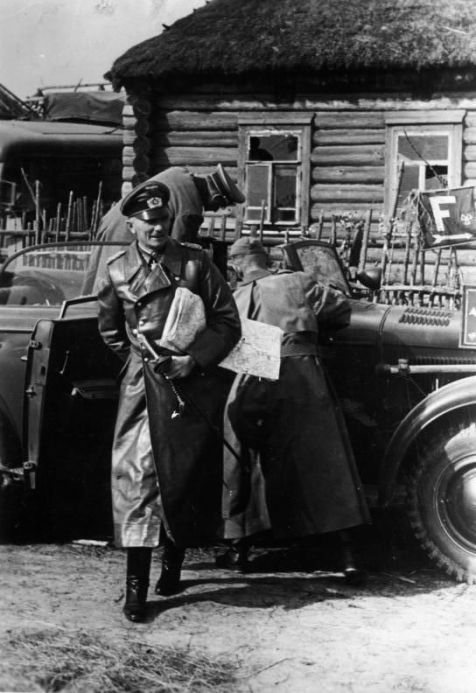
bock command car
Von Bock gets off his command car somewhere in the USSR. After the fall of Minsk his HQ is established in Borisov at the waters of the historically famous Berezina river.

Moritz Albrecht Franz Friedrich Fedor von Bock is born in an aristocratic Prussian family. He participates in the First World War as a Captain and is promoted to Major at the end of the conflict. For his gallantry and bravery in combat commanding a batallion he is awarded the prestigious Pour le Mérite.

In 1938 during the Austrian Anschluss he commands an army group (later redesigned temporarily as 8th Army) and enters in the sister state for the annexation to the III Reich. The same year occupies with his troops the Sudetenland (part of Czechoslovakia at the time) that Hitler demands as a German ethnic territory. When World War Two starts in September 1939, his now Army Group North commences operations against Poland. The new swift way to wage war (the lighning war as the mass media names it) is then presented to the puzzled world. Von Bock links up then with Germany’s new ally, the USSR, in the fortress city of Brest-Litovsk. The campaign is a total success, occupying Hitler the western regions of Poland, while Stalin occupies the Eastern ones. Poland as such ceases to exist. France will be von Bock’s next theatre of operations where he is in charge of Army Group B. Once the campaing in the West is victoriously finished, he is promoted to Field Marshall on the 19th of June 1940.

Thus, Fedor von Bock will march head on against General Dmitri Grigorievich Pavlov at dawn, Sunday 22nd of June 1941. The latter, Commander of the Western Military District, covers and extensive area streching from the old Baltic republics to the impenetrable Pripyat marshes. On the other hand, von Bock has under his orders the powerful Heeregruppe Mitte (Army Group Centre). Out of the 3 attack axis planned, his is the most potent as it counts with not only one, but two Panzergruppen. They are the 2. Panzergruppe (Heinz Guderian) and the 3. Panzergruppe (Hermann Hoth), a mixed force of 9 Panzer divisions and 6 motorized divisions. In all, von Bock counts on 14 army corps plus reserves (2 more corps, 2 divisions and 1 brigade). Army Group Centre‘s order of battle is as follows:

  • 4th Army (Field marshall von Kluge)
  • 9th Army (Colonel-general A. Strauss)
  • 2. Panzergruppe (Colonel-general H. Guderian)
  • 3. Panzergruppe (Colonel-general H. Hoth)
  • 2. Luftflotte (Field marshall A. Kesselring)
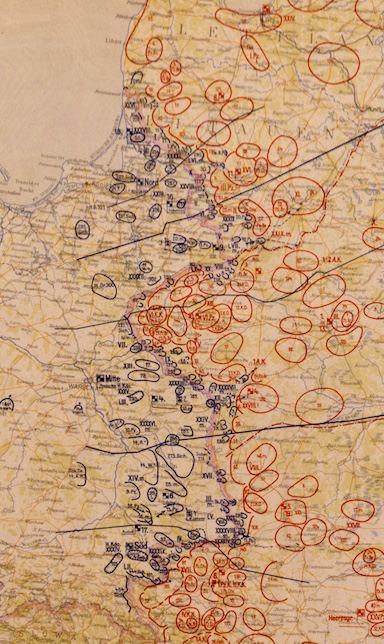
Byelostok salient german map
Lage Ost Karte or Situational Eastern Map, depicting the order of battle at the start of operation «Barbarossa». The two large blue diverging lines show the areas od resposibility of each Army Group. Von Bock’s units are logically displayed between those.

In spite of what the classical Operation Barbarossa bibliography states, Moscow was never Hitler’s preferred objective. His Operations Directive no. 21 clearly defines 3 attack thrusts (and additional support operations in Norway and Finland) and Bock’s target (Moscow) is «on condition». This means that his advances are always linked to the progresses of his neighbouring army groups heading for Leningrad and Kiev. Many of Adolf Hitler’s Commanders assume that Moscow must be the natural target of the whole campaign, but this, subject to sour debates at the utmost level in July-August 1941, is not in the Führer‘s mind; at least before taking Leningrad and Kiev. Even today, Operation Barbarossa is not well understood in the West by the general public (see planeamiento de Barbarroja<>Barbarossa’s planning [ESP+ENG]).

Fedor von Bock will encircle and destroy a large number of RKKA (Red Army of Workers and Peasants) troops in the areas of Bielostok, Novogrudok and area of Minsk (see Batallas de cerco Bielorrusia<>Encircling battle Belarus ESP+ENG]). The speed of the maneouvre will be so unexpected that the news of the fall of Minsk will reach Moscow as a hammer blow.

Without respite his two armoured wedges, Hoth’s by the north towards the «land bridge» between rivers Western Dvina and Dniepr and Guderian’s by the south, crossing the Dniepr, set the basis for the next encirclement battle: Smolensk. However the capture of this historical city poses stiffer problems than Minsk. He will eventually take Smolensk as well, but this time with greater difficulty and without having being capable of achieving a decisive operational blow to the enemy. Many troops find a escape route from the Kessel (cauldron) through a narrow corridor that the Field marshall will not seal. After the seizing of the enclave, von Bock is then forced to make a halt for rest and refit of his units. Men and machines are too worn out to continue. When the Wehrmacht starts moving forward again in early August 1941 a shocking order arrives that many field commanders simply don’t grasp: the 3. Panzergruppe must turn 90º North to support the capture of Leningrad, while Guderian must turn South to help in the Ukraine. Moscow must wait! Von Bock is therefore stripped of his armoured forces but in turn is allowed to advance to Moscow with his foot soldiers.

Eventually, after the fall of Kiev in September 1941, when Hitler authorizes him to go for Moscow (Operation Typhoon), he will just get to the gates of Stalin’s capital city. And no more…With overextended logistic lines, great attrition of men and machines, with poor winter equipment for his soldiers and in the coldest winter of the century (temperatures around -40ºC), he will not make it. In these conditions and with deteriorating health Hitler will relieve him from the Command of Army Group Centre on the 19th of December 1941. He will be posted to the OKH reserves (Oberkommando des Heeres<>Army High Command)…

Did you find this article interesting? Leave your comments below…

Follow other articles in Twitter @barbarroja0300h
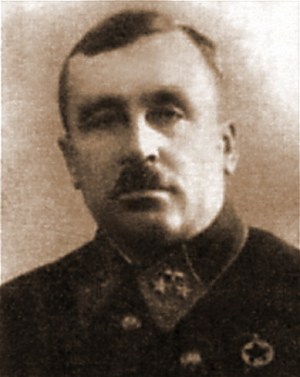
Ionov, Aleksei Pavlovich. General-maior

[English version at the end]

 PERSONAJES DE BARBARROJA

¡Ya a la venta Barbarroja 03:00 hrs!


GENERAL-MAIOR (VVS) ALEKSEI PAVLOVICH IONOV (1894-1942)

ionov aleksei pavlovich
General-maior Ionov, Comandante de las Fuerzas Aéreas del Distrito Especial Militar del Báltico. Su carrera terminará tan sólo a los nueve días de la invasión de Hitler.

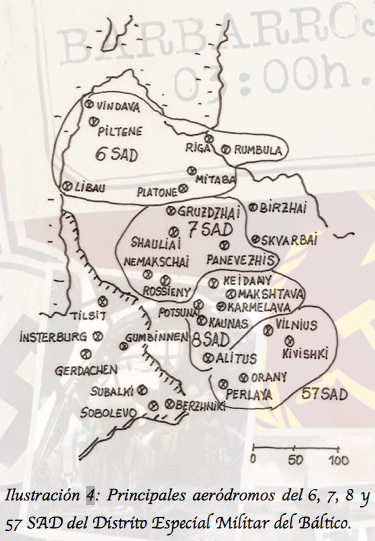
Es el responsable de las fuerzas aéreas asignadas al Distrito Especial Militar del Báltico. Como los demás Distritos Militares, inmediatamente es redenominado «Frente» al comenzar las hostilidades, con los que Ionov se convierte en Comandante en jefe de las Fuerzas Aéreas del Frente Noroccidental (general F. I. Kuznetsov). Cubre el flanco derecho del dispositivo soviético frente a Prusia Oriental. Tiene su cuartel general sito en Riga (Letonia) y bajo su cadena de mando van a operar 5 divisiones aéreas (4 del tipo mixto con bombarderos y cazas y una puramente de cazas). En total 453 bombarderos y 744 cazas; de los últimos hay en inventario 140 modernos interceptadores MiG-1 y MiG-3. Son las unidades de vuelo que se listan:

  • 21 IAP PVO (Riga, Letonia): 65 I-16, 1 I-153 y 1 SB
  • 4 SAD (Panevezhis, Lituania ): 107 SB, 164 I-153/ I-15 y 1 I-16
  • 6 SAD (Shiauliai, Lituania): 141 I-16/ I-153 y 105 SB
  • 7 SAD (Kaunas, Lituania): 106 MiG-3/ MiG-1, 94 I-16/ I-153, 41 SB y 5 Pe-2
  • 8 SAD (Riga, Letonia): 23 MiG-3, 48 I-16, 80 I-153, 1 I-15 bis, 129 SB/ Ar-2, 5 Il-2 y 7 Pe-2
  • 57 SAD (Pskov, Rusia): 36 I-16, 25 I-153
  • 161 IAP «reservas» (Lepel, Bielorrusia): 42 I-16/ I-153
  • 312 SBAP (Riga, Letonia): 6 SB

leyenda: IAP=regimiento de cazas, SAD=división aérea mixta, PVO=defensa aérea, SBAP=regimiento de bombardeo rápido

Su adversario directo será el 1. Luftflotte (Generaloberst Alfred Keller), que entre otras unidades cuenta con la archifamosa Ala de Caza nº 54 “Grünherz”. Es la veterana unidad de cazas Messerschmitt del «corazón verde» al mando del «as» Johannes Trautloft. La misión promordial de la aviación del Eje es destruir el poder aéreo soviético en el suelo y el sector de las ex-repúblicas bálticas no es excepción. Al amanecer del 22 de junio de 1941 las bases de Ionov más próximas a la frontera sufrirán pérdidas inasumibles, con sus aviones aún alineados en los aparcamientos. Incomprensiblemente la orden de pasar las unidades a alerta de combate llega en la noche del 18-19 de junio al cuartel general del Distrito Especial Militar del Báltico, empero las órdenes de dispersión se transmiten sólo en la víspera de este domingo 22. Muchos pilotos soviéticos están sencillamente durmiendo en sus propias casas. Incluso en el caso de su 6ª División Aérea Mixta (desplegada en el centro del Distrito Militar), sólo se recibe la alerta…¡dos horas antes del ataque! Para los pilotos de la Luftwaffe cada misión parece un ejercicio de tiro en tiempo de paz. Las primeras salidas de la VVS (Voyenno-Vozdushnye Sily<>Fuerza Aéra Soviética) no ocurren antes de hora u hora y media tras el ataque alemán. Es exactamente a las 03:40 horas (de Berlín), es decir Barbarroja + 40 minutos, cuando por fin la 7ª División Aérea Mixta recibe órdenes de Riga de llevar a cabo contraataques contra aeródromos alemanes en Tilsit y emplazamientos. Aún así Ionov no autoriza (probablemente bajo directries de Moscú) sobrevolar la frontera con el Reich.

vvs szf
Despligue de bases aéreas de Ionov principlamente en las repúblicas bálticas y Bielorrusia

Sus pérdidas, no obstante, aún siendo elevadas, no impiden que un número de cazas y bombarderos reaccionen e intenten neutralizar desde el aire la cuña Panzer del general Höpner (Comandante del 4. Panzergruppe), pero la Luftwaffe goza de superioridad aérea y las pérdidas en las unidades de Ionov son siempre numerosas (especialmente entre los bimotores de bombardeo que operan temerariamente sin escolta de cazas). Es de reconocer el arrojo de estos aviadores, conscientes de sus pocas posibilidades contra la caza germana. En la confusión del momento, otras de sus unidades más a retaguardia y no atacadas, ni siquiera salen a volar en la trágica mañana de la Operación Barbarroja.

Höpner y sus fuerzas blindadas alcanzan en tiempo récord las aguas del gran río Dvina Occidental. Ionov lanza prácticamente lo poco que le resta. Con sus regimientos de bombarderos desde bases en Letonia, Estonia y área de Leningrado intenta destruir las cabezas de puente aún poco consolidadas en el Dvina, pero irremisiblemente los Messerschmitt Bf-109 de la JG 54 “Grünherz” se cobran una y otra vez un alto precio entre los bimotores Tupolev.

Ionov, al igual que sus camaradas de los otros frentes, no tiene más remedio que salvar los aparatos aún en servicio tras cada ataque alemán en progresivos redespliegues a bases del interior. Sus esfuerzos no le valdrán el reconocimiento de Moscú. El día 1 de julio, tan sólo 9 días tras el comienzo de la campaña de  invasión de Hitler, será arrestado, destino común de muchos de los generales soviéticos que en vano intentan desesperadamente aguantar la embestida de la Wehrmacht. Será fusilado en febrero de 1942 y como tantos otros, rehabilitado su nombre en 1955, tras a muerte de Stalin.


¿Querrías conocer los detalles de esta y las demas operaciones?

¡Adquiere la obra cronológica Barbarroja 03:00h en edición de coleccionista!


Comprar Ahora Button

Deja tu comentario abajo y síguenos haciendo click en la opción al final de la página


[English version]

BARBAROSSA’S PROTAGONISTS


MAJOR-GENERAL SOVIET AIR FORCE (VVS) ALEKSEI PAVLOVICH IONOV (1894-1942)


mig3 leningrad
MiG-3’s patrolling the skies of Leningrad. They belong to the 7 IAK (Fighter Air Corps). The machine is counted as the most modern in the VVS order of battle at Barbarossa start.

He is responsible for the air units assigned to the Baltic Special Military District. As all the other military districts it changes its designation to «Front« when hostilities commence and  this way Major General Ionov becomes the Commander-in-Chief of the North Western Front Air Forces (F.I. Kuznetsov). It covers the right-most flank of the Soviet deployment facing Eatern Prussia. Ionov’s headquarters is located in Riga (Latvia) and under his command operate 5 air divisions (4 mixed divisions with fighters and bombers and 1 with just fighters). In all operate 453 bombers and 744 fighters; from the latter there are 144 modern interceptors MiG-1 and MiG-3. The order of battle is as follows:

  • 21 IAP PVO (Riga, Latvia): 65 I-16, 1 I-153 and 1 SB
  • 4 SAD (Panevezhis, Lithuania ): 107 SB, 164 I-153/ I-15 and 1 I-16
  • 6 SAD (Shiauliai, Lithuania): 141 I-16/ I-153 and 105 SB
  • 7 SAD (Kaunas, Lithuania): 106 MiG-3/ MiG-1, 94 I-16/ I-153, 41 SB and 5 Pe-2
  • 8 SAD (Riga, Latvia): 23 MiG-3, 48 I-16, 80 I-153, 1 I-15 bis, 129 SB/ Ar-2, 5 Il-2 and 7 Pe-2
  • 57 SAD (Pskov, Russia): 36 I-16 and 25 I-153
  • 161 IAP «reservas» (Lepel, Belarus): 42 I-16/ I-153
  • 312 SBAP (Riga, Latvia): 6 SB

IAP=fighter air regiment, SAD=mixed air division, PVO=air defense, SBAP=fast bomber air regiment

His direct adversary will be Colonel-General Alfred Keller’s 1. Luftflotte, who, amongst other units, will count on the famous 54th Fighter Wing “Grünherz”. It is the seasoned Messerschmitt «Green Heart» wing commanded by the «ace» Johannes Trautloft. The primary mission of the Axis aviation is the destruction of the adversary’s air power on the ground and this is no exeption in the ex-Baltic republics. Thus at dawn, Sunday 22nd of June 1941, Ionov’s closest airbases to East Prussia will suffer severe losses in his air fleets still neatly aligned on the aprons. Shockingly, the instructions for combat readiness are received at the Military District headquarters on the night of the 18th-19th of June, but the alert is raised only on this Sunday’s eve. Many soviet pilots are still peacefully sleeping at home. Even in the case of the 6th Mixed Air Division (deployed on the centre of the Military District), the alarm is received…just 2 hours before the attacks!! For the Luftwaffe pilots it seems a routine peace-time shooting exercise. The first VVS (Voyenno-Vozdushnye Sily<>Soviet Air Force) sorties are lauched not before 1-1.5 hours after the German attack. Exactly at 03:40 hours (Berlin time), at Barbarossa + 40 minutes, the 7th Mixed Air Division receives at last orders from Riga HQ to retaliate targeting aerodromes in Tilsit and other spots. General Ionov, though, does not clear flights into German airspace (possibly following Moscow’s guidelines).

ar-2 shaiuliai
Ar-2 belonging to the 46 BAP/ 7 SAD based in Shaiuliai. This base along with many others will suffer the main thrust of the Luftwaffe air-to-ground attacks on Sunday, the 22nd of June 1941.

However, in spite of staggering losses, numbers of VVS  fighters and bombers manage to get airborne and try to neutralize Höpner’s 4. Panzergruppe wedging through the Soviet lines. But the Luftwaffe controls the skies and Ionov suffers many losses in air-to-air combats (especially amongst the twin-engine bombers without fighter escort). It is indeed remarkable the courage of these aviators, standing small chances versus the enemy fighters. In this confusing moments, other rear area unscathed bases even fail  to launch any sorties at all on this deadly Barbarossa’s Sunday, due to lack of orders.

Höpner and his Panzer‘s reach in record time the banks of the great Western Dvina river. With his last remaining forces Ionov tries to destroy the still vulnerable bridgeheads on the Dvina, but as expected, again and again the JG 54’s Messerschmitt Bf-109‘s claim appalling numbers of twin engine Tupolev’s.

Ionov, along with other air commanders from other fronts, has no other chance except to try to save his mauled forces after every German attack towards rearguard bases. But his desperate attempts won’t grant him the appreciation of Moscow. On the 1st of July 1941, just 9 days into Hitler’s campaign against the USSR, he will be arrested. Just one another case of the many examples of comrades in arms who struggle to withstand the German onslaugh. He will face the firing squad in February 1942 and like many others too, his name will be rehabilitated in 1955, always after Stalin’s death.


Did you find this article interesting? Leave your comments below and follow us clicking on «SEGUIR» at the end of the page

ITALIA

[English version at the end]

 PARTICIPANTES DE BARBARROJA

¡Ya a la venta Barbarroja 03:00 hrs!

ITALIA

macchi mc.200
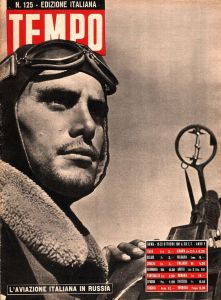
El C.S.I.R. cuenta inicialmente con el apoyo de los 51 Macchi MC.200 «Saetta» del 22º Grupo de Caza.

La mayor operación militar de todos los tiempos está rodeada de mitos. Una visión parcial típica en Occidente de la más grande guerra relámpago de todos los tiempos, muestra al Führer Adolf Hitler como único actor en la campaña de asalto de la URSS el 22 de junio de 1941. No obstante la Operación Barbarroja, ciertamente bajo la bandera de la cruz gamada, es concebida como una misión multinacional, entre cuyos participantes está Italia como una de las naciones protagonistas.

Casi un mes antes del Barbarossatag (día de Barbarroja), Benito Mussolini, el Duce, ya ordena la creación de un cuerpo expedicionario denominado Corpo d’Armata autotrasportabile. Sólo el 21 de junio de 1941 por la tarde, horas antes de la guerra relámpago que está apunto de desatarse, Hitler informa a Mussolini al respecto. Y así el 22 de junio, fecha del inicio de la Operación Barbarroja, Mussolini declara también la guerra a la Unión Soviética. Al día siguiente se empieza a organizar su fuerza de combate al mando del general Francesco Zingales ya bajo las siglas C.S.I.R. (Corpo di Spedizione Italiano in Russia). Inicialmente se planea que vaya acompañado por dos grupos de bombardeo y otro de caza (coronel Carlo Drago).

El 30 de junio el dictador alemán da luz verde para envío de sus aliados italianos a la U.R.S.S. Y el 10 de julio están ya listos para la partida. El contingente está compuesto por 62.000 hombres y 5.000 vehículos. Se integran bajo dependencia operativa del 11º Ejército de la Wehrmacht (general Schobert), a su vez operando en el teatro de operaciones de Ucrania (Heeresgruppe SüdGrupo de Ejércitos Sur de von Rundstedt). Son las divisiones de infantería motorizada 9ª Pasubio (Generale di Divisione Vittorio Giovannelli) y 52ª Torino (Generale di Divisione Luigi Manzi). Estas divisiones, a pesar del hecho de haber sido ideadas como «móviles», carecerán del adecuado material motorizado en el campo de batalla. Por añadidura, la última gran unidad es la 3ª Celere Division “Principe Amedeo Duca d’Aosta” (Generale di Brigata Mario Marazzani) que engloba a un regimiento de Bersaglieri y un batallón acorazado con blindados ligeros L3/33. Zingales será relevado del mando por el general Giovanni Messe, al causar el primero baja por una grave infección pulmonar.

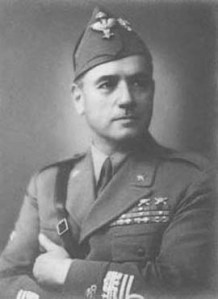
giovanni messe
General Giovanni Messe (1883-1968). Comandante en Jefe de las fuerzas expedicionarias italianas C.S.I.R. en la URSS hasta octubre de 1942. Messe releva justo antes del inicio de la intervención italiana al general Zingales, que causa baja por enfermedad.

El 14 de julio Mussolini ordena a su Estado Mayor la creación de un segundo cuerpo expedicionario compuesto por infantería (esta vez motorizada). No obstante, una semana más tarde, reconociendo las posibilidades reales del Ejército, insistirá en motorizar «en la medida de nuestras posibilidades» a estas unidades. Añadirá que «nuestra participación no puede ser menor que la de los eslovacos. Es necesario cunplir con nuestras obligaciones para con nuestros aliados».

El 29 de  julio de 1941 se organiza su componente aéreo (Comando Aviazione del Corpo di Spedizione Italiano in Russia) en el 22º Gruppo Autonomo Caccia Terrestre con 4 escuadrillas (359ª, 362ª, 369ª y 371ª) equipadas con 51 aparatos de caza Macchi M.C.200 «Saetta». Se le agrega el 61º Gruppo Autonomo Osservazione Aerea con 32 bimotores de reconocimiento Caproni Ca.311 (34ª, 119ª y 128ª escuadrillas). Apenas un mes más tarde

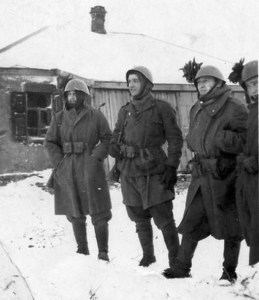
bersaglieri
Hombres del regimiento de Bersaglieri de la División Celere. Su casco con el característico adorno lateral identifica a estas unidades.

recibirán los aviadores italianos su bautismo de fuego al abatir a 2 I-16 «Ishak» y 6 Tupolev SB-2 sin lamentar pérdidas propias.

Tras el cruce de los ríos Dniester y Bug la primera unidad en entrar en combate en la zona de Nikolayev es la  División Pasubio. La Torino, deficiente en medios motorizados, la sigue a la zaga. El 14 de agosto los italianos pasan bajo dependencia operativa del 1. Panzergruppe «Kleist» hasta verano del año siguiente. Las tropas del Duce se enfrentan así en esta etapa a las unidades del Distrito Militar de Odessa, redesignado (al estilo ruso) el primer día de hostilidades como Yuzhny Front (Frente Sur) del general Cherevichenko e inmediatamente después bajo órdenes de Iván Tiulenev. En la noche del 26 al 27 de septiembre la Divisón Torino cruzará en gran río Dnieper bajo fuego de artillería y ataques aéreos. En septiembre toman parte en la captura de Dniepropetrovsk y Kiev y al mes

siguiente las tropas del general Messe se harán con Stalino (actual Donetsk), importante enclave industrial y ferroviario en la cuenca del Don. En noviembre ocuparán Gorlovka.

La participación italiana, no exenta de coraje y con grandes expectativas políticas por parte de Benito Mussolini, sufrirá de carencias de equipamiento y deficiente logística. Cuando la intervención en la URSS del Duce concluya drásticamente en 1943 tras el desastre de las fuerzas del Eje en Stalingrado, 90.000 italianos habrán causado baja en el frente ruso…

¿Querrías conocer los detalles de esta y las demas operaciones?

¡Adquiere la obra cronológica Barbarroja 03:00h en edición de coleccionista!

Comprar Ahora Button


Deja tu comentario abajo y síguenos haciendo click en la opción al final de la página


[English version]

BARBAROSSA’S PARTICIPANTS

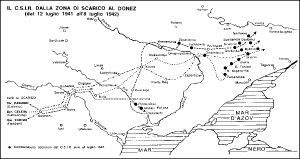
operations map csir
Area of operations of the Italian expeditionary forces in the USSR. The promising swift advances at the start of Barbarossa change dramatically in 1942-43 after the Soviet counterattack (Operation «Uranus»Operatsya «Uran») and encirclement of the German 6th Army (Paulus) in Stalingrad.

ITALY

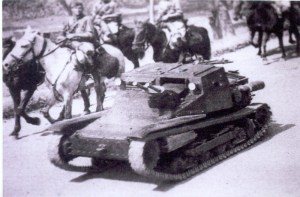
l3/33
61 tanquettes L3/33, like the one depicted, are fielded by the Regiment «San Giogio» belonging to the 3rd Division Celere P.A.D.A. The L3/33 tanquettes have low combat value, with little protection even to infantry arms. They serve as scouts and perhaps their better characteristic consist of their extra low profile and speed, being difficult targets for enemy gunners.

The largest military operation of all times is full of myths. One of those, specially extended in the West, is to believe that it was just the III. Reich the only actor to assault the USSR on the 22nd of June 1941. However, Operation Barbarossa, certainly under the svastika flag, was a multinational league of nations and one of those was Italy, with an important contribution of troops.

Almost one month before the Barbarossatag (day of commencement of Barbarossa), Mussolini orders the creation of an expeditionary corps known as Corpo d’Armata autotrasportabile. Only on the evening of the 21 st of June 1941, a few hours before the unleash of the vastest lightning war of all times, Hitler informs Mussolini accordingly about it. Thus, on the 22nd of June, the date of Operation Barbarossa, il Duce declares the war on the Soviet Union too. On the next day the Italian combat forces begin to become organized under the command of General Francesco Zingales, already under the new acronim C.S.I.R. (Corpo di Spedizione Italiano in Russia). It is thought to be supported by 2 bomber groups and an additional fighter group (Colonel Carlo Drago).

tempo magazine
«Tempo» magazine publishes on the 16th of October 1941 an article about the Italian aviators in the Soviet campaign.

On the 30th of June Adolf Hitler eventually authorizes his Italian ally to go into action in the U.S.S.R. This way they are fully ready to march on the 10th of July. They fall under the operative hierarchy of Schobert’s 11th Army, which in turn attacks through the Ukranian sector, responsibility of von Rundtedt‘s Army Group South (Heresgruppe Süd).   It will consist of 62,000 troops and 5,000 vehicles. The Italian contingent consists of the 9th Infantry Division Pasubio (Generale di Divisione Vittorio Giovannelli) and the 52nd Infantry Division Torino (Generale di Divisione Luigi Manzi). These units, in spite of being conceived as «mobile», will lack enough motorization in the battlefield. Last but not least, the third of the large units is the 3th Celere Division “Principe Amedeo Duca d’Aosta” (Generale di Brigata Mario Marazzani), which will encompass a Bersaglieri regiment and an armoured battalion with the light L3/33’s. The Commander-in-Chief Zingales will not depart eventually to the USSR, as he will suffer an acute lung infection. He is replaced by General Giovanni Messe.

On the 14th of July Mussolini orders his High Command to organize a second expeditionary corps of infantry forces (this time motorized). However, just a week later and realizing the real chances of his Army will insist on motorizing «to the maximum extent of our possibilities». He adds «…our participation can’t be less than that of the the Slovaks. It is imperative to comply with our duty towards our allies…».

On the 29th of July 1941 the air support (Comando Aviazione del Corpo di Spedizione Italiano in Russia) is finally organized into the following flying units: the 22º Gruppo Autonomo Caccia Terrestre with 4 fighter squadrons (359th, 362nd, 369th y 371st) fielding 51 Macchi M.C.200 «Saetta». The 1º Gruppo Autonomo Osservazione Aerea with 32 reconnaissance twin engine Caproni Ca.311’s (34th, 119th y 128th squadrons) is added. Just a month later the Italian aviators will receive their baptism of fire when they manage to shoot down 2 I-16 «Ishak» y 6 Tupolev SB-2 without any own losses.

stalino
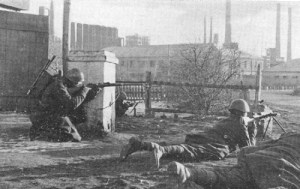
C.S.I.R. troops fighting for the strategic enclave of Stalino. The first Italian units will enter in the city on the 20th of October.

After forcing the Bug and Dniestr rivers, the first ground unit to become engaged in combat is the División Pasubio in the Nikolayev area. The Torino, still lacking adequate motorization is lagging behind. On the 14th of August 1941 the Italians are set under operational orders of the 1. Panzergruppe «Kleist» (until the summer of 1942). The soldiers of the Duce are facing at this stage the troops of the Odessa Military District, renamed on the first day of war, following the Russian style, as Yuzhny Front (Southern Front). This Front is under orders of General Cherevichenko and right after under General Ivan Tiulenev’s. During the night of the 26th-27th of September 1941, the Torino division crosses the great Dniepr river under heavy artillery and air attacks. In September the C.S.I.R. soldiers participate in the seizing of Dniepropetrovsk and Kiev. On the next month General Messe’s men will achieve an important objective which is the capture of Stalino (Donetsk today), an important industrial and railway centre in the Don basin. In November they will occupy Gorlovka.

The Italian participation, undoubtedly corageously carried out  and always under great political expectations from Benito Mussolini, will suffer from serious shortfalls in equipment and logistics. Finally and dramatically in 1943, Mussolini’s intervention in the «Russian front» will cease after Stalingrad’s Axis defeat, suffering more than 90,000 casualties…

Did you find this article interesting? Leave your comments below and follow us clicking on «SEGUIR» at the end of the page

BARBARROJA-1: La última orden

[English version at the end]


 ESTRATEGIA DE BARBARROJA

¡Ya a la venta Barbarroja 03:00 hrs!

21 de JUNIO de 1941

timoshenko-revista-time
Mariscal Semyon Konstantinovich Timoshenko (1895-1970), en primera plana de la revista TIME en junio de 1941. Comisario de Defensa del Pueblo (equivalente a Ministro de Guerra)

DIRECTIVA Nº 1 AL CONSEJO SOVIÉTICO DE LOS DISTRITOS FRONTERIZOS DEL OESTE SOBRE LA POSIBILIDAD DE UNA INVASIÓN ALEMANA

A: DISTRITO MILITAR DE LENINGRADO, DISTRITO ESPECIAL MILITAR DEL BÁLTICO, DISTRITO ESPECIAL MILITAR DE KIEV Y DISTRITO MILITAR DE ODESSA.

1) A lo largo del 22-23 puede comenzar una invasión sorpresiva en los distritos militares occidentales.

2) No responder a acciones de provocación que puedan agravar la situación. Las tropas deben estar al máximo nivel de alerta para identificar la agresión externa de alemanes o aliados.

3) Ordeno:

– A lo largo de la madrugada del 22 ocupar posiciones de combate próximas a la frontera.
– Dispersión y enmascaramiento de la aviación en sus aeródromos al amanecer del 22
– A todas las unidades pasar a alerta de combate. Tropa debe dispersarse y camuflarse
– Alerta máxima a la defensa antiaérea. Protección de ciudades y objetivos.

Firmado Timoshenko y Zhukov

timoshenko y zhukov
El mariscal Timoshenko (con binoculares) y su viejo camarada, general Zhukov en una fotografía de 1940.

¿Querrías conocer los detalles de esta y las demas operaciones?

¡Adquiere la obra cronológica Barbarroja 03:00h en edición de coleccionista!


Comprar Ahora Button

Deja tu comentario abajo y síguenos haciendo click en la opción al final de la página


[English version]

BARBAROSSA-1: The last order


BARBAROSSA’S STRATEGY

OOB ENGLISH
Order of battle of deployed forces along the vast frontier from the Baltic until de Black Sea. The forces deployed in Finaland and Norway are not depicted. [ Courtesy http://www.onwar.com ]

21st OF JUNE 1941

DIRECTIVE NO. 21 TO THE SOVIET COUNCILS OF THE WESTERN MILITARY DISTRICTS ABOUT THE PROBABILITY OF A GERMAN INVASION.

TO: LENINGRAD MILITARY DISTRICT, BALTICS SPECIAL MILITARY DISTRICT, KIEV SPECIAL MILITARY DISTRICT AND ODESSA MILITARY DISTRICT

1) Expecting surprise offensive in the Western Military Districts.

2) Do not respond to any provocations that might escalate the conflict. Troops shall be in maximum alert in order to identify the German or her allies’ surprise aggression.

3) I order:

-To deploy early morning to forward combat outposts along the frontier.
-To disperse and camouflage aviation assets in their aerodromes during the early morning hours of the 22nd.
-All units to go into full combat alert.
-Anti-air defense to be raised to full alert. Protect cities and key objectives.

Signed, Timoshenko and Zhukov.

Did you find this article interesting? Leave your comments below and follow us clicking on «SEGUIR» at the end of the page

Kliment Voroshilov KV-1

[English version at the end]

 MÀQUINAS DE BARBARROJA

¡Ya a la venta Barbarroja 03:00 hrs!


CARRO DE COMBATE PESADO KLIM VOROSHILOV KV-1

kv-1-museo-fas-rusia
Un KV-1 en la actualidad en el museo de las Fuerzas Armadas de la Federación Rusa. Se puede apreciar la gran solidez del vehículo y sus anchas cadenas para sortear terrenos no preparados.

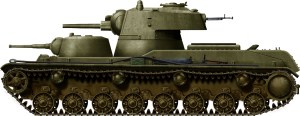
Obedece al concepto doctrinal soviético de operaciones en profundidad. Desarrollada en los años 20 esta doctrina meramente ofensiva, necesita de vehículos suficientemente resistentes capaces de romper el frente enemigo y penetrar incólumes en el dispositivo adversario.  Por añadidura se requieren carros rápidos (modelos BT) y vehículos de reconocimiento. Este grupo de blindados pesados, a veces llamados carros de “asedio”, deben ser capaces de aguantar los impactos de calibres contracarro. El carro de combate de 5 torretas T-35 es el primero que sigue esta filosofía. Se suceden otros prototipos, a destacar el SMK y el T-100 desarrollados en la fábrica Kirov de Leningrado (LKZ<>Leningradskom Kirovskom Zavode). Una modificación del primero con una sóla torreta será el que reciba propia denominación como KV-1.

El KV adopta el nombre del Comisario de defensa del Pueblo, Kliment (Klim) Voroshilov, y recibe el visto bueno de Stalin para su producción. Algunos modelos de preserie son usados en la Guerra de Invierno contra Finlandia satisfactoriamente (1939-40). De hecho no sólo el KV participa sino también prototipos del SMK y el T-100. En febrero de 1940 comienza la producción en serie en la fábrica mencionada de Leningrado y pronto en la fábrica de tractores de Chelyabinsk, más allá de los Urales. El primer modelo se denomina KV-1 mod. 39.

Es un impresionante blindado de 45 toneladas y 75 mm. de coraza en su parte más protegida, cuyo principal defecto reside en que adolece de un buen sistema de transmisión para mover tamaña masa. Otra de sus deficiencias es su escasa visibilidad a través de escotillas estrechas. El modelo 39 porta un cañón “corto” L-11 de 76,2 mm. Versiones posteriores a finales de 1940 portarán el F-32 capaz de perforar 66 mm. de coraza a 500 metros (KV-1 mod. 1940). Una vez de comienzo la campaña de invasión de Hitler de la URSS el 22 de junio de 1941, abrirán fuego a 1.000 metros con efectividad contra cualquier carro germano. El armamento principal está complementado por 3 ametralladoras DT-29 de 7,62 mm. Una de ellas cubre el arco trasero desde la parte posterior de la torreta.

smk precursor del KV-1
El «Carro de Combate de Asedio» SMK. Se ve la similitud con el KV-1, su desarrollo posterior de una sola torreta.

La planta motriz se basa en el motor diesel de 12 cilindros en V (V-2k) capaz de desarrolar 600 C.V. Su máxima velocidad en carretera es de 34 Km/h. Algunos modelos KV-1 mod. 39 recibirán un refuerzo de coraza extra de 20 mm. adicionales. Pasarán así a denominarse KV-1E.

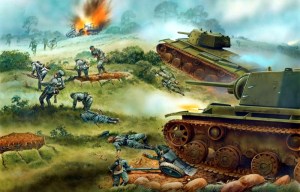
Durante la Operación Barbarroja el primer encuentro con los Panzer se produce en Raseiniai (Lituania) a poco más de 24 horas de la ruptura de hostilidades. La 6. Panzer Division del general Landgraf hace frente a estos súperpesados. La divisón germana, que está equipada con numerosos blindados ligeros de orígen checoslovaco Pz.Kpfw 35(t), al atardecer entran en Raseiniai y cruzan el río Dubissa para hacer frente a la 2ª División Acorazada con un número de gigantes KV. Es la unidad del General-maior Krivoshein ¡La sorpresa táctica de los carros KV es total! Pasan incólumes a través de las posiciones de infantería alemanas y machacan con sus anchas orugas piezas contracarro e incluso embisten a los “pequeños” Panzer. La cabeza de puente en la margen derecha del Dubissa debe ser abandonada, pues no hay manera de detener a estos monstruos de acero que siguen adelante como si nada. Acto seguido cruzan el puente sobre el río…Sólo la intervención de obuses de grueso calibre apuntando con sus bocas horizontalmente en tiro directo y, sobre todo, de piezas de 8,8 cm., consiguen posteriormente ralentizar la contraofensiva del la 2 TD (Tankovaya Divizya<>División Acorazada). Los combates duran todo este caluroso día de junio.

Para suerte de las tropas del Eje, “sólo” hay 639 KV en servicio el 22 de junio de 1941. Son prácticamente invulnerables al fuego de piezas contracarro (PaK 36 de 3,7 cm. y PaK 38 de 5,0 cm). Como se acaba de relatar, no son pocas las situaciones difíciles en las que los germanos deben emplearse a fondo con piezas de 8,8 cm. y obuses de 10,5 cm. con tiro directo para inmobilizarlos en zonas vulnerables, como la transmisión o el sector trasero, menos blindado. La mayoría de los KV verán acción en el sector septentrional del gigantesco «frente ruso», por el sencillo hecho de la localización geográfica de su fábrica de ensamblaje en Leningrado…


¿Querrías conocer los detalles de esta y las demas operaciones?

¡Adquiere la obra cronológica Barbarroja 03:00h en edición de coleccionista!


Comprar Ahora Button

Deja tu comentario abajo y síguenos haciendo click en la opción al final de la página


[English version]

BARBAROSSA’S MACHINES


HEAVY TANK KLIM VOROSHILOV KV-1


shot out kv-1
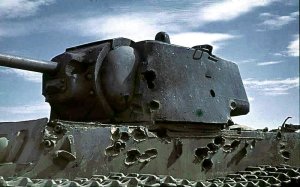
The picture depicts the punishment suffered by this KV-1 before being fully disabled. Most of the impacts on its hull bounced off.

This vehicle is developed under the Soviet doctrinal concept of “deep combat”. This doctrine is developed in the 20’s and needs armoured vehicles resistant enough to enemy fire, in order to breakthrough their lines and reach its rearguard areas unscathed. Additionally it calls for the use of fast machines (BT types) and reconnaissance types. This group of «heavies», sometimes referred to as “siege tanks” have to be able to withstand most antitank munitions. The 5-turret T-35 is the first to follow this concept. Other prototypes will follow, such as the SMK and the T-100, all of them produced in the Leningrad’s Kirov factory (LKZ<>Leningradskom Kirovskom Zavode). A further modification of the former will recibe its own designation as KV-1.

The KV takes the People’s Defense Commisar’s name, Kliment (Klim) Voroshilov. Its production receives green light by the very same Stalin. Some pre-series units are used during the so-called Winter War (1939-40) against Finland with good results. As a matter of fact, not only the KV, but the prototypes SMK and T-100 are tested too.  In February 1940 the series production starts in the aforementioned factory and soon in the Tractor Factory in Chelyabinsk beyond the Urals. The first model is called KV-1 mod. 1939.

It is a 45-ton tank with 75 mm. of armour in its thicker areas, but lacks a reliable transmission system to move such a mass. Another one of its flaws is a reduced crew visibility (narrow slits). The 1939 model is fitted with a “short” barrel 76,2 mm. L-11 cannon. At the end of 1940 it will be retrofitted with the F-34, capable of piercing 66 mm. of armour at 500 metres (KV-1 mod. 1940). On the battlefield often they open fire at ranges of 1,000 metres, being able to engage any German Panzer with success. The main weapon is complemented by 3 DT-29 7.62 mm. machine guns. One of them is covering the rear arc firing from the back of the turret.

kv-1 raiseniai
A dramatized picture of the events at Raseiniai. The clash of the 6. Panzer Division and the 2nd Armoured Division KV-1’s.

Its powerplant is the V-2k 12 cylinder v-diesel engine, capable to develop 600 H.P. Maximum road speed 34 km/h. Some KV-1’s mod. 1939 will receive 20 mm. of extra armour and will be known as KV-1E.

During Operation Barbarossa the first encounter with these juggernauts takes place in Raseiniai (Lithuania) just 24 hours into the operation. Generalmajor Landgraf’s 6. Panzer Division is to face these heavy-weights. The German division, equipped with many Czech light Pz.Kpf. 35(t)’s enters in Raseiniai in the evening of the 23rd. Then they force Dubissa river and engage the 2 Tankovaya Divizya (2nd Armoured Division) which fields a number of KV‘s. General-maior Krivoshein is in command. The tactical surprise of the KV‘s is undescriptible! They breakthrough the German infantry lines unscathed and crush with their wide tracks the small anti-tank guns and even ram the relatively tiny Panzer. The right bank of the Dubissa river is swiftly abandoned by the Landser (nickname of the German soldier) before the unstoppable onslaught of the steel monsters. Right away the Russian armour cross the bridge onto the western side. Only the last minute intervention of high caliber howitzers and specially the famous 8,8 cm. gun manage to contain the tide of the 2nd Tankovaya Divizya. The combat continues through this hot day of June 1941.

To Germany’s relieve, there are “only” 639 KV’s in service on the 22nd of June 1941. They are virtually immune to any 3,7 cm. PaK 35/36 and 5,0 cm PaK 38 fire. As just related, in many difficult situations the Germans get away thanks to the use of 8,8 cm. cannons and howitzers in direct fire, to disable the transmission systems or to hit the rear sectors where they are less armoured. Most of the KV-1‘s will see action in the Northern sector of the huge «Russian front», just because of the geographical location of the assembly lines in Leningrad…


Did you find this article interesting? Leave your comments below and follow us clicking on «SEGUIR» at the end of the page

Guderian, Heinz. Generaloberst.

[English version at the end]


 PERSONAJES DE BARBARROJA


¡Ya a la venta Barbarroja 03:00 hrs!


TENIENTE GENERAL HEINZ WILHELM GUDERIAN (1888-1954)


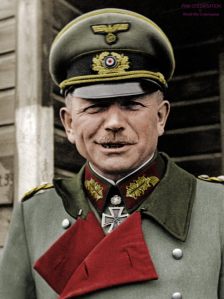
guderian color
Retrato de Guderian luciendo su Cruz de caballero de la cruz de Hierro con Hojas de roble.

Heinz Guderian es uno de los más reputados generales de carros de combate de la Wehrmacht. Llegará a ser apodado “el veloz Heinz” por su presteza en conducir las fuerzas acorazadas hacia el corazón de las defensas enemigas. Tras la derrota de la Primera Guerra Mundial y las restrictivas condiciones impuestas por los aliados en el Tratado de Versalles, Guderian es aceptado en el reducido ejército de 100.000 hombres que se le permite poseer a Alemania; es el denominado Reichswehr. Sobresale escribiendo artículos acerca de la motorización del ejército. Pronto será destinado a unidades  Kraftfahrzeug-Abteilungen (Batallones motorizados). Se revelará como un defensor a ultranza de la guerra de movimiento aún descuidando los flancos. Tendrá contacto con las tesis de la guerra de movimiento de los británicos Liddle Hart y Fuller, ideólogos de la estrategia acorazada. También Guderian enriquece su visión de la futura guerra móvil con una visita a la URSS de una fábrica de carros combate en Kazán. Cuirosamente coincidirá allí con algunos de los que serán sus más acérrimos adversarios durante la conflagración mundial en ciernes.

A pesar de sus trabajos y ensayos, Guderian se hará famoso con la publicación de su obra más famosa «Achtung, Panzer!«. Gracias a su estancia en la Unión Soviética recogerá además en su libro sus impresiones sobre gigante del este, con cifras detalladas del inventario de vehículos blindados. En Alemania será criticado por algunos de sus propios camaradas de armas por excesivamente fantasioso al hablar de 10.000 carros de combate. Una vez comenzada la Operación Barbarroja el 22 de junio de 1941, el mismo Hitler le confesará a las pocas semanas que de haber creído, como decía Guderian en «Achtung, Panzer!«, que los rusos poseían tal cantidad astronómica de blindados, jamás hubiera dado la orden de invadir. ¡Y Guderian se quedó corto en unos 15.000 carros de combate!

guederian polonia
Guderian conversa con el general soviético Semyon Krivoshein durante los actos de la parada militar de la victoria sobre Polonia, en Brest el 22 Sep 1939. Desde hace apenas un mes la URSS y el III Reich son aliados en virtud del tratado Ribbentrop-Molotov. El tratado, controvertido en su momento (y en la actualidad) incluye protocolos secretos sobre la repartición de Europa del este en áreas de influencia. El oeste polaco es ocupado por Alemania y la mitad este por Stalin. [Cortesía Bundesarchiv].

Antes del comienzo oficial de la Segunda Guerra Mundial participa en la operación de anexión de Austria (Anschluss) y la ocupación de los Sudetes al mando de un Panzergruppe en 1938. Al mando del XIX. Armeekorps entrará también en Polonia un año después. Es en 1939 cuando Guderian es nombrado Chef der Schnellen Truppen (jefe de tropas rápidas), a cargo del entrenamiento y supervisión de este tipo de unidades. Pero es en la campaña contra Francia donde más patente muestra su doctrina de movimiento, contraviniendo las órdenes que le son inoportunas para internarse tras las líneas enemigas hasta donde el combustible de sus Panzer le lleve.

Ya una vez iniciadas las hostilidades contra Stalin, manda el 2. Panzergruppe, encuadrado en el Grupo de Ejércitos Centro (von Bock). Junto con el general Hoth y su 3. Panzergruppe, en tiempo récord embolsan a cientos de miles de soviéticos en las batallas de cerco de Bielostok, Novogrudok y Minsk. Él y Hoth, no obstante, fieles a la doctrina de la importancia de no detenerse, dejan a la lenta infantería que se encargue de reducir las bolsas de resistencia. El área de responsabilidad de ambos es Bielorrusia. Guderian conduce el brazo sur de la poderosa pinza blindada en el eje Brest-Minsk atacando el flanco izquierdo del general Pavlov.

Minsk cae en tiempo récord y cruza el gran Dnieper. Sin dilación se lanzará a por Smolensk y la acometerá por el sur; no obstante, este enclave a medio camino de Moscú y a orillas del Dnieper será un hueso más duro de roer. A pesar de capturarlo finalmente, no podrá evitar la evasión de miles de soldados enemigos por un estrecho corredor defendido por el RKKA (Ejército Rojo) a sangre y fuego.

Con fama de arrojado, su manera de hacer la guerra supone un contraste con el proceder en el campo de batalla de von Kluge (Comandante en Jefe del 4. Ejército). Es decir, velocidad y riesgo contra meticulosidad y precaución. Ambos tendrán encuentros muy agrios durante la campaña, especialmente durante unas semanas en el verano, cuando a Guderian se le pone bajo control operativo de Kluge, pasando este último a ser su jefe directo. Guderian se exaspera…

Tras la captura de Smolensk, se produce un parón operativo en la primera semana de agosto de 1941. La Wehrmacht ha avanzado distancias espectaculares sin cesar de combatir y los hombres y las máquinas están agotados. Los comandantes de fuerzas Panzer necesitan motores nuevos y repuestos a una escala no prevista. El polvo ruso ha acelerado el proceso de desgaste de la mecánica de los blindados. Son semanas de incertidumbre en las que el OKW (Oberkommando der Wehrmacht Alto Mando de las Fuerzas Armadas) parece no definirse sobre la idea de continuar hacia la capital de Stalin o no. Incluso Guderian se entrevista con Hitler para intentar convencerle de que Moscú es el objetivo, idea que Hitler deshecha acusándole de no entender los aspectos económicos de las guerras. Hitler está seducido con la idea de los recursos de Ucrania y el petróleo del Cáucaso. Defensor, pues, a ultranza de la idea de tomar la capital como objetivo final de Barbarroja, Guderian contraviene las órdenes de la cadena de mando ocupando el saliente de Yelnya. Un punto expuesto (sudeste de Smolensk) a manera de trampolín, que él estima como esencial para lanzarse contra la capital de la URSS en cuanto le den luz verde. Su tozudez en esta ocasión le llevará a retirarse del saliente en septiembre de 1941 con miles de bajas sufridas. Las órdenes que recibirá, para su sorpresa, no son de continuar hacia el este sino de girar 90 grados a la derecha para caer tras Kiev para una nueva batalla de cerco sin precedentes en la Historia…


¿Querrías conocer los detalles de esta y las demas operaciones?

¡Adquiere la obra cronológica Barbarroja 03:00h en edición de coleccionista!


Comprar Ahora Button

Sigue interesantes referencias también en Twitter @barbarroja0300h

Deja tu comentario abajo…


[English version]


BARBAROSSA’S PROTAGONISTS


COLONEL-GENERAL HEINZ WILHELM GUDERIAN (1888-1954)


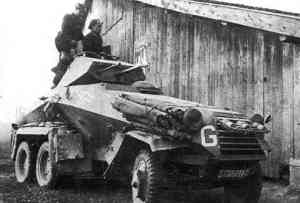
sdkfz
Guderian has a «G» symbol painted on all his divisions’ vehicles for personal recognition. Here an Sd.Kfz. reconnaisannce vehicle in Russia.

Heinz Guderian is one of the most reknown Wehrmacht’s tank-generals. He is called “Speedy Heinz” due to his ability to move his armoured forces through the heart of the enemy’s defenses. After the German defeat in World War I and the dire restrictions of the Treaty of Versailles, Guderian is accepted in the new 100,000 men army that the Allies allow Germany to raise; it is the so-called Reichswehr. Relentlessly he will release numerous articles about the motorization of the army and is stationed in Kraftfahrzeug-AbteilungenMotorized Battalions. He supports the new art of mobile warfare, that is to bring the fight into the enemy’s heart, even if the cost is to leave his vulnerable flanks unprotected. During those years he will study the armoured doctrines of the British Liddle Hart and Fuller. He will enrich his vision of the mobile warfare thanks to a visit to the USSR (Kazan), when he is invited to a tank factory. Ironically, he will meet some of his future hard-core enemies right there.

In spite of his articles and essays, Heiz Guderian will become famous after the publishing of his book «Achtung, Panzer!» (Beware, tanks!), translated to many languages under different titles. Thanks to his experiences in Russia, he will reflect his impressions about the giant of the East with detailed figures of the future enemy’s inventory. But in the same Germany he is criticized by own comrades of arms for fantasizing about 10,000 Soviet tanks. On the 22nd of June, 1941, once Operation Barbarossa commences, the same Hitler confesses to Guderian that had he kn0wn the real numbers of Soviet tanks, stated by Guderian in his work «Achtung, Panzer!«, he would have never invaded. And Guderian fell short in about 15,000 tanks!

Guderian aboard
General Heinz Guderian on board a Heinkel He-111. Russian front.

Before the official start of World War II, General Guderian participates in the annexation of the Austrian state (Anschluss) and later in the Sudetenland occupation in command of a Panzergruppe (1938). He will enter in Poland commanding the XIX. Armeekorps (12th Army Corps) a year later. A year after he is appointed as Chef der Schnellen Truppen (Chief of Fast Troops) with responsibility of the training and supervision of this type of new units. But it is during the campaign of France (May-June 1940) where he fully demonstrates his new doctrine of how to wage a modern war. He will ignore «inconvenient» orders in order to breakthrough the adversary’s defenses as far as the fuel of his Panzer can take him.

Once the hostilities against Stalin start he is in command of the 2. Panzergruppe, under Army Group Centre (von Bock). Along with General Hoth’s 3. Panzergruppe, he will encircle in no time hundreds of thousands of Soviet troops in the “cauldrons” of Bielostok, Novogrudok and Minsk. However, along with Hoth, and their belief of never stop, will let the slow moving infantry to take care of the encircled armies, while both of them keep rushing forward. Their area of operations is Belarus. Guderian drives the Southern pincer’s armoured arm along the Brest-Minsk axis attacking General Pavlov‘s left flank.

Minsk falls swiftly and crosses the great Dniepr river. Without respite dashes towards Smolensk to attack it from the South; however, this enclave half-way to Moscow and at the banks of the waters of the Dniepr will be somehow harder to take. In spite of its eventual capture, thousands of Soviets will flee from the encirclement through a tiny corridor free of Germans.

His ideas of the war of movement of mechanized troops will directly clash with von Kluge’s (4th Army) old-fashioned way to wage war. This is the difference between speed and risk versus meticulosity and safety. Both will have sour encounters specially during the summer, when for a few weeks Guderian is set under Kluge’s operational control, consequently being the latter his direct chief. Guderian feels mad about it…

guderian-wearing-panzerkampfabzeichen
General Guderian wearing the tankers badge (Panzerkampfabzeichen) on his left breast pocket next to his Cross of Iron.

After Smolensk an operational halt occurs up to the first week af August, 1941. The Wehrmacht has advanced impressive distances so fast without stopping fighting and men and machines are exhausted. Panzer commanders need new engines and spare parts in huge quantities. The Russian dust has clogged the filters spoiling the engines of the Panzer. The operational ratio of the Panzer divisions is at its lowest. There’s uncertainty about what direction to take next. The OKW (Oberkommando der WehrmachtArmed Forces High Commnad) hesitates about whether to continue towards Moscow. In this line he will even visit Hitler to persuade him about Moscow as final objective. Reluctantly, Hitler will listen to him, but right after disdainfully will accuse Guderian of being an ignorant on the economic aspects of wars. Hitler is seduced about the resources of the Ukraine and the Oil of the Caucasus. Guderian disobeys several times direct orders as he is also a believer of Moscow as final objective of Operation Barbarossa. Thus after Smolensk he will occupy the famous Yelnya salient, for him a crucial assembly point for the final assault towards Stalin’s capital city. Obsessed with the idea, finally will have to accept the realities of the battlefield and withdraw his badly battered troops off the salient in September, 1941. To his amazement, the orders issued to him are to turn 90 degrees to the right and fall east of Kiev for a new encirclement battle…


Did you find this article interesting? Leave your comments below…

Follow other articles in Twitter @barbarroja0300h
Brest. La fortaleza. «Брестская крепость»

[English version at the end]

 ESTRATEGIA DE BARBARROJA

¡Ya a la venta Barbarroja 03:00 hrs!

LA FORTALEZA DE BREST, 22 DE JUNIO DE 1941.

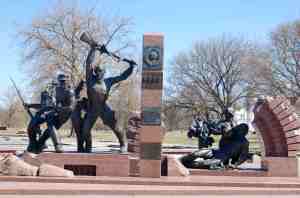
brest defensores
Monumento conmemorativo de la defensa de la fortaleza de Brest-Litovski en la actualidad.

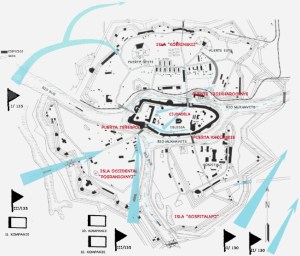
Transcurridos unos 20 minutos después de las 03:00 horas, las primeras tropas de la Wehrmacht cruzan los ríos fronterizos en botes neumáticos. La sorpresa es prácticamente total en el caso del río Bug frente a la fortaleza de Brest. El Bug es la línea divisoria entre la zona ocupada de Polonia por el III Reich y la ocupada por Stalin. Es la zona de responsabilidad del Grupo de Ejércitos Centro de von Bock y concretamente del 2. Panzergruppe del general Guderian, que sin dilación debe aprovechar la sorpresa y avanzar con sus medios motorizados y acorazados. Su línea logística, vital en una guerra moderna móvil, pasa por la ciudad de Brest y el mando germano sabe que debe reducir la guarnición de su histórica  fortaleza sin más demora. Por otro lado su defensa es responsabilidad del Distrito Militar Occidental del general PavlovBrest es un importante nudo de comunicaciones con líneas de ferrocarril que la unen con Minsk (capital Bielorrusa) através de Baranovichi. La fortaleza está dividida en cuatro islotes que descansan entre los ríos Bug y Mukhavets. Está defendida por una gran mezcolanza de unidades soviéticas totalizando casi 9.000 hombres. Una vez comenzado el asedio las fuerzas quedarán organizadas bajo el mando del capitán Ivan Nikolaevich Zubachev y el comisario político de regimiento Yefim. M. Fomin. Son:

  • Elementos de la 6ª División de Fusileros del 28º Cuerpo de Fusileros RKKA (equivalente en la nomenclatura soviética a «infantería»)
  • Elementos de la 42ª División de Fusileros del 28º Cuerpo de Fusileros RKKA
  • 17º Destacamento de Guardias Fronterizos (NKVD), Teniente Kizhevatov
  • Otras unidades de ingenieros, contracarro, antiaéreas y de servicios
  • 40 blindados
  • 22ª División Acorazada, general-maior V. Puganov (acantonada fuera del enclave hacia el sudeste).

    brest diagrama
    Plan de asalto inicial de la 45. Infaterie Division ejecutado por dos regimientos (130º y 135º).

El imponente conjunto de edificaciones, casamatas, puestos de observación y artillería es construido por los rusos entre 1833-1842 y pasa a manos de los polacos en virtud del Tratado de Riga (1921) con motivo de la creación del nuevo estado polaco tras la Primera Guerra Mundial. Acabada la invasión de la zona occidental de este pais por Hitler, los alemanes la ocupan, pero se la ceden a Stalin días después de que este invada el este del joven estado polaco el 17 de septiembre del 1939.

Comenzadas las hostilidades entre Hitler y Stalin la resistencia de la guarnición de la fortaleza se prolongará unas tres semanas, en las que la infantería alemana a cargo de la captura tendrá que ser apoyada por artillería pesada y aviación. El último resistente (con empleo de oficial) será el mayor Gavrilov, que caerá prisionero el 23 de julio. Algunas fuentes sostienen que existirá aún resistencia activa de defensores recalcitrantes hasta agosto (habitantes de la zona recuerdan el estruendo de armas de fuego en los primeros días de agosto). De cualquier forma documentos alemanes hablarán de resistencia a ultranza y las soviéticas convertirán el asedio en un símbolo patriótico.

Los medios blindados no son los adecuados para el asalto y se deja la tarea a la 45. Infanterie Division que se dispone a llevar a cabo un audaz plan de ataque tras el cruce del río Bug. La unidad, compuesta en su mayoría de austríacos, está a las órdenes del Generalmajor Fritz Schlieper. Es una unidad de Landser (como se conoce comunmente al soldado alemán de a pie) encuadrado en el XII. Armeekorps (12º Cuerpo de Ejército), a su vez dependiente de Guderian. El asalto comienza con una barrera de fuego artillero a las 03:15 horas proporcionado por baterías de obuses de 210 mm., Nebelwerfer (baterías de cohetes de 150 mm.) y dos monstruosos morteros de 600 mm. sobre vías de ferrocarril, conocidos como «Karl«/»Thor».

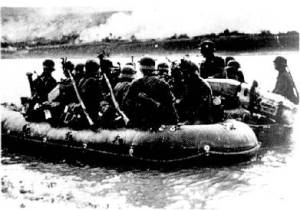
rio bug cruce botes
22 junio 1941, 03:19 horas. Los primeros hombres reman en dirección a la orilla de la fortaleza forzando las aguas del río Bug. La sorpresa es total al amparo de un imponente apoyo artillero.

Hacia las 15:00 horas, Guderian ya es capaz de sortear el nudo de Brest con su 3ª y 4ª divisiones acorazadas. Pero horas antes la infantería de Schlieper ya está empeñada en una sangrienta batalla. Son los hombres del 130º y 135º regimientos de su división. Uno de los hombres clave del asalto inicial es el capitán Praxa. A las 03:19 horas, cuando los primeros zapadores saltan a sus botes de goma para el cruce del Bug, aún no sospechan el baño de sangre al que se van a enfrentar por los viejos muros de esta fortaleza. El 135º Regimiento tiene como misión la captura de la isla occidental y la central, donde se encuentran los alojamientos de tropa. El 130º debe capturar la isla sur y cerrar el acceso este, el cordón umbilical con la ciudad. Merece la pena hacer una secuencia de los primeros momentos del asalto:

03:15: La fortaleza es sometida a un intenso castigo artillero. Los «Karl» del 833ª División de Artillería Pesada entran en acción.

03:19: El Bug está atestado de botes neumáticos acarreando las primeras tropas de asalto. Ganan la orilla opuesta sin nigún disparo y ocupan los puentes.

04:00: Continúa el machaque de la artillería, esta vez dirigida hacia la zona central, clavando literalmente a los hombres de la 6ª y 42ª divisiones de fusileros en las instalaciones sin posibilidad de reacción.

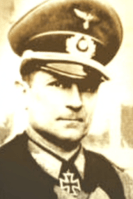
schlieper 45 infantry division
Generalmajor Fritz Schlieper, jefe de la 45ª División de Infantería

04:00-05:00: La Luftwaffe bombardea el puesto de mando en Zhavinka del 28º Cuerpo de Fusileros.

04:45: El Hauptmann (capitán) Praxa cae en combate.

06:00: El Grupo de Ejércitos Centro ya informa de un avance generalizado de 4-5 kilómetros.

06:25: Isla sur es capturada. Se libran combates aún en la norte. Contraataque de blindados soviéticos.

12:00: Schlieper da cuenta al XII. Armeekorps de multitud de bajas entre la oficialidad y tropa. Se ordena la suspensión del asalto.

Al atardecer del sangriento 22 de junio, 21 oficiales y 290 soldados y suboficiales germanos han caído en combate. No sólo Praxa ha muerto, sino también otros oficiales de las baterías de artillería. El Mando alemán decide retirar a los Landser de la 45ª División. Comienza el asedio. Si la fortaleza ha de caer, ha de ser por otros medios diferentes del asalto frontal…

¿Querrías conocer los detalles de esta y las demas operaciones?

¡Adquiere la obra cronológica Barbarroja 03:00h en edición de coleccionista!


Comprar Ahora Button

Sigue interesantes referencias también en Twitter @barbarroja0300h

Deja tu comentario abajo…


[English version]

BARBAROSSA’S PROTAGONISTS

BREST FORTRESS, JUNE 22nd, 1941.

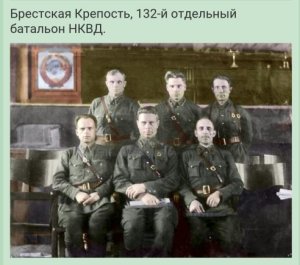
132nd NKVD Batallion Brest Fortress
Just before Operation Barbarossa, the men of the 132nd NKVD Battalion pose for possibly their last picture.

Just some 20 minutes after 03:00 hours, the first Wehrmacht troops cross the major frontier rivers into the U.S.S.R. The surprise factor is almost complete in the case of the Bug river landings to seize the Brest fortress. The Bug is the border between Hitler’s and Stalin’s occupied Poland. This is von Bock’s Army Group Centre area of resposibility and specifically Guderian’s 2. Panzergruppe, who must dash forward at full speed using his armoured and motorized assets. His logistic line, a paramount factor in a modern mobile war, crosses the city of Brest and the German Command knows that they must reduce its garrison with no delay. On the Eastern side of the river lays General Pavlov‘s Western Military District. Brest is an important road and railroad nerwork that links Baranovichi and Minsk (Belarus’ capital city). The fortress rests over 4 isles in the Bug and Mukhavets rivers. It is defended by an array of Soviet units amounting almost 9,000 men. Once the siege starts the forces will be organized under Captain’s Ivan Nikolaevich Zubachev and Regiment Political Commisar Yefim. M. Fomin. They are as follows:

  • Elements of the 6th Fusiliers Division <> 6 Strelkovaya Divizya, belonging to the 28th Fusiliers Corps («infantry» in the Soviet nomenclature)
  • Elements of the 42nd Fusiliers Division belonging to the 28th Fusiliers Corps
  • 17th Border Guards Detatchment (NKVD) under Lieutenant Kizhevatov
  • Other engineer, anti-tank, anti-air and support units
  • 40 tanks
  • 22nd Armoured Division <> 22 Tankovaya Divizya (not actually in the enclave but deployed in the vecinity due southeast). General-maior V. Puganov

Luftwaffe Aerophography of Brest-Litovski in may41
Luftwaffe aerophotography of the Brest fortress and its surroundings. The picture has been taking from the Southwest of the target and the city of Brest-Litovski can be seen to the East of the enclave. The central citadelle and Northern and Southern isles are visible. May 1941.

The impressive facility, composed by buildings, casemates and artillery posts, is built by the Russians between 1833-1842 and ends up in Polish hands thanks to the  Treaty of Riga (1921), as a concession to the new Polish state created after World War I. After Hitler’s invasion of this country, the Germans take over the fortress, but some days after it is handed over to Stalin after he invades the eastern side of the young Polish country (17th of September 1939).

The resistance of the defenders will stretch 3 fierce weeks, when the German infantry will have to be supported by either heavy artillery and aviation. The last defender (ranking officer) will be maior Gavrilov, that will fall in German hands on the 23rd of July. Some sources, nevertheless, inform of hard-core defenders still fighting in August (Brest inhabitants reported arms fire heard during the first days of August). In any case, Wehrmacht battle diaries will report about heroic resistance and the Soviets will make the fortress a symbol of the Motherland.

Tanks are not suited for the assault and the task is assigned to the 45. Infanterie Division poised to execute a daredevil attack after the Bug’s crossing. The unit, mainly composed by Austrians, is under Generalmajor Schlieper‘s orders. It is a Landser unit (as the German foot soldier is known) under the hierarchy of XII. Armeekorps (12th Army Corps) and in turn under Guderian’s mobile army. The assault starts with an artillery inferno at 03:15 hours by 210 mm. howitzer batteries, Nebelwerfer (150 mm. rocket launchers) and 2 monstuous 600 mm. mortar pieces over rails known as «Karl/Thor».

terespol door 333ir-45id brest
Landser of the 333rd Infantry regiment/45th Infantry Division before the Terespol Door after the seizing of the fortress.

At 15:00 hours Guderian bypasses the enclave with his 3rd and 4th Panzer divisions. But hours before Schlieper’s Austrians are already engaged in a bloody battle. They are the men of the 130th and 135th infantry regiments of Schlieper‘s division. One of the key men of the initial assault is Hauptmann (Captain) Praxa. Exactly at 03:19 hours, when the first engineer troops jump onto the rubber boats to force the Bug river, they are still unaware of the bloody bath they will experience at the walls and citadelle of the old fortress. The 135th Regiment is in charge of seizing the Western isle and the central (where the garrison army barracks are located) while the 130th is to take the Southern and block the Eastern access. The fortress’ life-line with the city.

It is worth a detailed follow up of the first moments of the assault:

03:15: The fortress is hammered by intense howitzer fire. The giant mortars «Karl» belonging to the 833th Heavy Artillery Division open fire.

gavrilov brest
Major Gavrilov. Allegedly the last defender of the fortress, captured in July. However, eyewitnesses report small arms fire still during the first days of August 1941.

03:19: The first assault groups cross the Bug waters in rubber boats. They force the river without firing a single shot and take the bridges intact.

04:00: The artillery inferno continues, this time over the central quarter, literally pinning down the men of the 6th and 42nd divisions inside the facilities without any chance.

04:00-05:00: The Luftwaffe bombs the 28th Fusiliers Corps’ Command Post at Zhavinka.

04:45: Hauptmann (Captain) Praxa is killed in combat.

06:00: Army Group Centre reports a general advance already 4-5 km. into the USSR.

06:25: The Southern isle is taken. The Northern one is still at stake. Soviet tank counter-attack.

12:00: Schlieper reports to the XII. Armeekorps about many casualties amongst the officers, NCO’s and troops. The frontal assault is called off.

At dusk of the 22nd of June 1941, 21 German officers and 290 NCO’s and soldiers of the 45. Infanterie Division have fallen in battle. Not only Praxa himself is a casualty but other artillery officers as well. The German Command decides to withdraw the remaining troops. The fortress is besieged. If the enclave has to be taken, the job has to be done by other means rather than an infantry frontal assault.

Did you find this article interesting? Leave your comments below…

Follow other articles in Twitter @barbarroja0300h

Rundstedt, Gerd von. Generalfeldmarschall.

[English version at the end]

 PERSONAJES DE BARBARROJA

¡Ya a la venta Barbarroja 03:00 hrs!

MARISCAL DE CAMPO KARL RUDOLF GERD VON RUNDSTEDT (1875-1953)

rundstedt
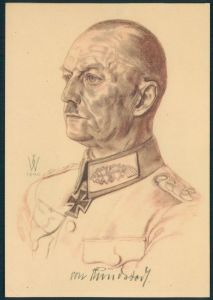
Mariscal de campo Gerd von Rundstedt. Comandante en jefe del Grupo de Ejércitos «Sur», responsable de las operaciones en la zona ucraniana.

Al comienzo de la Segunda Guerra Mundial, von Rundstedt está ya retirado. Pero al comenzar el nuevo conflicto es reincorporado al servicio activo y participa en las campañas de Polonia y Francia. Asciende a mariscal de campo en 1940.

A las 21:00 horas del 21 de junio de 1941, a tan sólo 6 horas del desencadenamiento de la mayor campaña militar de la historia, un desertor del 6º Ejército cruza las líneas y se interna en la URSS para avisar del ataque inminente. De poco va a servir su desesperado intento (que ya se venían recibiendo indicios por otras vías desde tiempo atrás), excepto para ordenar una alerta demasiado tardía y órdenes de dispersión de medios y enmascaramiento. Es uno de los soldados de uno de los ejércitos de von Rundstedt. Sea como fuere al curtido prusiano la Operación Barbarroja le va a reservar un papel protagonista. El veterano mariscal de campo Gerd von Rundstedt está listo para el asalto del sector meridional del gigante «frente ruso» a través de Ucrania y nada lo puede ya impedir. Es el comandante en jefe del Grupo de Ejércitos Sur (Heeresgruppe Süd). Se enfrentará en primera instancia por su flanco izquierdo al general Kirponos, comandante del Distrito Especial Militar de Kiev. Es precisamente aquí en Ucrania donde el Mando soviético teme más el ataque alemán. A 2 horas del comienzo de la Operación el Grupo de Ejércitos Sur retransmite la palabre clave WOTAN por la cadena de mando hasta el OKW (Oberkommando der Wehrmacht <>Alto Mando de las Fuerzas Armadas), dando así a conocer que todo está preparado.

Como fuerzas móviles cuenta con solamente el 1er Grupo Acorazado de von Kleist, con el que no conseguirá hasta agosto un golpe realmente decisivo cuando copará en un «golpe de guadaña» a casi 100.000 hombres en el «caldero» de Uman. Bajo su mando se integrarán formaciones de otros países (italianos, húngaros, rumanos y eslovacos). Cuenta además con el poderoso 6º Ejército de von Reichenau protegiendo el flanco izquierdo y avanzando al sur de los pantanos del Pripyat, mientras que el 17º (von Stülpnagel) actúa en el flanco derecho en la zona de Lvov. El 11º Ejército de von Schobert está desplegado más a la derecha y al sur hasta las costas del Mar Negro, junto con las formaciones de Antonescu a lo largo de las fronteras rumanas, con objeto de fijar a los soviéticos y no permitir un contraataque hacia los valiosos campos petrolíferos de los que Hitler está tan necesitado. El ataque de von Schobert no está programado para el 22 de junio, sino para el 1 de julio.

mapa-heeresgruppe-sud
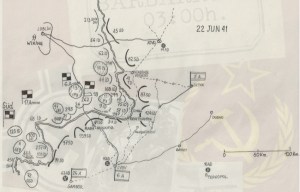
Despliegue de fuerzas en el sector sur, responsabilidad de Rundstedt por el lado germano y Kirponos en el soviético.

Del 26 al 29 de junio los Panzer del anciano mariscal sufren el acoso de Kirponos en el triángulo de Brody-Lutsk-Dubno, en el que se va a dar el mayor enfrentamiento de blindados de la Historia hasta este momento. El general soviético tiene en inventario una fuerza 3-4 veces superior en carros de combate a la de von Kleist. Las tropas de Ründstedt se enfrentan aquí por vez primera contra nuevos modelos de carros de combate, T-34 y KV. Toda la campaña en el Este pende de un hilo. Si Kleist es detenido o cercado con su fuerza de poco más de 700 Panzer, Barbarroja se irá al traste. Si el mariscal es frenado en seco o peor, obligado a retirarse, el 5º Ejército del RKKA (Ejército Rojo de Trabajadores y Campesinos) de Potapov podría verse libre y acometer por el sur al Grupo de Ejércitos Centro desde las marismas del Pripyat. Von Ründstedt escribe: «Los rusos están combatiendo muy empecinadamente; las cosas no van a ser tan fáciles como esperábamos y como hasta ahora han sido».

¿Querrías conocer los detalles de esta y las demas operaciones?

¡Adquiere la obra cronológica Barbarroja 03:00h en edición de coleccionista!


Comprar Ahora Button

Sigue interesantes referencias también en Twitter @barbarroja0300h

Deja tu comentario abajo…


[English version]

BARBAROSSA’S PROTAGONISTS

FIELD-MARSHALL KARL RUDOLF GERD VON RUNDSTEDT (1875-1953)

hitler rundstedt ju52
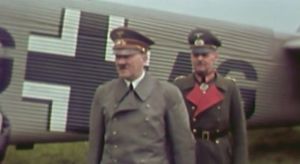
Rundstedt accompanying Adolf Hitler after a Junkers Ju-52 trip

When World War II starts, von Rundstedt is already a retired General. But as soon as the new conflict starts he is recalled to active duty and participates in the victorious campaigns of Poland and France. He is then promoted to Field Marshall in 1940.

At 21:00 hours of the 21st of June 1941, just 6 hours before the unleash of the vastest military campaign in History, a deserter from the 6th Army crosses the lines into the Soviet Union to warn about the impending attack. Little to no avail will be his desperate attempt (by other means many warnings have been received lately), except for rising a too late alarm and dispersal and camouflage measures. He is a soldier of one of the armies of von Rundstedt. All in all Operation Barbarossa is sparing a main role for the Field Marshall. The seasoned Prussian Gerd von Ründstedt is ready for the onslaught on the Southern sector of the gigantic Eastern Front throughout the Ukraine. He is the Commander-in-Chief of Army Group South (Heeresgruppe Süd). On a first stage he will fight on his left flank Commander Kirponos’ Kiev Special Military District. It is precisely here in the Ukraine were the Soviet High Command fears the main thurst of the German attack. 2 hours before the commencement of the assault Army Group South transmits along the chain of command the codeword WOTAN to the OKW (Oberkommando der Wehrmacht <> Armed Forces High Command), signaling that all is ready.

rundstedt general
Portrait of the still General Gerd von Rundstedt in 1940 before being promoted to Field Marshall

His mobile/armoured forces consist only of von Kleist’s Panzer units (1. Panzergruppe). Thus he will not be able to achieve an important blow to the adversary until August, when he will encircle almost 100,000 Soviets in the Uman «cauldron». Under his operational command he counts with the expeditionary forces of some of Germany’s allies (Italians, Hungarians, Rumanians and Slovaks). In addition he has von Reichenau’s powerful 6th Army protecting his left flank and advancing along the Southern edges of the Pripyat marshes. At the same time the 17th Army (von Stülpnagel) is in charge of the right flank in the Lvov area. Finally von Schobert’s 11th Army is deployed due South to the Black Sea shores along with Antonescu’s troops. They are in charge of commiting Soviet formations along the Romanian borders and to fend off any attempts against the Romanian oilfields, a Hitler’s much needed treasure. Von Schobert’s maneouvre is not scheduled to start on the 22nd of June 1941, but on the 1st of July.

From the 26th until the 29th of June Rundstedt will endure Kirponos‘ counter-offensive with 6 of his mechanized corps in the triangle Brody-Lutsk-Dubno. It will be the largest tank battle up to date in History. Kirponos fields 3-4 more tanks than Kleist. Von Rundstedt’s troops meet here for the first time the new tank types, T-34‘s and heavy KV‘s. The whole Eastern campaign is at stake. If Kleist is stopped or cut off with his +700 Panzer from the German lines, Barbarossa will turn into a fiasco. Consequently at this stage if Rundstedt fails or is driven back, then  RKKA General Potapov’s 5th Army would be able to disangage and drive north across the Pripyat marshes to attack Army Group Centre‘s right flank. Von Rundstedt writes: «The Russians are fighting very stubbornly; things will not be as easy as we hoped and as they used to be».

Did you find this article interesting? Leave your comments below…

Follow other articles in Twitter @barbarroja0300h
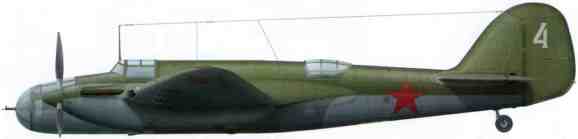
Sturmgeschütz III

[English version at the end]

 MÁQUINAS DE BARBARROJA

¡Ya a la venta Barbarroja 03:00 hrs!


CAÑÓN AUTOPROPULSADO DE ASALTO STURMGESCHÜTZ III (Sd.Kfz 142)


stug park povedy moscu
StuG III con cañón «corto» de 7,5 cm L/24. La velocidad del proyectil de 450 m/s. en su versión perforante aún puede penetrar hasta 90 mm. a 500 metros. Se puede apreciar lo compacto y solidez del vehículo. [Parque de la Victoria, Moscú]

El StuG III ha pasado a la historia como uno de los vehículos acorazados más famosos y respetados. Barato y fácil de producir está presente en todos los escenarios de combate de la Segunda Guerra Mundial y usado por varias naciones (a excepción naturalmente del teatro de operaciones del Pacífico). Es el vehículo de combate más producido por Alemania hasta la finalización de la conflagración mundial, que nace como un derivado sin torreta del PzKpfw. III para apoyo de la infantería. Pronto será adaptado como cazacarros. Cuenta con la ventaja de una silueta baja y buena coraza.

Se atribuye al general Heinz Guderian (que en la Operación Barbarroja mandará el 2. Panzergruppe en el Grupo de Ejércitos Centro) la paternidad de este nuevo concepto. Guderian escribe sobre la necesidad de equipar a las divisiones de infantería con unidades de 6 vehículos capaces de “allanar” el camino para la progresión de los infantes. La tesis de este triunfa y así nace un requerimiento en 1936 para el diseño de un vehículo que pueda montar una pieza de 7,5 cm. que haga fuego directo/indirecto al menos hasta los 6.000 metros, además de poder enfrentarse a blindados enemigos con munición perforante.

stug iii 4 vistas
StuG III Ausf. E. Bien acorazado por su parte frontal (50 mm. en versiones A – E) es un vehículo polivalente muy apreciado en el campo de batalla.

Se aprovecha el chasis del PzKpfw. III para la producción. En mayo de 1940 los primeros StuG III Ausf. A (Ausführung o versión A) empiezan a salir de fábrica a tiempo para entrar en acción en la campaña de Francia. El cañón es el Krupp 7,5 cm. Kanone L/24 (24 calibres). En realidad es una adaptación del KwK L/24 que monta ya el PzKpfw. IV. Aunque primero está ideado principalmente para la destrucción de defensas enemigas y fortificaciones.

Para comienzo de la invasión de la Unión Soviética el 22 de junio de 1941 la industria del Reich desarrolla ya el StuG III Ausf. D. Ya existen 11 batallones y 9 baterías independientes. Constituyen una buena simbiosis para con la infantería. Los hombres de a pie se sienten protegidos y los StuG necesitan de ellos para su defensa cercana (no dispondrán de ametralladora hasta el Ausf. E y tienen una coraza débil trasera). Los StuG avanzan en el campo de batalla a la velocidad de los hombres de a pie. Son un éxito incluso contra los T-26 y BT contra los que su proyectil de 7,5 cm., aún siendo de baja velocidad, sigue teniendo buena «pegada».

Se organizarán en batallones (Sturmgeschütz Abteilungen) y baterías (Sturmgeschütz Batterien) de vehículos independientes, cada batallón englobando a 3 baterías de 6 cañones autopropulsados cada una. En primavera de 1941 se las aumentará con 7 StuG. Y así se asignan a otras formaciones superiores según las necesidades. A partir del Ausf. F (primavera de 1942) montarán un muy capaz cañón “largo” de 7,5 cm. contracarro. De hecho conseguirán más carros enemigos batidos que todos los Panther y Tiger juntos. Naciones como España, Finlandia, Italia, Hungría, Bulgaria y Rumanía los tendrán también en inventario. 9.250 StuG III se producirán…

stug III comandante en puesto
Vista del jefe del cañón de asalto Sturmgeschütz III. Dispone de periscopio para mayor seguridad en la observación del campo de batalla.

Orden de batalla de unidades StuG asignadas a formaciones de combate al inicio de la Operación Barbarroja:

Stg.Abt.190 (11. Armee)
Stg.Abt.243 (17. Armee/IV. Armeekorps)
Stg.Abt.197 (1. Panzergruppe/XXXXVIII. Armeekorps (mot.))
Stg.Abt.191 (1. Panzergruppe/III. Armeekorps (mot.))
Stg.Abt.192 (2. Panzergruppe/XII. Armeekorps) (?)
Stg.Abt.226 (4. Armee/IX. Armeekorps)
Stg.Abt.201 (4. Armee/XII. Armeekorps)
Stg.Abt.203 (4. Armee/VII. Armeekorps)
Stg.Abt.210 (9. Armee/XX. Armeekorps)
Stg.Abt.184 (9. Armee/VIII. Armeekorps)
Stg.Abt.185 (18. Armee/I. Armeekorps)
Stg.Bttr.659, 660, 666 (mit Stab 600 (16. Armee/II. Armeekorps))
Stg.Bttr.665 (16. Armee/XXVIII. Armeekorps)
Stg.Bttr.667 (16. Armee/XXVIII. Armeekorps)
Stg.Bttr.1./190 (11. Armee/XI. Armeekorps)


Glosario de términos:

Armee: Ejército

Armeekorps: Cuerpo de ejército

Abteilung (Abt.): Batallón

Batterie: Batería

Panzergruppe: Grupo acorazado

Stab: Plana mayor


Video cortesía de Panzer Picture StuG III

¿Querrías conocer los detalles día a día de la Operación Barbarroja? Deja tu comentario abajo…

¡Adquiere la obra cronológica Barbarroja 03:00h en edición de coleccionista!


Comprar Ahora Button

Sigue interesantes referencias también en Twitter @barbarroja0300h


[English version]

BARBAROSSA’S MACHINES


SELF-PROPELLED ASSAULT GUN STURMGESCHÜTZ III (Sd.Kfz 142 )


The StuG III has become one of the most famous and respected fighting vehicles in history. Cheap and easy to produce, it will be present in all theatres of operations of WWII, used by many nations (except obviously in the Pacific). It is the most produced armoured vehicle by Germany up to the end of the world conflict, that is conceived as a turretless PzKpfw. III merely for infantry support. But it will be adapted soon as a tank-destroyer as well. Its main advantages reside in a good frontal armour and a very low silhouette.

StuG III low sihouette
The low silhouette of the StuG is a tactical advantage in this wheatfield. Versions A through E would enjoy a 5 cm. armoured hull.

General Heinz Guderian (who in Operation Barbarossa commands the 2. Panzergruppe in Army Group Centre) is credited with the paternity of this new concept. Guderian writes about the need of fielding detachments of 6 assault guns for infantry formations. These have to be capable of breaking through the enemy defenses for the good progression of the foot soldiers. Guderian’s thesis are taken into account and as a result an Army requirement is issued in 1936 for the acquisition of a vehicle fitted with a 7.5 cm cannon. This should be capable for direct/indirect fire up to 6,000 metres and to be able to defeat enemy armour with special piercing projectiles.

The PzKpfw. III chassis is chosen for the series production. In May 1940 the first StuG III Ausf. A (Ausführung or version A) rolls out from factory ready for the French campaign. Its cannon is the Krupp 7.5 cm. Kanone L/24 (24 calibre). This in turn is a modified KwK L/24 fitted already in the PzKpfw. IV series. But the former is meant for the destruction of enemy defenses and bunkers.

stug iii ukraine
This StuG III is asigned to a Waffen SS division in the Ukraine 1941. In the background a Panzerjäger can be seen.

At Barbarossa start the standard series is already the StuG III Ausf. D. There are already 11 battalions and 9 independent batteries. Each battalion (Sturmgeschütz Abteilungen) consists of 3 batteries (Sturmgeschütz Batterien) each (6 vehicles per battery). They are a good symbiosis with the infantry. The Landser (as the German foot soldier is known) welcomes its near protection and the StuG’s need them for its immediate defense (they will lack machine guns until the version E and their rear armour is weak). The StuG’s are meant to advance at the speed of the Landser. They are even successful against the T-26’s and BT’s. In spite of the low muzzle velocity of its 7.5 cm. gun, it still has a «punch» against light and medium tanks.

After the Ausf. F (spring 1942) they will be fitted with a powerful “long barrel” anti-tank 7.5 cm. cannon. As a matter of fact they will be credited with more «kills» than all the Panther‘s and Tiger‘s together. Other nations will use them like Spain, Finland, Italy, Hungary, Bulgaria and Romania. 9,250 StuG’s will be produced…

Order of battle of StuG units assigned to fighting formations at Barbarossa start:

Stg.Abt.190 (11. Armee)
Stg.Abt.243 (17. Armee/IV. Armeekorps)
Stg.Abt.197 (1. Panzergruppe/XXXXVIII. Armeekorps (mot.))
Stg.Abt.191 (1. Panzergruppe/III. Armeekorps (mot.))
Stg.Abt.192 (2. Panzergruppe/XII. Armeekorps) (?)
Stg.Abt.226 (4. Armee/IX. Armeekorps)
Stg.Abt.201 (4. Armee/XII. Armeekorps)
Stg.Abt.203 (4. Armee/VII. Armeekorps)
Stg.Abt.210 (9. Armee/XX. Armeekorps)
Stg.Abt.184 (9. Armee/VIII. Armeekorps)
Stg.Abt.185 (18. Armee/I. Armeekorps)
Stg.Bttr.659, 660, 666 (mit Stab 600 (16. Armee/II. Armeekorps))
Stg.Bttr.665 (16. Armee/XXVIII. Armeekorps)
Stg.Bttr.667 (16. Armee/XXVIII. Armeekorps)
Stg.Bttr.1./190 (11. Armee/XI. Armeekorps)

Glossary of terms:

Armee: Army

Armeekorps: Army corps

Abteilung (Abt.): Battalion

Batterie: Battery

Panzergruppe: Armoured group

Stab: Staff

StuG III footage [Courtesy Panzer Picture]

Did you find this article interesting? Leave your comments below…

Follow other articles in Twitter @barbarroja0300h
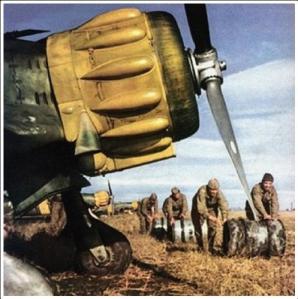
BM-13 «Katyusha»

[English version at the end]

 ARMAS DE BARBARROJA

¡Ya a la venta Barbarroja 03:00 hrs!


SISTEMA MÓVIL LANZADOR DE COHETES BM-13


bm-13-katiusha-bm13
Denominado «órgano de Stalin» por los alemanes o «Katyusha» por el RKKA, es un éxito como arma desde el primer momento de su empleo en los combates en la región de Orsha. A las 15:15 horas del 14 de julio, una batería al mando del capitán Flyorov del modelo BM-13 entra en acción. Se convierte en ese mismo momento en una de las armas más temidas de los Landser. [Museo de la Gran Guerra Patria de Kiev].

El 14 de julio de 1941 en la región de Orsha (sudoeste de Smolensk) tiene lugar el bautismo de fuego de una nueva arma. El mando germano recibe un inquietante informe del frente respecto a la misma: “Los rusos utilizaron baterías de un número inusualmente elevado de piezas. Las tropas bajo fuego de los rusos son testigos: la cascada de fuego era similar a un huracán. Pérdidas entre el personal significativas”.

En realidad se trata de una sola batería (7 vehículos) del sistema reactivo BM-13 al mando del capitán Flyorov, en evaluación del equipo. Pronto los alemanes los van a llamar “órganos de Stalin” por el agudo silbido característico que emite en los lanzamientos. Los soviéticos lo denominarán «Katyusha».

La idea de estos montajes móviles de cohetes (82 y 132 mm.) se origina en la URSS en 1930. Coincidiendo con el comienzo de la Operación Barbarroja, se inicia la producción en serie del sistema lanzador de cohetes BM-13.

El BM-13 consta de un doble rail capaz de albergar 16 cohetes de aviación RS-132 de 132 mm. con un alcance máximo de más de 8 km. El conjunto se soporta sobre el camión estándar ZIS-6 del Ejército Rojo. Son proyectiles de 42,3 kg. cada uno. La salva se dispara en un intervalo de entre 7 a 10 segundos y la acción conjunta de una sola batería es capaz de crear el mismo efecto de saturación que 75 piezas de artillería en un sector de 4 kilómetros cuadrados.

perfil BM-13
Sistema móvil lanzador de cohetes múltiple BM-13. Está basado en el camión normalizado del RKKA ZIS-6.

Informe del General Yeremenko de los resultados del primer ensayo en combate del «Katyusha», que apoya la defensa de la tenaz 73ª División de Fusileros (coronel Akimov):

“…probamos la nueva arma cerca de Rudnya. Los cohetes surcaban por el cielo con un ruido atronador. Subían como cometas con una cola roja y después explotaban como un rayo. El efecto de la explosión de 320 artefactos en un período de 26 segundos en un área muy limitada sobrepasaron todas las expectativas. Los alemanes huyeron aterrados. Tengo que aseverar que nuestras tropas huyeron de la misma forma. Por razones de seguridad no les habíamos informado de antemano acerca del uso de la nueva arma…”.


¿Querrías conocer los detalles día a día de la Operación Barbarroja? Deja tu comentario abajo…

¡Adquiere la obra cronológica Barbarroja 03:00h en edición de coleccionista!


Comprar Ahora Button

Sigue interesantes referencias también en Twitter @barbarroja0300h
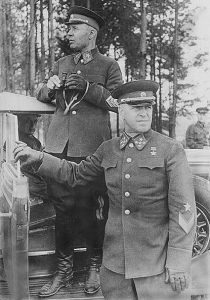

[English version]
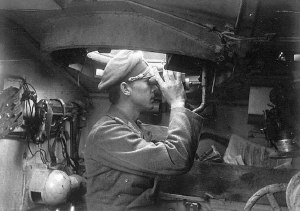
BARBAROSSA’S WEAPONS


MOBILE ROCKET LAUNCHER SYSTEM BM-13

Katyusha rockets
Detailed picture of the 16×132 mm. rocket salvo.  Range 7,900 metres.[Great Patriotic War museum in Kiev].

On July 14th, 1941 in the Orsha region (SW of Smolensk) takes place the baptism of fire of a new weapon. The German HQ receives an alarming front report: “The Russians used an unusual number of artillery pieces. The eye-witnesses under Russian fire state: The sea of fire was similar to a hurricane. Severe casualties…”.

As a matter of fact just one battery (7 vehicles) is responsible for this. It is the secret first field test of the BM-13 rocket launcher system under command of Captain Flyorov. Soon the Germans will learn to call them «Stalin’s organs» due to their characteristic whistle when fired; the Soviets, «Katyusha».

The idea of these mobile rocket launchers (82 and 132 mm.) is conceived in the USSR in 1930. Coinciding with the start of Operation Barbarossa the new BM-13 system rolls out from factory.

The BM-13 system consists of a double rail structure over a lorry, capable of firing 16xRS-132 aviation rockets (132 mm.) up to a range of almost 8,000 metres. The array is supported over a Red Army standard ZIS-6 lorry. These rockets weigh 42.3 kilograms each. The salvo interval takes 7-10 seconds and the unified action of a single battery equates the saturation effect of 75 artillery pieces over a 4 square kilometre sector.

Report by General Yeremenko in regards of the first operational use of the «Katyusha», an ultra-secret weapon in support of the 73rd Fusiliers Division (Col. Akimov):

«…we tested the new weapon in the vicinity of Rudnya. The rockets streaked across the sky with a deafening noise. They climbed like comets with a trailing red tail and then exploded like thunder. The effect of 320 devices bursting within 26 seconds in a very confined area greatly surpassed all expectations. The germans fled in panic. I must state that our troops fled likewise. For secrecy reasons we did not inform them beforehand about the use of the new weapon…».

Did you find this article interesting? Leave your comments below…

Follow other articles in Twitter @barbarroja0300h