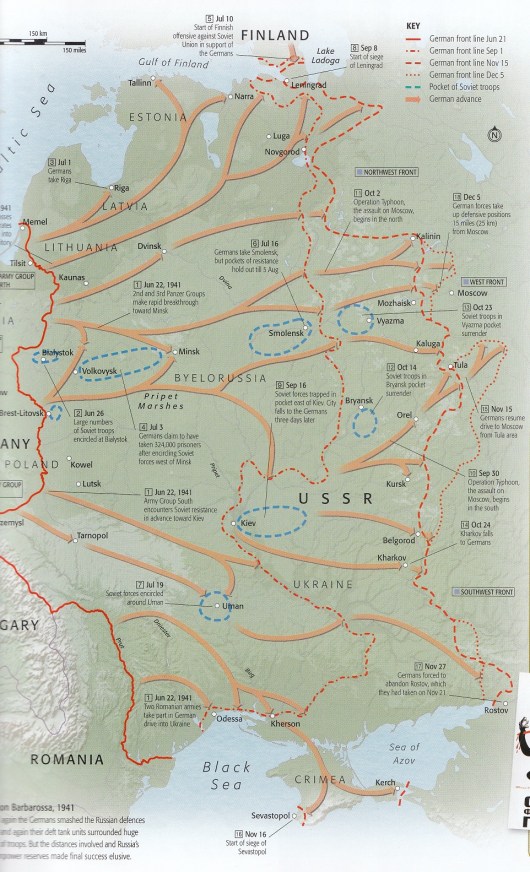
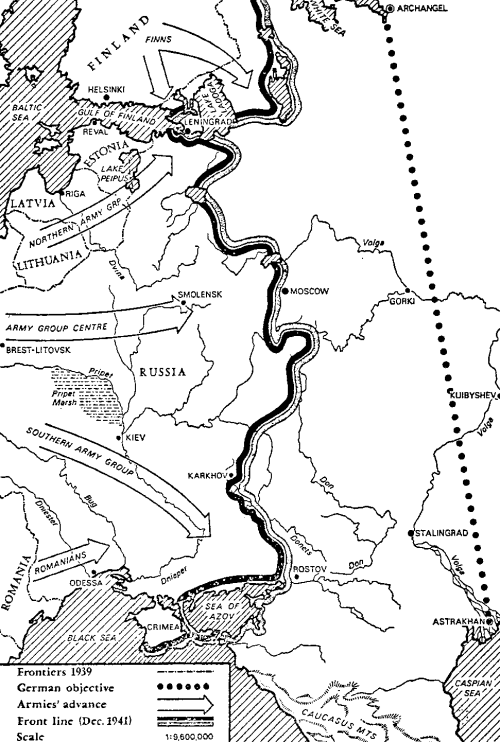
Mapa del avance máximo del frente en diciembre de 1941. Las líneas azules representan los embolsamientos de tropas soviéticas.
Durante los últimos días de julio de 1941 y tras la primera semana de agosto, el éxito de la operación de ataque a la Unión Soviética parece claro. Las bolsas de prisioneros del RKKA (Ejército Rojo) se cuentan por centenas de miles, la Wehrmacht, victoriosa en todos los campos de batalla europeos (excepto aún en pugna contra Gran Bretaña), ha cruzado el gran río Dnieper y está a punto de liquidar una nueva bolsa de ejércitos de Stalin en Smolensk. El Alto Mando alemán no se plantea ya cómo derrotar a su enemigo sino, convencido de que es cuestión de tiempo, qué dirección tomar para acelerar la caída de Stalin: ¿Es Moscú la mejor alternativa o desviar al poderoso Grupo de Ejércitos Centro para apoyar la captura de la capital cultural y cuna del bolchevismo, Leningrado? Hitler (y su entorno) piensan que la guerra está resuelta…
En la primera semana de la campaña de invasión el dirigente comunista desparece de la escena política. ¿Es esto un síntoma de la descomposición de su régimen? Sus ejércitos están en retirada, ya ha perdido miles de carros de combate y su aviación está subyugada por la Luftwaffe. ¿Cuánto más podrá durar esto? La pregunta es…
¿En algún momento la Operación Barbarroja tuvo posibilidades de triunfo o nunca las tuvo?
¡Comenta tu respuesta al final de esta misma página!
————————–[English version]———————–
Barbarossa, born for disaster?
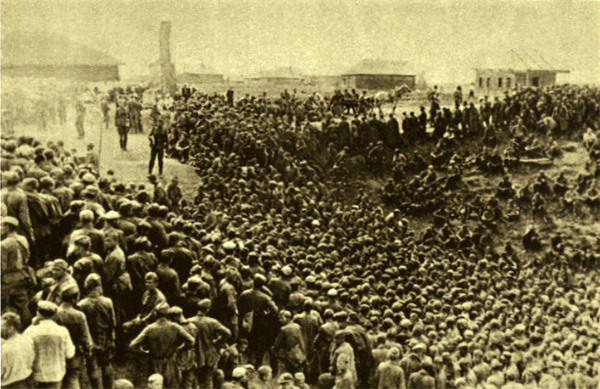
Masses of thousands of prisoners taken during the battle for Smolensk in July 1941. By the end of this year +3,000,000 Red Army POW’s will be in Hitler’s hands.
During the last days of July 1941 and after the first week of August, the success of the Soviet Union invasion operation seems clear. The RKKA‘s (Red Army) prisoners are accounted by hundreds of thousands, the Wehrmacht, victorious in all European battlefields (except still struggling against Britain), has crossed the great river Dniepr and is about to finish off a new «cauldron» of enemy troops in Smolensk. The German High Command is not even thinking about how to defeat its adversary, deeming it is just a matter of time, but what direction to take to accelerate the fall of Stalin: Is it Moscow the best option or to divert the powerful Army Group Centre to help in seizing Russia’s cultural capital and cradle of Bolshevism, Leningrad? Hitler and his entourage think the war is almost over…
In the first week of the invasion operation, the Soviet Premier vanishes from the public scene. Is this a proof of the weakness of his regime? His armies are in full retreat, he has lost thousands of tanks and his aviation is under the Luftwaffe’s air supremacy. How much longer can this last? Now the question is…
Did Operation Barbarossa have at anytime any chances or was it born for failure?
UNTERNEHMENBARBAROSSA, ACTO FINAL: LA DIRECTIVA NÚM. 21.
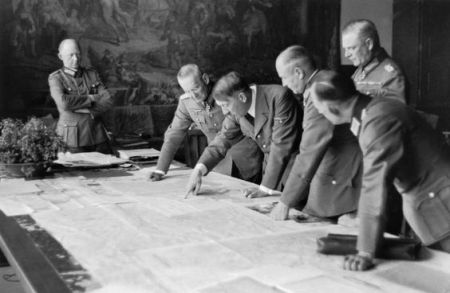
De izquierda a derecha: Jodl, Halder, Hitler, Brauchitsch, (no identificado) y Keitel en una reunión de planeamiento en el Berhoff en julio de 1940. En esta fecha se comunica al generalato alemán la intención de atacar la URSS.
El 6 de diciembre de 1940, el general Alfred Jodl, Jefe de Estado Mayor del OKW (Oberkommando der Wehrmacht) ordena a su adjunto, el general Warlimont confeccionar la Directiva que se va a presentar a Hitler. Toda la base de planeamiento del general Marcks y las correcciones hechas por Paulus (especialmente las de este ultimo) son las que se plasmarán en la Directiva número 21.
6 días más tarde, la Kriegsmarine (armada alemana) hará llegar un informe sobre la peligrosidad de abrir un segundo frente cuando aún los hombres de la mar está en el punto álgido de la lucha con Gran Bretaña. Pero Gran Bretaña, contra las cuerdas, aún no está vencida.
El día 17 la Directiva llega a manos del Führer. Hará este un par de cambios: de los dos grupos de ejército (Heeresgruppen) al norte de los pantanos del Pripyat, estos son los grupos Norte y Centro de von Leeb y von Bock, respectivamente, el primero tendrá que tomar Leningrado y Kronstadt (base de la Flota soviética del Báltico). Sólo después de acometer estos objetivos se reemprendería el avance hacia Moscú. Este será un punto de discordia entre parte del generalato y Adolf Hitler, quien no considera Moscú como un objetivo decisivo, sino como consecuencia de la buena conducción de la campaña.
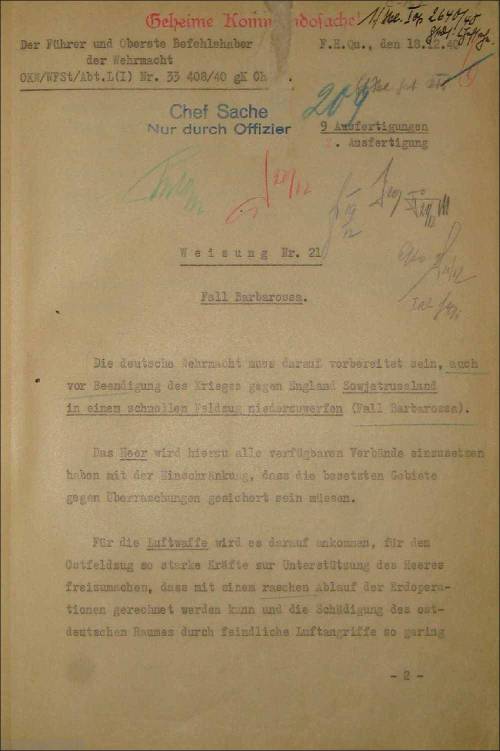
Página de la Directiva número 21. En su primer párrafo: «Die Deutsche Wehrmacht muss darauf vorbereitet sein, auch vor Beendigung des Krieges gegen England Sowjetrussland in einem schnellen Feldzug niederzuwerfen (Fall Barbarossa)». [Las Fuerzas Armadas alemanas deben, incluso antes de la finalización de la guerra con Inglaterra, aplastar a la Rusia soviética en una campaña fulgurante (operación Barbarroja)].
Al siguiente día, 18 de diciembre de 1941, la Directiva número 21 es firmada bajo el nombre en clave de UNTERNEHMEN BARBAROSSA. Hitler, admirador de Federico «Barbarroja» (1122-1190) el primer Emperador del Sacro Imperio Romano-Germánico, usará su apelativo para la gesta militar más ambiciosa. Así 7 meses más tarde y sin remisión dará comienzo la campaña más devastadora de todos los tiempos, una campaña que cambiará radicalmente el curso de la historia europea para siempre. Los papeles de Rumanía y Finlandia quedan asimismo definidos en el documento como aliados del III Reich. La diplomacia germana, una vez que se levante el secreto de la campaña, invitará a otras potencias a intervenir: Suecia, Hungría y Eslovaquia. El dictador alemán está presentando ante el mundo su proyecto como la cruzada contra el bolchevismo.
Es el momento de deshacer alguno de los mitos que sobre la campaña en el “frente ruso” existen en Occidente.
1.- Durante la fase inicial de la campaña, el objetivo es la destrucción de las fuerzas soviéticas dislocadas en las regiones occidentales de la URSS. No se debe permitir su escape hacia el este.
2.- En segunda instancia, alcanzar una línea de terrotorio desde donde la VVS (Voenno Vozdushnye Sily-Fuerza Aérea Roja) no sea capaz de violar las fronteras del Reich.
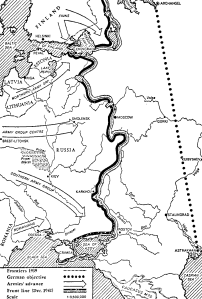
3.-Llegar a la línea río Volga-Arkhangelsk (Arcángel), desde donde la Luftwaffe tenga bajo su radio de acción a la industria de Stalin más allá de los Urales.
El plan es ciertamenta ambicioso y arriesgado y se basa en la presunción de un Ejército Rojo mal motivado y dirigido, como se ha demostrado en el conflicto ruso-finés, la Guerra de Invierno de 1939-40. Se confía en el colapso del aparato militar y consecuentemente en la posible caída del régimen de Stalin. Como afirma Adolf Hitler: “bastará con dar una patada a la puerta para que todo el edificio podrido se venga abajo”. Por lo tanto, la campaña se planea de corta duración e intensa, con la participación de 4 cuñas potentes acorazadas (Panzergruppen) que cercarán y destruirán el despliegue militar enemigo. Pero el futuro demostrará lo equivocado de estas premisas. Aunque Hitler no se equivocará al afirmar “El mundo contendrá el aliento cuando Barbarroja se ponga en marcha”.
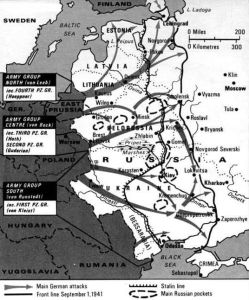
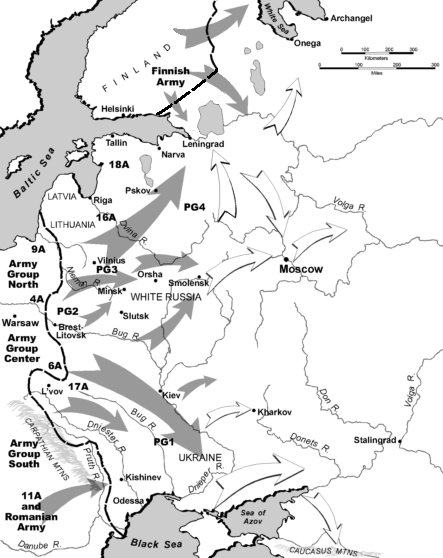
En concreto, el Grupo de Ejércitos Sur deberá atacar en dos ejes, uno hacia Kirovograd y otro hacia Kiev. El Grupo de Ejércitos «Centro» aprovechará el saliente de Bielostok para un doble envolvimiento y el Grupo de Ejércitos Norte se dirigirá a Kaunas (Kovno), a través del río Divina hacia el lago Pskov. En el frente de Finlandia, la Directiva espera que los fineses ataquen a izquierda o derecha del lago Ladoga en coordinación con el avance del Grupo de Ejércitos Norte. Más al norte las tropas acantonadas en Noruega deberán defender el territorio contra incursiones británicas, capturar Petsamo y amenazar Murmansk y su puerto estratégico para su conquista posterior.
El reloj continúa su cuenta atrás con los preparativos listos para mayo de 1941, pero el 30 de abril, debido a los acontecimientos en Yugoslavia y Grecia, que obligan a Alemania a intervenir al lado de los italianos, Hitler decide posponer Barbarroja para el 22 de junio. Aunque el principal factor no es ese, sino la primavera extremadamente lluviosa de 1941, que ha elevado los niveles de las aguas en exceso y anegado grandes extensiones de terreno. El retraso achacado el fracaso de Mussolini en Grecia es otro de los mitos.
Así 145 divisiones alemanas, unos 3 millones de hombres se alinearán en un extensísimo frente apoyadas por 3 flotas aéreas.
¿Te pareció interesante este artículo? ¡Comenta más abajo!
Sigue interesantes referencias también en Twitter @Barbarroja0300h
-—————————————[English version]——————————————
BARBAROSSA’S ORIGINS
PART 8:
UNTERNEHMENBARBAROSSA, FINAL ACT: DIRECTIVE NO. 21.
The plan: Leningrad, the cradle of Bolshevism and Kronstadt, the Soviet Baltic fleet base had to be taken by the northern group. Smolensk and at a later stage, Moscow, are responsibility of the central group. Ukraine, rich in resources, is the task of the southern group. The dotted line is the final territorial frontier to reach. From there the Luftwaffe will have the Urals and its industry within its lethal action radious.
On the 6th of December 1940, General Alfred Jodl, OKW Chief of Staff (Oberkommando der Wehrmacht) orders his adjutant, General Warlimont to write down the final draft for the Directive to be presented to Hitler. The basis for the document is the planning done by Marcks and by Paulus (specially this one).
Six days later the Kriegsmarine (German Navy) will submit another report stating the dangers of opening a second front when they are still in the apex of the fighting against Britain. Britain is against the ropes but still not defeated.
On the 17th of December the Directive will reach Hitler’s hands. He will amend a couple of “details”: From the two acting army groups north of the Pripyat marshes, the northern one will take precedence in seizing Leningrad and Kronstadt (Baltic Red Fleet base). Only when this has been accomplished, Army Group Centre will aim for Moscow. This point will be a harsh point of disagreement between many in the highest commands and Hitler with the campaign once in full swing. Hitler don’t see Moscow as a decisive objective, but as a consequence of the good conduct of the whole operation.
On the next day, the 18th, Directive no. 21 is signed under the name UNTERNEHMEN BARBAROSSA. The Führer, as an admirer of Frederic “Barbarossa” (1122-1190), the first Holy Roman Emperor, will choose purposely his nickname for his most ambitious dream, the destruiction of Bolshevism. This way and relentlessly the most devastating campaign of all times will commence. A military feat that will change the European course of History. The tasks of Romania and Finland, as Germany’s allies, are defined in the document as well. Only once the secrecy of the plans is lifted other powers will be invited to join, like Sweden, Hungary and Slovakia.
It is time to clarify some of the myths about Barbarossa still nowadays in the West:
1.- During the initial phase of the campaign the objective is to encircle and destroy the Soviet array of forces in its Western regions. It must be prevented by all means that they escape to the vastness of the eastern steppes.
2.- After that, to reach a territorial demarcation (a buffer zone) from where the VVS (Voenno Vozdushnye Sily or Red Air Force) can’t pose a threat to the III Reich.
3.- Finally to reach the river Volga-Arkhangelsk line where the Luftwaffe can neutralize, within its action radious, the remaining Stalin’s industry (Ural region).
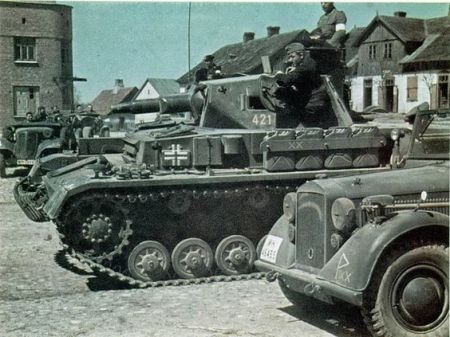
A Panzerkampfwagen IV and a Horch command car belonging to the 6. Panzer Division in Eastern Prussia before start of Operation Barbarossa. The unit is commanded by Major General Franz Landgraf. It is one of the 4 divisions composing the 41st Motorized Army Corps. Objective: Leningrad.
The plan is indeed ambitious adn risky, or better said tremendously ambitious, but it is based on the assumption of a badly commanded and under-motivated Red Army, as proved in the russo-finnish Winter War 1939-40. It is deemed that a collapse of the military might occur followed by the collapse of Stalin’s regime. As Adolf Hitler presumed “We will kick in the door and the whole rotten structure will crumble to the ground”. Consequently the campaign is thought to be short and intense, with the participation of 4 powerful armoured wedges that will encircled and destroy the enemy. The future, however, will prove the inaccuracy of these premises. Although the German dictator won’t be wrong saying: “The world will hold its breath at the launching of Operation Barbarossa”.
Now on the battlefield, Army Group South will attack in 2 axis, towards Kirovograd and Kiev. The Bielostok salient will be used by Army Group Centre for a double encirclement and Army Group North will seize Kaunas (Kovno) and then across the Western Dvina towards lake Pskov. In the Finnish front the Directive expects Marshall Mannerheim to attack left or right of lake Ladoga in coordination with the German advance towards Leningrad. Even more to the north, the bulk of German forces in Norway will prevent any British incursions by sea and to seize Petsamo and to occupy jump-off positions to be ready for the capture of Murmansk and its vital port.
The clock is tickicking its countdown for all preparations to be fully ready by May 1941, but on the 30th of April, due to unexpected events in Yugoslavia and Greece, the Wehrmacht is bound to intervene on the side of Italy. Hitler postpones Barbarossa for the 22nd of June.
This way 145 German divisions supported by 3 air fleets, about 3 million men, are taking their positions along an extensive frontline…
Una vista de satélite del campo de batalla en Bielorrusia. El punto de vista se sitúa sobre Alemania con perspectiva hacia el este. Las líneas negras corresponden a los dos brazos acorazados de Hoth y Guderian. Los cercos de Belostok, Novogrudok y Minsk son el resultado de lo que significa la guerra relámpago.
El golpe maestro del Heeresgruppe «Mitte» (Grupo de Ejércitos «Centro»): en el sector central del vasto frente oriental las dos potentes cuñas acorazadas del general Hermann Hoth (3. Panzergruppe, por el norte) y del general Heinz Guderian (2. Panzergruppe, por el sur), llevan a la práctica los principios más puros de la guerra relámpago, der Blitzkrieg. Con una maniobra audaz y en tiempo récord, embolsan en una pinza gigantesca a 4 ejércitos soviéticos (3º, 10º, 13º y partes del 4º). Los primeros carros de combate de Hermann Hoth entran en Minsk el 27 de junio, tras tan sólo 5 días de una furiosa carrera a través de Bielorrusia, con los flancos peligrosamente expuestos. La asistencia del 2. Luftflotte (2ª Flota Aérea de Luftwaffe) ha sido esencial para neutralizar a la VVS (Voenno Vozdushnye Sily o Fuerzas Aéreas Soviéticas) y abrir camino a las vanguardias acorazadas.
Los cercos, con unos 420.000 prisioneros, pasarán a la historia como las bolsas de Bielostok, Novogrudok y Minsk. Entre Bielostok y Novogrudok quedan copados el 3er y 10º Ejércitos del RKKA. Respectivamente, son las tropas del general-leitenant V. I. Kuznetzov y general-maior A. A. Korobkov. Los cercados lucharán en muchos casos y otros atravesarán a pie las líneas alemanas en dirección este. Otros se integrán en bandas armadas de partisanos. De los capturados, la mayoría perecerá en improvisados campos de prisioneros de hambre y sed.
El siguiente objetivo de los Panzer del Heeresgruppe «Mitte» es forzar el río Berezina…rumbo hacia Smolensk. «Panzer, vorwärts!» (¡Panzer, adelante!).
El 28 de junio de 1941 el general Pavlov, Comandante de todo el Zapadny Front o Frente «Occidental», una impresionante formación de combate que defiende Bielorrusia es desbordada por los acontecimientos (un «Frente» es equivalente a un grupo de ejércitos del Heer). Este es destituido y reemplazado por el general Yeremenko. Timoshenko recibe en Moscú al nuevo Comandante del Frente y le presenta la situación desastrosa en Bielorrusia con un análisis de las causas del fracaso de Pavlov. Yeremenko no sale de su estupor cuando Timoshenko le traza una línea en una carta indicando lo
Columna de la 7.Panzer Division, integrada en el XXXIX. Armeekorps (motorisierte) del 3. Panzergruppe de Hoth. El Panzer 38(t) porta el distintivo identificativo de división (Y).
vasto del territorio perdido. Sencillamente increíble en tan sólo seis días de combates. Timoshenko añade:
“El peligro de los fascistas reside en su estrategia acorazada. Ellos atacan en unidades grandes. A diferencia de nosotros, ellos tienen cuerpos acorazados completos que operan independientemente, mientras que nuestras brigadas acorazadas no son más que apoyo de la infantería y nuestros carros se usan de manera secuencial. Pero esos blindados alemanes no son invencibles. Ellos no poseen modelos súperpesados. Al menos hasta la fecha no los han usado. Yo he dado autorización para el uso operativo de los T-34. Todos aquellos disponibles serán entregados al frente a toda prisa desde la Escuela Regimental de Carros de Combate de Moscú.»…
Sigue interesantes referencias también en Twitter @Barbarroja0300h
¡Deja abajo tu comentario!
-—————————————[English version]——————————————
BARBAROSSA’S BLITZKRIEG
Generals Heinz Guderian (left) and Hermann Hoth. Respectively commanding 2. Panzergruppe and 3. Panzergruppe across Belarus. The combined action of both armoured thrusts sets an example in the History of the lightning war. After the capture of Minsk, Smolensk will mean an operational halt in Army Group «Centre». [Courtesy Bundesarchiv]
The master plan of Heeresgruppe Mitte (Army Group «Centre»): over the central sector of the vast Eastern front two powerful armoured axis, one under General Hermann Hoth (3. Panzergruppe, on the north) and another under General Guderian (2. Panzergruppe, on the south), carry out the principles of the purest lightning war, der Blitzkrieg. With a daredevil maneouvre and swiftly they encircle inside a gigantic cauldron up to four Soviet armies (3rd, 10th, 13th and parts of the 4th). By doing so, Hermann Hoth’s first Panzer formations reach Minsk on the 27th of June, just after 5 days of a savage run throughout Belarus, his flanks largely exposed. The assistance of the 2. Lutflotte (2nd Air Fleet) has been essential to neutralize the VVS (Voenno Vozdushnye Sily – Soviet Air Force) and to clear the way to the tanks.
The encirclements of 420,000 prisioners will pass into History as the cauldrons of Bielostok, Novogrudok and Minsk. Between Bielostok and Novogrudok 3rd and 10th RKKA armies get trapped. They are the formations of V. I. Kuznetsov and general-maior A. A. Korobkov. In many cases they will fight to the end and in other they will walk for weeks their way East across the thin German lines. Others will just join disorganized armed bands: The partisans. Most of the frontoviki (Red Army soldiers) will perish in makeshift prisoner camps due to exposure, hunger or thirst.
The next objective of the Panzer forces of Heesresgruppe Mitte will be the crossings of the river Berezina, just on track to Smolensk. «Panzer, vorwärts!» (Tanks, advance!).
On the 28th of June 1941, General Dmitri Pavlov, Commander in Chief of the whole Western Front, an potent war formation responsible of defending Belarus is overflooded by the current events (a «front» equates a Heer army group). He is sacked and replaced by General Yeremenko. Marshall Timoshenko receives in Moscow the new Front Commander and briefs him about the disastrous situation in Belarus, with an analysis of Pavlov’s failures. Yeremenko is simply shoked when Timoshenko draws a line over a map depicting the territorial losses. Simply unbelievable in just 6 days of combat. Timoshenko adds:
RKKA’s tanks out of action near Zelva (Belarus) in the first days of Army Group Centre’s offensive.
» The danger of the fascists lays in their armoured strategy. They attack in great formations. Unlike us, they have full armoured corps that maneouvre independantly while our mechanized brigades just support the infantry and our tanks are used piece-meal. But those German tanks are not invincible. They don’t have superheavy types. At least they haven’t used them up to date. I have just cleared the operational employment of the T-34’s. All of those available out of the Moscow Regimental tank School will be delivered to the front in no time.»…
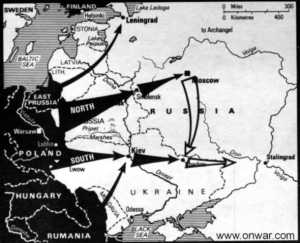
El plan de Marcks. En la primera fase el eje central de ataque debe capturar Moscú. Una fuerza auxiliar se desviará hacia el norte para apoderarse de Leningrado. El segundo eje de ataque, por el sur, tomará Kiev en una segunda fase, cuando los captores de Moscú hayan completado su misión. Sólo entonces girarían 90º hacia Ucrania. [ Cortesía http://www.onwar.com ]
En julio de 1940 a un poco conocido general de artillería llamado Erich Marcks se le encarga un plan que cambiará la historia de Europa. Se trata nada más y nada menos que del estudio y confección de un plan de ataque a la Unión de Repúblicas Socialistas Soviéticas. La premisa de partida (dada por el mismo Adolf Hitler) es la destrucción de los ejércitos de Stalin en el campo de batalla. Cuando Marcks entrega su borrador este está convencido de que el objetivo principal de la campaña debe ser la captura de Moscú…
¿Estás de acuerdo con Erich Marcks?
¡Comenta tu respuesta al final de esta misma página!
[English version]
Moscow, Yes or No…?
Barbarossa’s final operations plan. It consists of 3 attack axis. The Red Army must be destroyed to the west of rivers Dvina and Dniepr before they have a chance to withdraw to the vast Russian steppes. The plan was deviced to take a maximum of 2-3 months, but the Eastern Front turned out to be the bloodiest battlefield of WWII for 4 years. It was actually in the lands of Western USSR where the fate of Europe was decided and changed forever.
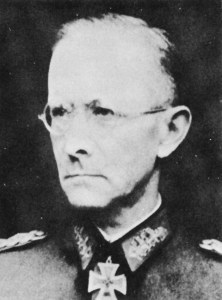
In July 1940 an unknown artillery general named Erich Marcks is given his most important task, that will change the course of History in Europe. It is nothing less than the study and planning of the attack on the Union of Soviet Socialist Republics. The objective (given by the same Adolf Hitler) is the destruction of Stalin’s Army in the battlefield. When Marcks submits his draft he is convinced that the key objective of the campaign is to seize Moscow…
General Erich Marcks
¿Do you agree with Erich Marks?
Comment your choice right at the bottom of this page!
El objetivo: la Unión de Repúblicas Socialistas Soviéticas
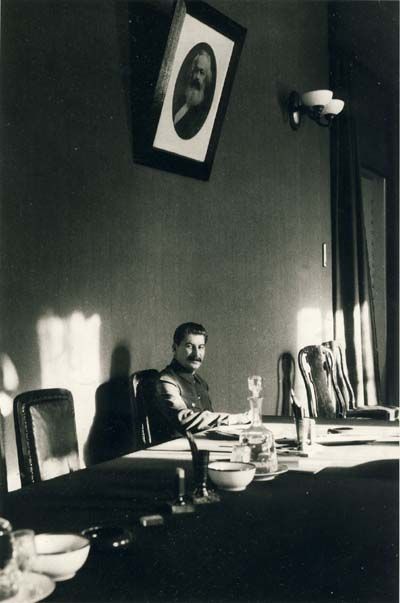
Iósif Vissariónovich Dzhugashvili, Stalin, el hombre de «hierro». Eliminada toda la oposición política, se erige como la figura indiscutible de la URSS y del Comunismo mundial.
Tras la revolución de 1917 Rusia atraviesa momentos especialmente convulsos de su historia. El derrocamiento del Zar la sume en una cruenta guerra civil, que tras la victoria de los bolcheviques se transforma según la nueva doctrina comunista. Son años de hambre, privaciones y «depuración» de la sociedad. La transformación abarca todos los sectores, desde la economía, según planes quinquenales de producción dirigida por el estado, la sociedad (con su nuevo adoctrinamiento político) y naturalmente las Fuerzas Armadas. Llegados a los años 30, Stalin se erige como la figura indiscutible del régimen. Ha depurado el partido comunista eliminando toda forma de posición contra él de la manera más radical, pero existe aún un estamento que necesita depurar: el RKKA (Ejército Rojo de Trabajadores y Campesinos).
Entre 1937 y 1938, más de 400 altos mandos de sus Fuerzas Armadas serán detenidos y procesados (de un total de unos 700, desde mariscales a oficiales con mando en brigada). Este bienio pasará a la historia Soviética como el de las purgas de Stalin. Gran número de ellos serán fusilados y los más «afortunados» mandados a campos de trabajo en Siberia. En condiciones atroces muchos más perecerán. Las cifras son aplastantes. De entre estos 400 oficiales, figuran como «eliminados»:
1.- 3 de los 5 mariscales
2.- 13 de los 15 comandantes de ejército
3.- 57 de los 85 jefes de cuerpo de ejército
Con empleos inferiores las cifras son difíciles de determinar, pero pueden ascender a varios millares.
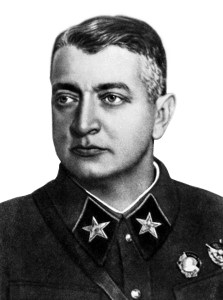
Mariscal Mikhail Tukhachevsky. Quizás el militar más relevante del Ejército Rojo, es pasado por las armas en las «grandes purgas». Las diferencias entre él y el dictador ya venían de la guerra ruso-polaca, cuando en 1920 no fue capaz de entrar en Varsovia al mando del Frente Occidental. Ambos se cruzaron acusaciones.
Figuras de gran prestigio y valía personal son eliminadas, como el mariscal Tukhachevsky, uno de los ideólogos soviéticos que propugnaba por la nueva doctrina de uso de los medios acorazados. Los vacíos dejados se rellenarán por norma con hombres adeptos al régimen de valía más política que militar: Voroshilov, Kulik, Mekhnis…Este hecho se pondrá de manifiesto en los primeros desastrosos meses de la Operación Barbarroja. La cadena de mando soviética es rígida y existen pocos hombres dispuestos a seguir la iniciativa propia, incluso aunque los acontecimientos en el campo de batalla los aconsejen. Existe un temor racional a actuar sin órdenes.
Por otro lado el plan quinquenal de 1937-1942 embarca a la URSS en una fase muy ambiciosa de reequipamiento y modernización del RKKA. Las experiencias obtenidas en la Guerra Civil Española y la cuasi-desastrosa campaña contra Finlandia de 1939-40 pone en evidencia graves carencias técnicas y, en el segundo caso, de calidad de los cuadros de mando. Cuando los alemanes inician el planeamiento de invasión, pecan de usar una información de inteligencia deficiente, considerando a los soviéticos menos numerosos en cuanto a tropas. Esto les anima al proyecto. Pero el factor más decisivo es el hecho de la trascendencia de los resultados demostrados al mundo de la victoria pírrica obtenida sobre una nación mucho más pequeña: Finlandia. Los Finlandeses ciertamente han debido ceder y perder territorios en la Guerra de Invierno 1939-40 pero han infligido pérdidas gravosas a las tropas stalinistas. A la vista de estos hechos, el Ejército Rojo se presenta ante el mundo como una fuerza poco motivada y peor liderada.
La producción a gran escala en la URSS se basa en planes quinquenales. Una gran parte de la producción del estado se dedica al rearme.
Posiblemente no exista en Alemania durante 1940-1941 ningún oficial que no crea firmemente en la superior capacidad del soldado alemán, el Landser, frente el soviético. Las cifras se obvian a pesar de que la URSS cuenta con 170 millones de habitantes (el doble que Alemania). A pesar del juego de guerra de Paulus (1940) en el que se pone de manifiesto las dificultades de las fuerzas alemanas en alcanzar los últimos objetivos de Barbarroja (línea del Volga-Arkhangelsk), y así se le hace saber a Hitler, la creencia generalizada se basa en que la calidad de la Wehrmacht suplirá con creces la cantidad de tropas de Stalin. Grandes detractores de la campaña de invasión de la URSS, dícese de hombres como Franz Halder y Brauchitsch, no escapan a esta sensación de superioridad.
La URSS es un gigante del que poco se sabe. Vive sumida en una neblina de secretísimo tanto hacia el exterior como en los asuntos domésticos. En 1941, no obstante, posee el mayor ejército de la tierra. Hablamos de una potencia militar de 25.000 carros de combate y alrededor de 12.000 aviones. Alemania dispone de 1/5 de carros de combate y 1/3 en aviación. No existe nación que se acerque al poderío militar de Stalin. Al comienzo de la Operación Barbarroja dispone, no obstante, de material en su mayoría anticuado como carros de combate T-26 y cazas Polikarpov I-16. El nuevo material está llegando, pero en números relativos aún hay pocos blindados y aviones modernos.
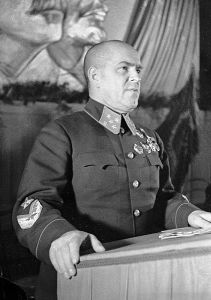
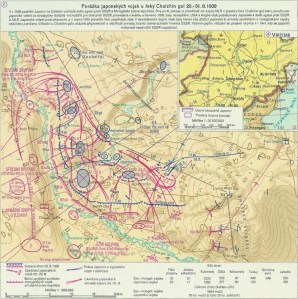
Es curioso cómo la victoriosa y aplastante campaña de Zhukov contra las tropas japonesas en Extremo Oriente (Khalkhin Gol) pasa desapercibida ante el mundo. En 1939 un contingente de 75.000 hombres del Imperio del Sol Naciente ocupa un sector de soberanía de la República Popular de Mongolia Exterior a lo largo del río Khalkhin Gol. Al invocar el tratado defesivo con la URSS, Stalin se pone en marcha. Zhukov, al mando de la operación, inflige 41.000 bajas a los japoneses a cambio de 10.000 propias. Durante Barbarroja Zhukov jugará un crucial papel y posiblemente sea el salvador de Moscú en el invierno de 1941-42.
Stalin es consciente de que el Pacto de No Agresión firmado con el III Reich (agosto de 1939) tiene fecha de caducidad. Pero necesita tiempo para llevar a cabo sus grandiosos planes de expansión del RKKA. Posiblemente su ejército no estará listo para antes de 1942-43. Hitler lo sabe. El premier soviético necesita tiempo y a pesar de las señales de amenaza que llegan desde el oeste, sigue una política de no provocación. Los acuerdos económicos de suministro de materiales estratégicos con Alemania se siguen respetando sin más. Son materiales con los que Alemania fabrica municiones, instrumentos de precisión, carburantes y lubricantes para sus Panzer y con ellos ha derrotado a Polonia, Dinamarca, Noruega, Bélgica, Holanda, Francia y pronto a Yugoslavia y Grecia. Unos meses antes de Barbarroja un bimotor Junkers de reconocimiento es obligado a tomar tierra en emergencia en territorio soviético. La tripulación es capturada sin posibilidad de destruir las cámaras y fotografías tomadas en la misión. Timoshenko pide permiso para fusilar a los aviadores acusados de espionaje, pero Stalin no lo autoriza. No quiere dar a Alemania la más mínima excusa para un incremento de la tensión.
Cuando Hitler autoriza el flujo final de tropas hacia Polonia en las vísperas de la invasión el 22 de junio de 1941, agentes al servicio del gobierno de Polonia en el exilio (Londres) dan cuenta de los acontecimientos. Llega a conocimiento del primer ministro británico, Churchill, quien lo comunica a Stalin. Pero Stalin desconfía. Al fin y al cabo el inglés siempre ha sido un anti-comunista acérrimo, quien había instigado una intervención británica en la guerra civil rusa (1918-22) e incluso pugnado por formar un frente anglo-francés de apoyo a Finlandia y contrario a la URSS en la Guerra de Invierno (1939-40). Sea como fuere, más de 7 millones de hombres se van disponiendo frente a frente a lo largo de una extensísima frontera sin remisión. El reloj sigue su cuenta atrás…
Sigue interesantes referencias también en Twitter @Barbarroja0300h
-—————————————[English version]——————————————
BARBAROSSA’S ORIGINS
PART 6:
The objective: The Union of Soviet Socialist Republics.
General Georgy Zhukov. One of the most capable assets in the Stalinist Army. He survived the purges and proved his value in Khalkhin Gol 1939, the russo-finnish Winter War 1939-40 and during Operation Barbarossa and other operations on the Eastern Front (so called «Great Patriotic War» in Russian History)
After the 1917 revolution Russia lives specially harsh times in her long History. Once the Czar is ousted, the nation will suffer a bloody civil war. After the Bolsheviks victory, the transformation of the giant nation will commence in accordance to the Communist doctrine. These are years of hunger, arrests, fear and «depuration». The transformation encompasses all sectors of the state, from economics (done through state ruled five-year plans), social indoctrination and , of course, drastic changes in the military.
Once in the 30’s Stalin arises as the indisputable regime’s man. He has «depurated» the Communist Party, thus getting rid of any possible opposition, but still there is one body that needs his consideration: the RKKA (Red Army of Workers and Peasants). And it will be done mercilessly and ruthlessly.
Between 1937 and 1938, out of 700 high ranking officers in the Services, 400 will be “purged”. They will be arrested on made up accusations and court-martialed. Most of them will be shot. The «fortunate» ones will be sent to force labour camps in Siberia. Many more will perish due to fatigue, exposure or mistreatment. The numbers of the detained are outstanding. These 400 men include:
1.- 3 out of 5 marshalls in active duty in the RKKA
2.- 13 out of 15 army commanders
3.- 57 out of 85 army corps commanders
Lower ranks are difficult to assess, but involve several thousands.
Prestigious, skilled and respected officers are simply liquidated like Marshall Tukhachevsky, one of the few who saw the potential of the new armoured forces acting en masse and coordinately. The “vacancies” will be filled with men not necessarily qualified in the military art but in the political. Men like Voroshilov, Kulik, Mekhnis…This fact will explain part of the disasters suffered by the Red Army in the summer of 1941. The Soviet chain of command is stiff and only at this stage a few commanders are ready to follow their initiative, even if the circumstances in the battlefield dictate their way. There’s obviously a rational fear to act without orders.
On the other hand, the five-year plan 1937-1942 calls for a massive modernization and reequipping of Stalin’s Army. The lessons learned after the Spanish Civil War and the half-disastrous Finnish campaign in the Winter War 1939-40 show deep technical shortcomings and in the latter, poor leadership. When the Germans commence the planning of Operation Barbarossa they rely on poor intelligence data (regarding numbers of Soviet divisions) and this fact encourage them to continue optimistically with the study. However, the main encouraging factor is the analysis of the Soviet phyrric campaign in Finland. A much smaller nation. The Finns have lost territories indeed, but have managed to inflict infamous losses to Stalin’s troops. Before the world, the Red Army is presented as a poorly motivated and badly commanded force.
Possibly there’s no single officer in the 1940-41 Germany who does not believe in the superior capabilities of the German soldier, the Landser, versus the Soviet. The fact that the USSR has 170 million inhabitants (twice as much as Germany) seems not to be an obstacle. In spite of the war-game held by Paulus in 1940, where he concludes that due to lack of enough troops the last strategic territorial gains might be compromised (Volga-Arkhangelsk line), and Hitler is informed accordingly, the majority are still optimistic. Serious opposers of the operation, men like Franz Halder or Brauchitsch feel this way too.
The USSR is an unknown juggernaut. The secretism covers all matters related to Soviet life, either towards foreign powers or regarding the domestic affairs. In 1941, nevertheless, the USSR fields the greatest army in the world. We are referring to 25,000 tanks and 12,000 aircraft. The III Reich has 1/5 in numbers of tanks and 1/3 of planes. There’s no other nation on Earth close to Stalin’s army strenght. However, at OperationBarbarossa start their forces are still relying on obsolescent materiel, like the T-26 tank or the PolikarpovI-16 fighter.
In August 1939 Japanese troops suffer an utter defeat in the hands of Soviet General Zhukov along the river Khalkhin Gol in Exterior Mongolia.
Curious at it may seem, Zhukov’s decisive victory against the Japanese in Far East escapes unnoticed to the world. In the summer of 1939 a contingent of 75,000 Japanese troops occupy a strip along the river Khalkhin Gol that belongs to the Exterior Mongolian People’s Republic. In virtue of a defensive pact with the Soviet Union, Stalin moves over. Zhukov, in command of the operation, inflicts appaling 41,000 casualties to the troops of the Rising Sun, in exchange of 10,000 own losses. During Barbarossa Zhukov will play a paramount role in the survival of its nation and will save Moscow in the winter 1941-42.
Stalin is aware of the non-lasting nature of the Non-Agression Pact signed with the III Reich in August 1939. But he needs time to carry out his ambitious plans of enlarging and modernizing his RKKA. Most likely his army won’t be combat-ready before 1942-43. Hitler knows this as well. The Communist Premier needs time and in spite of the threat signs arriving from the West, follows a non-provocation policy. The trade agreements with Germany, supplying strategic materials, continue being honored. These are the raw materials which Germany needs for the manufacturing of optics, munitions, precision instruments and oil and lubricants for her Panzerwaffe. Thanks to those material Germany has defeated Poland, Denmark, Norway, Belgium, Holland, France and soon, Yugoslavia and Greece. A few months before Barbarossa a Junkers reconnaissance airplane is brought down into Soviet soil. The crew is captured without being able to destroy the highly classified cameras and photographies taken of Russian future targets. Marshall Timoshenko demands their immediate execution on charges of spionage, but Stalin opposes. Faithful to his appeasement policy he won’t do anything that can be used as an excuse against Germany.
When Hitler gives permission for the deployment of troops to Eastern Poland along the new borders with the Soviet Union, agents report it to their Polish government in the exile (London). Churchill is informed and in turn he warns Stalin. However Stalin doesn’t trust Churchill. After all, the English has a reputation of being a strong anti-Communist. He had even instigated a British intervention during the Russian civil war (1918-22) and even supported an anglo-french front to help Finland against the USSR during the Winter War 1939-40. All in all, more than 7 million troops continue relentlessly deploying face to face along a gigantic frontline. The clock continues ticking…
Barbarroja tiene objetivos militares, políticos, ideológicos y también geográficos. Hitler pretende alcanzar la línea del Volga (Mar Caspio) con la de la localidad de Arkhangelsk. Tal extensión de terreno en control de la Wehrmacht impediría cualquier ataque de la aviación de Stalin sobre el Reich.
Una vez acabado los trabajos del estudio sobre la URSS, en noviembre de 1940 el OKH (Oberkommando des Heeres o Alto Mando del Ejército) está concentrado en los preparativos de la captura de Gibraltar (Operación Félix) e intervención en los Balcanes. Esto, mientras su órgano de mando superior, el OKW (Oberkommando der Wehrmacht o Alto Mando de las Fuerzas Armadas) ya está concentrado en la “cuestión rusa”.
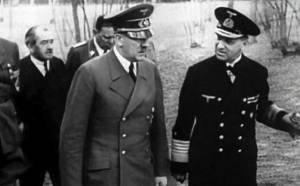
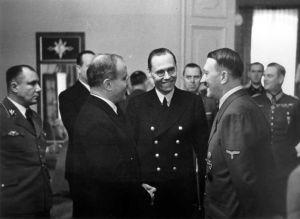
En noviembre el gobierno soviético pide las primeras explicaciones del porqué de las concentraciones de efectivos en las antiguas provincias polacas. El agregado militar de la embajada de Moscú, general Köstring, es llamado a Berlín. Allí es instruido para que, si cuestionado, informe a las autoridades soviéticas de que se trata de un redespliegue tras la victoriosa campaña en el oeste, por gozar en Polonia de mejores infraestructuras militares. El ministro de exteriores soviético, Molotov, visita Berlín en noviembre. Conferenciará con Adolf Hitler el día 13 del mismo. El Gran Almirante Raeder, que se entrevista con el Führer al día siguiente, se da cuenta de que este sigue aferrado a su idea de invasión. Raeder le expresa su oposición una vez más, haciendo hincapié en que una victoria primeramente sobre Gran Bretaña es vital. Piensa que la URSS tardará aún varios años en estar en posición de atacar a Alemania. La cuestión de abrir dos frentes es la pesadilla que no se debe repetir, especialmente tras la experiencia de la Gran Guerra.
El Gran Almirante Erich Raeder en uno de sus encuentros con Hitler. La insistencia del primero de acabar primero con Gran Bretaña antes de poner en marcha el plan de invasión de la URSS no convence a Hitler.
Así transcurren el calendario, cuando el 5 de diciembre Brauchitsch (Jefe del Ejército) y Halder (su Jefe de Estado Mayor) presentan al dictador el plan. Recordemos el estudio inicial de Marcks y la posterior modificación de Paulus. Se le explican los pormenores y la decisión de emplear a 3 grupos de ejército. El objetivo geográfico final sería alcanzar la línea del Volga y la región norteña de Arkhangelsk; una extensión gigantesca de territorio que expulsaría al Ejército Rojo más allá de los Urales, desde donde no podría ya ser amenaza para el Reich. Hitler da su aquiescencia pero insiste nuevamente en la necesidad imperiosa de destruir a los soviéticos en el oeste de la URSS, evitando que puedan replegarse hacia los vastos espacios de Rusia. Este tiene la campaña de Napoleón muy presente y no quiere incurrir en los mismos errores estratégicos. Tiene buenas noticias y añade que tanto Rumania como Finlandia tomarán parte en el plan. Para él Moscú no es decisivo. Lo deja claro. Agrega que el transvase de tropas de oeste a este tardaría 8 semanas, pero que las preparaciones no se podrían ocultar al mundo más allá de mediados de abril de 1941…
Entretanto se está llevando a cabo un ejercicio de puestos de mando organizado por el general Paulus. Este lo ha dividido en 3 fases:
1.- Batallas en la frontera
2.- La línea Kiev-Minsk-lago Peipus
3.- Y alcance de objetivos potenciales
Paulus llega a una conclusión preocupante: la 3ª fase prueba que a duras penas las fuerzas alemanas serían capaces de penetrar y dispersarse por las cada vez más anchas estepas rusas, si el RKKA (Ejército Rojo) ofrece resistencia ¡Los soviéticos deben ser necesariamente destruidos en el campo de batalla!
El Generalmajor Eduard Wagner, Jefe de Suministros y Administración, idea el descomunal plan logístico. Con todo, finalmente se concluye que la URSS puede ser derrotada en 8-10 semanas…
El plan está listo. El general Alfred Jodl (Jefe del Estado Mayor del OKW) ordena a Warlimont (su adjunto) el 6 de diciembre escribir la Directiva número 21 para la firma del Führer. Cuando Adolf Hitler plasme su rúbrica en el documento, la mayor operación militar de todos los tiempos no tendrá vuelta atrás…
Sigue interesantes referencias también en Twitter @Barbarroja0300h
-—————————————[English version]——————————————
BARBAROSSA’S ORIGINS
PART 6:
PRELIMINARY PLANS (November-December 1940)
Vyacheslav Molotov, the Soviet Minister of Foreign Affairs, is received by Hitler in Berlin. The Soviets are suspicious about changes in the German «spheres of influences» policies agreed in the Non-Agression Pact signed by both states in August 1939.
In November 1940 the OKH (Oberkommando des Heeres or Army High Command), once finished its initial planning about the “Russian question”, is focused in a new plan: Operation Felix or the capture of Gibraltar enclave through Spain. Thus now it is the turn of its higher body, the OKW (Oberkommando der Wehrmacht or Armed Forces High Command) to work on the USSR invasion plans.
In November the Soviet government suspiciously asks the first questions about the meaning of troop movements in the old Polish Eastern provinces. The German military attaché, General Köstring is called back to Berlin to receive precise instructions about what to answer in case the Soviets ask. It would simply be a redeployment of forces to Eastern Poland, after the victorious French campaign, for rest and refit. Molotov, the Soviet Minister of Foreign Affairs, visits Berlin. Hitler receives him on the 13th of November. Grand Admiral Raeder, who meets the Führer the day after, realizes that nothing has changed in Hitler’s mind. In spite of that, Raeder, for a second time insists that a primary victory over Great Britain is a must. He believes that the USSR still needs several years in order to be fully ready to attack Germany. The sole idea of opening a second front is a nightmare never to repeat; a lesson well learned after the Great War.
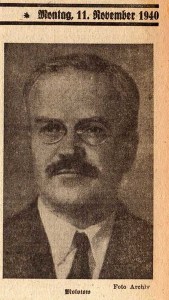
The German press publishes the breaking news about Molotov’s visit in Berlin on the 11th of November 1940.
Now on the 5th of December 1940, generals Brauchitsh (Chief of the Army) and Halder (Chief of Staff OKH) present the study to the dictator. Let us remember how Marcks initiated the case study and Paulus modified it. Hitler is explained the details and the need for 3 army groups. The final geographical objective would be the line of the river Volga-Arkhangelsk; a gigantic area that would expel the Red Army beyond the Ural mountains, from where they could never pose a threat to the III Reich. The German dictator agrees but highlights the need of destroying the Red Army in Western Russia before they withdraw to the vastness of Russia. He has clearly in mind Napoleon’s campaign and want to avoid the same strategic mistakes. The good news is that either Romania and Finland will join the plan. For Hitler, Moscow is not decisive. Last, but not least, he adds that the troop redeployment would take 8 weeks, but the preparations would not pass unnoticed to the world beyond mid April 1941…
The OKW is busy. A command post war-game is carried out led by General Paulus. He has divided his operation in 3 phases:
1) Frontier battles 2) The line Kiev-Minsk-lake Peipus 3) Reaching the last potential objectives
But Paulus reaches a serious conclusion: The third phase proves that hardly the Wehrmacht would drive so deep into Russia fanning-out across the immense steppes, specially if the Red Army stands fast. The RKKAMUST then be encircled and destroyed in the battlefield!
Generalmajor Eduard Wagner, Chief of Logistics and Administration, is in charge of devicing a never ever seen supply strategy. All in all, the final report concludes that the campaign will be brought to success in 8-10 weeks.
The plan is ready now. General Alfred Jodl (Chief of Staff OKW) orders General Warlimont (his adjutant) on the 6th of December 1940 to write the final Directive no. 21. When Hitler signs it the clock of the largest military campaign in History will start ticking…
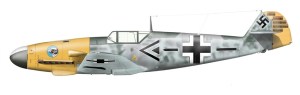
MESSERSCHMITT Bf-109F contra POLIKARPOV I-153 CHAIKA
Dos clásicos adversarios en las primeras semanas de la campaña de invasión de la Unión Soviética. A pesar de ser ya un aparato obsoleto en el escenario del frente oriental de 1941, el biplano I-153 Chaika (gaviota) es altamente maniobrable y está bien armado con 4 ametralladoras. Dispone de un motor Shvetsov M-62 de 1.000 C.V. que le proporciona una velocidad de tan sólo 424 km/h. a 5.000 metros. No obstante su escasa carga alar de 79,72 kg/m2 lo hace tremadamente ágil. Al amanecer del 22 de junio de 1941 centenares serán destruidos en sus aparcamientos, pero aún así muchos saldrán a combatir a la Luftwaffe.
Por contra la ventaja principal del Messerschmitt Bf-109F reside en su capacidad de trepada y velocidad. Su motor de inyección Daimler-Benz 601A de 1.200 C.V. le proporciona 600 km/h. en altura (casi 170 km/h. más que el pequeño diseño de Polikarpov). Pero pesa unos 500 kg. más que el I-153 (carga alar 196 kg/m2) lo que le sitúa en desventaja en cuanto a agilidad. Por ello enseguida los pilotos de caza alemanes adoptarán la táctica de «golpear y escapar», usando su exceso de velocidad para volver a ganar altura y posicionarse para un nuevo ataque. Caer en la trampa de un combate evolucionante a baja altura y baja velocidad contra un adversario mucho más maniobrero puede costar caro.
Con todo, en el escenario del verano de 1941, los pilotos de la Luftwaffe se encuentran entre los mejores del mundo y la VVS (Fuerza Aérea Soviética), con limitadas excepciones, no está a la altura ni en cuanto a entrenamiento, ni en calidad técnica de la mayoría de sus aviones en plantilla. Se están empezando a recibir los primeros lotes de cazas modernos, tipo MiG-3, LaGG-3 y Yak-1, pero en números relativos son pocos y las tripulaciones aún están entrenándose. No olvidemos que en esta fase de la Blitzkrieg en Rusia, la espina dorsal de la fuerza de caza Roja está compuesta por Chaika y los monoplanos I-16, también obsoletos. Ambos serán relegados en breve a misiones aire-suelo…
Messerschmitt Bf-109F-2 de Werner Mölders. JG 51
Polikarpov I-153 «Chaika». Este aparato «rojo 14» es capturado el primer día de «Barbarroja»
¿Te ha resultado de interés este artículo? Deja tu comentario abajo…
Sigue interesantes referencias también en Twitter @barbarroja0300h
…………………………………[English version]………………………………
BARBAROSSA’S TACTICS
MESSERSCHMITT Bf-109F vs. POLIKARPOV I-153 CHAIKA
Both, two classic enemies in the first weeks of operation Barbarossa. In spite of being an obsolete aircraft in the 1941 Eastern Front scenario, the biplane I-153 Chaika (seagull) is highly maneuverable and well armed with 4 machine guns. It is powered by a 1,000 H.P. ShvetsovM-62 engine, with a top speed of only 424 km/h. at 5,000 metres. Nevertheless its low wing surface to weight ratio (79.72 kg/sqm) makes it extremely agile. At dawn the 22nd of September 1941, hundreds will be destroyed in German ground attacks on their very same bases. But still, many will fly and challenge the Luftwaffe in the skies.
The main advantage of the Messerschmitt Bf-109F consisted of its greater speed and climb-out performance. Its fuel injection 1,200 H.P. Daimler-Benz 601A engine makes it 600 km/h. fast (almost 170 km/h. faster than the Polikarpov’s design). As a disadvantage, it is heavier than the I-153 (wing surface to weight ratio 196 kg/sqm). Therefore it cannot outmaneouvre its adversary. Due to this factor Luftwaffe fighter pilots will soon learn to maximize the hit and run tactics and not to get engaged in slow-turning dogfights against a much more maneuverable aeroplane. Being lured into a low level air combat with the biplane is certainly a bad idea.
All in all, in the 1941 scenario Luftwaffe pilots are amongst the best of the world and the VVS (Soviet Air Force) is, with limited exceptions), below training standards and relatively short of modern fighters such as the MiG-3’s, LaGG-3‘s or Yak-1’s. Still the backbone of the Red fighter force is composed by these Chaikas and the I-16’s monoplanes, obsolete types too…
Did you find this article interesting? Leave your comments below…
MESSERSCHMITT Bf-109F contra POLIKARPOV I-153 CHAIKA
Dos clásicos adversarios en las primeras semanas de la campaña de invasión de la Unión Soviética. A pesar de ser ya un aparato obsoleto en el escenario del frente oriental de 1941, el biplano I-153 Chaika (gaviota) es altamente maniobrable y está bien armado con 4 ametralladoras. Dispone de un motor Shvetsov M-62 de 1.000 C.V. que le proporciona una velocidad de tan sólo 424 km/h. a 5.000 metros. No obstante su escasa carga alar de 79,72 kg/m2 lo hace tremadamente ágil. Al amanecer del 22 de junio de 1941 centenares serán destruidos en sus aparcamientos, pero aún así muchos saldrán a combatir a la Luftwaffe.
Por contra la ventaja principal del Messerschmitt Bf-109F reside en su capacidad de trepada y velocidad. Su motor de inyección Daimler-Benz 601A de 1.200 C.V. le proporciona 600 km/h. en altura (casi 170 km/h. más que el pequeño diseño de Polikarpov). Pero pesa unos 500 kg. más que el I-153 (carga alar 196 kg/m2) lo que le sitúa en desventaja en cuanto a agilidad. Por ello enseguida los pilotos de caza alemanes adoptarán la táctica de «golpear y escapar», usando su exceso de velocidad para volver a ganar altura y posicionarse para un nuevo ataque. Caer en la trampa de un combate evolucionante a baja altura y baja velocidad contra un adversario mucho más maniobrero puede costar caro.
Con todo, en el escenario del verano de 1941, los pilotos de la Luftwaffe se encuentran entre los mejores del mundo y la VVS (Fuerza Aérea Soviética), con limitadas excepciones, no está a la altura ni en cuanto a entrenamiento, ni en calidad técnica de la mayoría de sus aviones en plantilla. Se están empezando a recibir los primeros lotes de cazas modernos, tipo MiG-3, LaGG-3 y Yak-1, pero en números relativos son pocos y las tripulaciones aún están entrenándose. No olvidemos que en esta fase de la Blitzkrieg en Rusia, la espina dorsal de la fuerza de caza roja está compuesta por Chaika y los monoplanos I-16, también obsoletos. Ambos serán relegados en breve a misiones aire-suelo…
Messerschmitt Bf-109F-2 de Werner Mölders. JG 51
Polikarpov I-153 «Chaika». Este aparato «rojo 14» es capturado el primer día de «Barbarroja»
¿Te ha resultado de interés este artículo? ¿Querrías conocer los detalles de esta y las demas operaciones?
Deja tu comentario abajo y sígue CONQUISTAR RUSIA punteando en la opción «SEGUIR / FOLLOW» a la izquierda de la página
[English version]
BARBAROSSA’S TACTICS
MESSERSCHMITT Bf-109F vs. POLIKARPOV I-153 CHAIKA
Both, two classic enemies in the first weeks of operation Barbarossa. In spite of being an obsolete aircraft in the 1941 Eastern Front scenario, the biplane I-153 Chaika (seagull) is highly maneuverable and well armed with 4 machine guns. It is powered by a 1,000 H.P. ShvetsovM-62 engine, with a top speed of only 424 km/h. at 5,000 metres. Nevertheless its low wing surface to weight ratio (79.72 kg/sqm) makes it extremely agile. At dawn the 22nd of June 1941, hundreds will be destroyed in German air attacks on their very same bases. But still, many will fly and challenge the Luftwaffe in the skies.
The main advantage of the Messerschmitt Bf-109F consisted of its greater speed and climb-out performance. Its fuel injection 1,200 H.P. Daimler-Benz 601A engine makes it 600 km/h. fast (almost 170 km/h. faster than the Polikarpov’s design). As a disadvantage, it is heavier than the I-153 (wing surface to weight ratio, 196 kg/sqm). Therefore it cannot outmaneouvre its adversary. Due to this factor, Luftwaffe fighter pilots will soon learn to maximize the hit and run tactics and not to get engaged in slow-turning dogfights against a much more maneuverable aeroplane. Being lured into a low level air combat with the biplane is certainly a bad idea.
All in all, in the 1941 scenario Luftwaffe pilots are amongst the best of the world and the VVS (Soviet Air Force) is, with limited exceptions), below training standards and relatively short of modern fighters such as the MiG-3’s, LaGG-3‘s or Yak-1’s. Still the backbone of the Red fighter force is composed by these Chaikas and the I-16’s monoplanes, obsolete types as well…
Did you find this article interesting? Leave your comments below and follow us clicking on «SEGUIR / FOLLOW» at the left of the page
Marcks, Paulus y su diferente perspectiva sobre el ataque a la URSS.
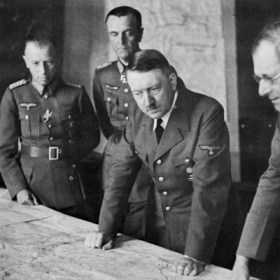
Hitler en una conferencia de planeamiento. Friedrich Paulus tras él. Este se hará cargo del trabajo de Marcks y lo adaptará a los deseos de Hitler.
Acabado el estudio de Marcks de invasión de la URSS, el 5 de agosto de 1940 se hará oficial su entrega. Como se describe en las partes anteriores, el más ambicioso plan alemán de la Segunda Guerra Mundial y de la historia de los conflictos, se basa en dos premisas básicas: dos ejes de ataque partiendo de Polonia y la capital de Stalin como objetivo prioritario.
En septiembre de 1940 lo retomará el Generalleutnant (teniente general) Friedrich Paulus (el futuro mariscal que en 1943 rendirá su 6º Ejército en Stalingrado), destinado en el OKW (Oberkommando der Wehrmacht), Alto Mando de las Fuerzas Armadas. El plan inicial de ataque a la URSS sufrirá una modificación importante: Ya no se contemplan 2 grupos de ejército, sino 3 y Moscú será un objetivo condicionado. Es decir, una vez que el Grupo de Ejércitos “Centro” haya tomado Smolensk, la continuación de la ofensiva hacia Moscú, o no, dependerá de la progresión del Grupo de Ejércitos “Norte” en la consecución de su objetivo, que es la captura de Leningrado. Paulus abre la posibilidad de que el Grupo de Ejércitos “Centro” tenga que distraer un número de tropas para apoyar la toma de Leningrado.
El nuevo plan contempla a 3 grupos de ejército. Dos pertiendo de Polonia y un tercero desde el sur de Polonia y Rumanía.
El Gran Almirante Raeder se entrevista por entonces con Hitler e intenta disuadirle de abrir un segundo frente sin haber acabado primero con Gran Bretaña. Él es de la opinión de que Alemania debería apoyar el esfuerzo italiano de hacerse con el canal de Suez. Así el avance hacia Palestina y Siria estaría próximo y no sería necesario atacar a la URSS desde el norte. Pero Raeder se da de bruces con una decisión de carácter no sólo militar o económica, sino ideológica. Hitler sabe (y Stalin) que el enfrentamiento sucederá tarde o temprano…
El 29 de octubre desde el OKW Halder recibe el plan modificado de Paulus. Queda claro que la relación de fuerzas no es favorable para Alemania, lo que obligará a concentrar tropas en el Schwerpunkt (punto de ruptura decisivo), pero desprotegiendo otras zonas aceptando riesgos. No obstante, incluso el general Halder, detractor firme del plan y el resto de la oficialidad alemana, no escapa a la sensación de superioridad del soldado alemán frente al soviético. La campaña soviética contra Finlandia en el invierno 39-40, en la que Stalin consigue una victoria pírrica, apoya la idea de que el RKKA (Ejército Rojo) es un gigante poco preparado y desmotivado…
Sigue interesantes referencias también en Twitter @Barbarroja0300h
-—————————————[English version]——————————————
“BARBAROSSA’S” ORIGINS
PART 5:
Marcks, Paulus and their planning.
Once Marcks has completed his study for the invasion of the USSR, he officially submits it on the 15th of August 1940. As described in the previous parts, it is the most ambitious German invasion plan of World War Two and its consequences will surpass any other’s in the History of Mankind. It is based on 2 assumptions: 2 attack axis starting from Poland and Stalin’s capital city as primary target.
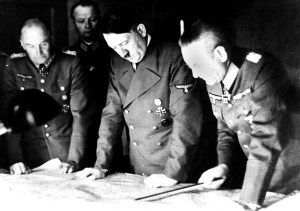
Adolf Hitler with Halder at his left side. The meeting will take place on the 7th of August’ 41 with Operation «Barbarossa» in full swing.
In September 1940 Generalleutnant Friedrich Paulus (the future Field Marshall who will surrender his 6th Army at Stalingrad in 1943) will take over the planning. He is assigned to the OKW (Oberkommando der Wehrmacht), Supreme Armed forces Command. The initial attack plan against the USSR will be significantly amended. It is not 2 army groups any more but 3 and Moscow will be a target on condition. This means that once Army Group “Center” had taken Smolensk, it will be cleared to continue towards Moscow depending on Army Group “North’s” own progression towards Leningrad. Paulus leaves a chance for reinforcing the latter with troops from Army Group “Centre” to support seizing Leningrad.
Grand Admiral Raeder tries to convince Hitler about not opening a second front before beating Great Britain. On the contrary, he supports the idea of helping the Italians capture the Suez Canal. This way Palestine and Syria would be next on the list and it would not be necessary to attack the USSR from the North. But Raeder faces not only a military or economical decision, but ideological. Hitler (and Stalin) know that war at some point is a certainty…
On the 29 October 1940 the OKW gives Halder Paulus’ amended plan. It is clear then that the force ratio is not on Germany’s side. This will force a strategy of concentrating forces over a Schwerpunkt (decisive point of interest), leaving other sectors unprotected, therefore taking risks. However, even Halder, who openly opposes the plan and the rest of the German staff, have a feeling of superiority over the Soviets. The pyrrhic Soviet victory over Finland in 1939-40 proves the unpreparedness and lack of motivation of the Red Army…
El 5 de agosto de 1940, unas dos semanas tras la decisión de Hitler de preparar la invasión de la URSS, el general Marcks presenta su planeamiento. La principal premisa de su plan está basada en que la toma de Moscú supondrá la derrota del Ejército Rojo. Moscú es un importantísimo centro industrial, de comunicaciones y naturalmente político y para Marcks su captura supondrá el golpe decisivo de la campaña. De hecho presupone que si los soviéticos no se rinden, la ofensiva se continuará hasta los Urales desde donde estos no podrán conducir operaciones militares, aunque podrían establecer un gobierno en Asia y mantener un estado de guerra indefinido.
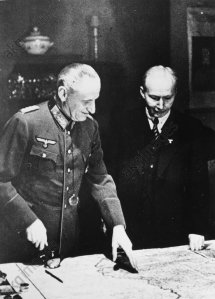
General Ernst Köstring (agregado militar en Moscú), a la izquierda y Werner Tippelskirch en la embajada alemana de Moscú. Köstring discrepará con el planeamiento de Marcks. Foto de septiembre 1939.
Marcks trata este punto con el agregado militar alemán en Moscú, el General der Kavallerie Ernst Köstring. Pero este discrepa en este punto. Köstring es buen conocedor de la URSS y habla ruso (de hecho nace en Moscú en 1876). No lo sabe aún pero Hitler será de su misma opinión pronto. Köstring duda de que la captura de Moscú sea la clave de la victoria, por los vastos recursos industriales de Rusia más allá de los Urales y la capacidad rusa de improvisar una red viaria obviando la capital.
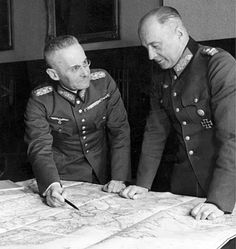
Halder, Jefe de Estado Mayor del OKH (Oberkommando des Heeres) Alto Mando del Ejército y jefe temporal de Marcks mientras dura el planeamiento, da su visto bueno. También es de la opinión de que Moscú debe ser el objetivo prioritario de la campaña. De hecho a lo largo de toda la operación será férreo defensor de esta tesis.
Acabado el trabajo de Marcks, en septiembre lo retomará el Generalleutnant (teniente general) Friedrich Paulus, destinado en el OKW (Oberkommando der Wehrmacht), Alto Mando de las Fuerzas Armadas. El plan inicial de ataque a la URSS sufrirá una modificación importante…
Sigue interesantes referencias también en Twitter @Barbarroja0300h
-—————————————[English version]——————————————
“BARBAROSSA’S” ORIGINS.
PART 4:
Marks and his planning.
Halder (a la izda.), Jefe del Estado Mayor del Alto Mando del Ejército (OKH) conferenciando con Brauchitsch, Jefe del Ejército y superior inmediato suyo. Temporalmente Halder tendrá bajo su mando a Marcks durante la fase de planeamiento inicial del ataque a la URSS. Foto de 1939.
On the 5th of August’ 40, barely 2 weeks after HItler’s decision to prepare the invasion of the USSR, General Erich Marks submits his final draft. His plan’s main assumption is based on the capture of Moscow, which will surrender the Red Army. Moscow is one of the industrial, communications and, naturally, political key centres of the USSR and for Marcks this will be the campaign’s decisive target. As a matter of fact he considers that even if the Soviets don’t give up, then the Wehrmacht will have to drive the Red Army out beyond the Urals. There the Soviets won’t be in a position to continue military operations. Nevertheless he leaves the chance for the Soviets to set up a new government and continue the war indefinitely.
Marcks discusses this premise with the German military attaché in Moscow, General der Kavallerie Ernst Köstring. The latter disagrees. Köstring is well acquainted with the USSR and speaks Russian (in fact he is born in Moscow in 1876). He still doesn’t know it, but Hitler will be of his same opinion soon. Köstring does not believe that the capture of Moscow will be the key of a successful campaign, because of the huge industrial resources existing beyond the Urals, and the Russian improvisation ability to set up new road networks skipping Moscow.
Halder, OKH Chief of Staff and Marcks’ boss on a temporary basis, approves the latter’s plan. He fully supports the idea of capturing Stalin`s capital city as a key objective. As a matter of fact during the execution of the campaign he will insist on this priority.
Once Marcks’ job is done, in September Generalleutnant (Lieutenant-General) Friedrich Paulus, posted in OKW (Oberkommando der Wehrmacht) Armed Forces High Command, takes over. The planning will be amended significantly…






 ¡ CONQUISTAR RUSIA !